

 Apple Podcasts
 Spotify
 YouTube
 PocketCasts
 Overcast
 #100: How Creators Can Help Brands Win AI Search
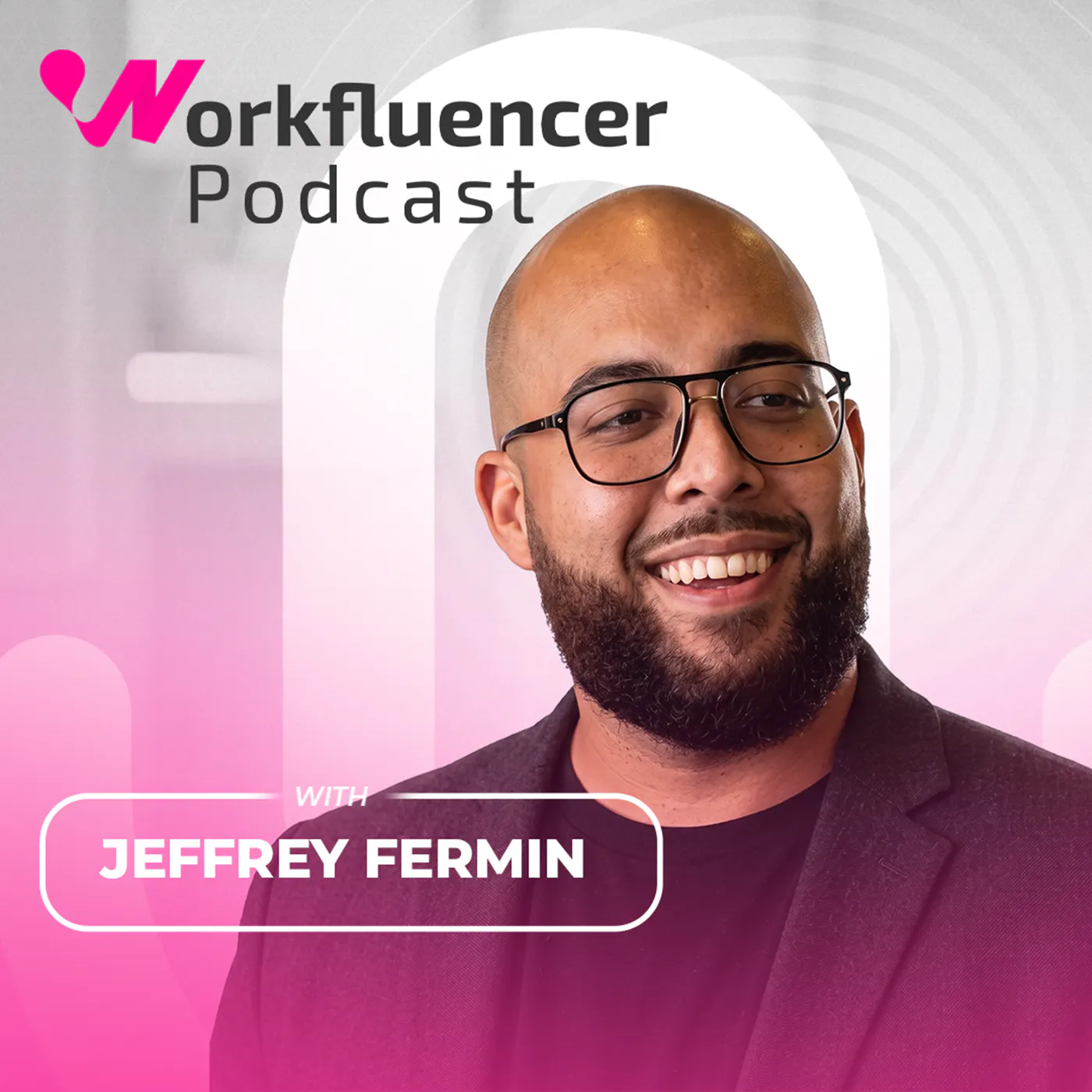
AI search citations are the newest piece of real estate on the internet, and creators may be one of the fastest ways for brands to claim it. Most brand deals are still measured through reach, clicks, and conversions. Meanwhile, answer engines are shaping which companies get mentioned when buyers ask ChatGPT, Perplexity, or Google who to trust. Almost nobody is pricing creator partnerships around that value yet.
This conversation was never supposed to become an episode. Rhona Pierce invited Jeffrey Fermin, a 15-year marketing veteran, to privately pressure test an offer she is building around AI search citations. What follows is a behind-the-scenes look at two media and marketing operators working through the opportunity in real time.
They break down how attribution actually works inside companies, why UTMs and discount codes miss so much of a creator’s influence, and how podcast transcripts and other written assets can support visibility in AI-generated answers.
At its core, this is a conversation about proof. Creators need ways to demonstrate value when tracking fails. Brands need to understand what a mention from a trusted outside voice can do that content published on their own website cannot.
You’ll hear why tying creator pay to closed sales is a bad deal, how multi-touch attribution better reflects the B2B buying journey, and why Rhona will never agree to perpetual usage rights when creator content could continue generating value for years.
This behind-the-scenes conversation marks the 100th episode of the Workfluencer Podcast.
What You'll Learn:
- Why AI search citations are becoming a line item creators can price and sell
- Where a creator’s responsibility ends in the sales funnel
- How multi-touch attribution works in B2B marketing
- How creator content can support visibility in AI search
- Why transcripts and structured written content matter
- What AI citations could mean for creator usage rights
- Why brands and creators need new ways to measure long-term value
Resources Mentioned:
- Rhona's Newsletter: https://link.rhonapierce.com/newsletter2
Connect with Us:
- Connect with Jeffrey: https://www.linkedin.com/in/jfermin/
- Connect with Rhona: https://www.linkedin.com/in/rhonabarnettpierce
Want to turn your team into creators?
Visit workfluencermedia.com to learn how we help companies turn employee expertise into content that gets noticed.
FAQs
What are AI search citations and why do they matter for brands?
An AI search citation is when a tool like ChatGPT, Perplexity or Google's AI Overview names your company as a source in its answer. It matters because the answer now sits above the ads and the organic results, so the citation gets read before your website does. Jeffrey's point in the episode is that these citations often come from off page mentions, not your own site. That makes third party voices, including creators, a direct input to your visibility.
Can creators get paid for helping a brand show up in AI search?
Yes, and it is early enough that pricing is still being invented. Rhona is actively negotiating this with brands as a separate deliverable from reach or clicks. The pitch is straightforward: the creator produces content that gets indexed, quoted and cited, which puts the brand in the AI answer layer. The open question is whether it is priced as a one time fee or an ongoing license.
How do you get a podcast episode cited by ChatGPT or Google AI Overviews?
Publish the written version. Jeffrey's method is to take the episode transcript, turn it into a 1,000 to 5,000 word structured page on your own site, format it for search, and strip out the obvious AI phrasing. Add internal links and schema. Then repeat that on LinkedIn and YouTube with clean transcripts so the same names and topics appear in multiple places.
Why is video harder to get cited than text right now?
The models are still far better at ingesting written pages than raw video. Jeffrey has tested pulling YouTube transcripts into Claude and calls it a coin flip. Rhona's read is the same: the crawlers are working from transcripts, not the footage. So the leverage is in how you format the transcript, the SRT file and the accompanying article, not in the video itself.
Should a creator's pay be tied to sales in a brand deal?
No. A creator is doing marketing work, not sales work, and marketers inside companies are not carried on a sales quota either. Rhona's position is blunt about it: you have zero control over what happens after the click. In B2B especially, nobody buys a six figure software contract mid episode. Price the work on the funnel movement you can actually influence.
What should a creator put on a link in bio page to prove value?
Give the brand something measurable. List the partners and products you work with, use embeddable widgets where they exist, and track click through rate against total page visitors. Then you can walk into a renewal conversation with a real number, like traffic driven and click through percentage, and ask the brand what converted on their side.
How does answer engine optimization change what a creator is actually selling to a brand?
For the last decade creators sold reach, impressions and click throughs, and brands tried to tie those to demos and closed revenue through UTMs, promo codes and attribution software. That model leaks constantly, because tracking parameters get stripped, automations are not configured, and buyers arrive without ever announcing where they heard about you. Answer engine optimization adds a different asset to the deal: durable presence in the layer where AI tools decide who to name. When a creator with real authority publishes content that mentions a brand, and that content is properly formatted and indexed, the brand can end up cited in AI answers by a source that is not on their payroll page. That third party credibility is something a company cannot manufacture on its own domain. So the creator is no longer just selling attention for a week, they are selling a compounding position in the place buyers now start their research.
What is the practical workflow for turning one podcast episode into AI search visibility?
Start with a clean transcript of the episode, since text is still what the models read most reliably. Turn that transcript into a structured long form page on your own site, roughly 1,000 to 5,000 words, formatted for search with clear question and answer structure, internal links and schema markup, and edited so it does not read like generated filler. Publish the same episode with a properly formatted transcript and SRT file on YouTube, then write a LinkedIn article version so the guest's name, your name and the topic appear together across multiple domains. The question and answer format matters because that is the shape of what people type into these tools. Jeffrey does this at AllVoices and in his own freelance practice, and his point is that the window is open right now: it is easier to get cited today than it will be once everyone catches on. The compounding benefit is that early, well formatted content tends to hold its position, so the work you publish this quarter can still be the source being quoted years from now.
Learn more about your ad choices. Visit megaphone.fm/adchoices
Rhona Pierce (00:00.152)
There's a new place on the internet where brands need to show up, and creators are the only ones who can get them there fast. Most creators don't even know this exists yet, and almost nobody is charging for it. I'm a smaller creator, so I don't sell reach, I sell engagement.
Jeffrey Fermin (00:16.366)
Attribution is the toughest thing. Whether it's B2B SAS, B2C consumers, there's so many variables that can go wrong and very little that can go right. My, I guess, main pillar was always SEO, AEO. You get this transcript, you build something on your actual website, and you say, hey, give me a 1000 to 5000 word breakdown, SEO formatted, have it not have AI speak.
Rhona Pierce (00:38.638)
People are really, really searching for these things in LLMs. And LLMs are citing not only the things that happen on your sites, but off-page, right? Jeffrey Fermin and I were on a call that was never meant to be public, but what came out of it was too good to keep between us. Jeffrey's a 15-year marketing vet and currently the head of demand gen at all voices.
I've been developing this offering around LLM citations for brands as a new layer of creator value, and I wanted to pressure test it with someone who spent their career on the measurement side of marketing. We got into how attribution actually works inside companies, why AI Search is creating territory that creators should be staking a claim on right now, and why your contract's usage rights clause was written for a world that doesn't exist anymore. Here's my conversation with Jeffrey Fermin. So for
Anyone who doesn't know you, can you give us your the your thirty second s story of who you are?
Jeffrey Fermin (01:42.282)
My name is Jeffrey Ferming. I am a proud Latino in tech. I'm a former founder. I'm a head of demand at a HR tech company. And I've helped nearly a dozen brands scale their their marketing of whether it's ops, ads, creative, analytical, you name it. I have a pretty decent framework and it's helped every company I I know grow. And my quick tagline, my personal one is I can take a company from zero to one and then one to a hundred. So
yeah, I have the formula that works. I got the sauce, as the kids like to say.
Rhona Pierce (02:17.434)
And he's got the receipts because all the companies that he's worked at, it's like it's like magic. And right now you're at Owl Voices and they're enjoying the magic, and benefiting from it.
Jeffrey Fermin (02:31.384)
They're doing pretty well. I like it. And we, you know, we have a really good head of community and content now. She's taken my th going back to to what we were saying earlier, like being able to be a producer, host, somebody that does all notes. I was doing pretty much Rebecca's hosting job while also having to account for all these other things before she got there. And it was a mess. I think if you look at my first like three webinars, I am like looking around, I'm looking at the notes.
I'm trying to like command the room and the audience and it is just it it's like being an air traffic controller. And yeah, it is insane, would not recommend. Get yourself some help if you're an early content creator, even if it's, you know, a little cousin that wants to learn videos.
Rhona Pierce (03:15.002)
Exactly. It's just anyone who can be there and help you like, hey, this comment like understands what you're talking about, understands the topic, and it's like, hey, this comment is an interesting one to pop up. Let's pop that up. Because you're also not just popping up every single comment, right? 'cause on lives, everything, you just never know what people are gonna say. But if it's like following the conversation, if it's not gonna take the conversation too like on a tangent or stuff like that.
Definitely that that type of thing. So that's something that helps. And then the repurposing stuff. That's my jam. Everyone knows that that's what I like, but I hadn't thought of that repurposing angle. So now I'm like excited to test it out. It's like, who knows, Jeffrey? Maybe we're gonna do a live one day and and we're gonna be here answering questions for people. I think something that as creators or
I'll say what I I'll talk about my experience, what I've run into with working with brands and doing brand deals. That's cool, right? And I am one that does not sell reach. I am a smaller creator. I have like twelve thousand-ish followers on LinkedIn, six thousand, seven thousand on on TikTok. So it's and Instagram. my gosh, Instagram. We can't I don't even have a thousand there. But like
I'm a smaller creator, so I don't sell reach. I sell engagement because that's my jam. Like my engagement is off the charts. When you look at like the comments, the saves, the the reposts, that that's really my thing. But then how do you but still at the end of the day, marketers, they have this pressure of how many demos did it drive? How many this did it drive? Like attribution. And then it's like, did people
go to you because they've heard me talk about this across eleven posts and then they decided they just didn't click on my link. even though I say don't forget to tell them Rona sent you, a lot of people forget to tell them Rona sent you because they just go like, I need this. So in your experience, like how can a creator work on this or should brands just like think about it differently? Hey, have you subscribed?
Rhona Pierce (05:34.708)
Let's fix that. It's the easiest way to support this show.
Jeffrey Fermin (05:38.862)
Well, before we get into that, I want to say for any potential brand partnerships, use this as a testimonial. Try to have Rhona represent your brand at a conference. I I got to meet you in person for the first time earlier this year. You were a force at the Transform Conference. So brands, pay Rhona fly her out. She will bring people back to go view your website, your your w whatever offerings. You put her in the right place.
She's gonna get you the she's gonna get you some leads. I I promise you that much. And I I s I seen it. I saw it with my own two eyes. you were forced there, and I think you have like one of the most engaging obviously personalities, but when you did the recap and and you did that, that like kind of the whole entire, I guess, HR tech industry was kind of like sharing it for like three or four days. And your comments section there looked like a group chat of all the the key players in an industry. So
use this as a testimonial. I've seen it. Link out to that link too, by the way. There's there's and and also say Jeffrey did that so I could get a c no I'm just kidding. Jeffrey got you Jeffrey sent me here. now on to answering your question. that I I did my plug. I wasn't organized, by the way. so attribution is the toughest thing, whether it's B2B SaaS, whether it is you know, D2C consumers.
There's always something, there's so many variables that can go wrong and very little that can go right. Wrong, you somebody didn't put proper UTM, the campaigns don't go through, and then maybe their demand gen person over here didn't set up automations to then say, like, this was an influencer campaign that does this. A lot of these things don't necessarily clip on the internet as good as we expect them to. And I say that as a 15-year marketer. Like we expect, like, we're gonna give this influencer, you know.
a special link and it's gonna go through there. By the time it reaches their e-commerce or Shopify site, maybe it's gonna do, maybe it's not. Maybe the user has something where it like deletes all the UTMs or there's some like weird Google Chrome thing. Like I said, endless variables for it to go wrong and a creator not to get attribution. what I would advise to any early creator or anyone like that is have a page that has those offerings that you might be kind of doing. So I
Jeffrey Fermin (08:01.986)
I I love it when you see like a creator page, that what's Lincoln biotech pages. Yeah, you'll often see like, okay, here are some of the brands I'm working with. Here are some of the products that we have. And now they have embeddable widgets where you can see like, okay, this is like an Amazon brand that I work with or something to that nature where they already have all that stuff obviously embedded and click through and that might or might not work.
But you at least have that entry level information or the top of funnel, middle of the funnel information to say, like, hey, I got this person here. The click through rate on this square out of the one hundred thousand visitors right here is five percent. so I am driving X amount of traffic to that. And you can come back as a marketer business person and say, like, I'm driving, I don't know, math, five thousand people to view this page. I hope my math is right. have
Have you seen any conversions coming out of that? And can you prove that? And you know, they might provide if their UTMs and all that stuff doesn't get attributed properly, they might provide like a code for you to do as well. That could be their attribution source. So it could be like Rona 15 and it's 15% off. There's so many of these things, but I will say, make sure that they have the strategy for you to get properly attributed, is probably with any of your brand partnerships.
And then also you have to do the job of like coming with it to say, like, here's my game plan and here's this the data that I provide. and it's gonna help you really like kind of say, you know, I gave the numbers earlier, like I'm gonna show you the funnel metrics that kind of get you to from point A to point B. Now you have to close it, you know, that's point C close. but yeah, that's that's totally up to them. I hope I made sense.
Rhona Pierce (09:50.442)
No, that that totally made sense and I and I love the whole the ending and this is a love letter to my marketers. The conversion that like that has nothing to do with me, guys. I get you people there. and any creator and I my gosh, I taught all my creator friends when they're like, yeah, I only get paid on this campaign if I do sales, I want to punch them.
You are not a free salesperson. You are marketing. You br just like marketers within companies aren't getting like sales quota or they shouldn't be. neither should creators or influencers doing these deals. Like, don't tie your work to sales because you have zero control. And also, like, especially in B2B content creation, right? I'm not like no one's gonna listen to the podcast.
And be like, my gosh, let me go click and spend a hundred grand a year on this software. It's not like a one-time, like you're not buying soap. It's like they have to listen to it, they have to learn about it, and they have to hear it multiple times. So that when they're ready to buy that type of software, then they go. And then as a creator, you have to know this is my audience, this is where they're at, these are these people, so that you can tell.
Brands like I have people who are thinking of buying or that are decision makers, they have to hear about your product a couple many times. But when they're ready to buy, they're like, let me, let me talk about this product. Let me go see, let me go do the demo. But they don't necessarily do it while listening to an episode, like every single time.
Jeffrey Fermin (11:36.246)
You brought up so many. I I don't know where to take this conversation because you brought up a lot of great things right now. I'll start with let me do multi-touch attribution. I feel like it's the safest one. But when you're a marketer, you know that that one social post that you put out on a Wednesday, it's really it's it's a brand impression play. You're gonna get the people that are already following you. Maybe they're gonna share it, maybe they're not. I think LinkedIn is is really bad at giving companies social media, whatever.
Let me not even go down that that alley. but here's what happens. We know that it takes multiple touches in order for someone to get even consider a product. So if I'm going to an influencer, I've already probably vetted that they're speaking to my ICP, that they are, yeah, obviously brand and impressions are a ma like a massive play, but do they even exist? And are they like, do they have the
the ICP in the in the networks that I want to promote to. That's square one. The other thing to then take into consideration is like
I won't say ROA or return on ad spend because you can do brand performance, but let me let me think about this a little bit more. I we are essentially investing on you to add an extra little touch. If you already have some some kind of like audience there within our ICP and someone that we're already speaking to, that they are mid-funnel and they are like already doing that, we want those two things to click for them. We want them to say, like, hey.
Jeffrey's marketing practice is now on on Rona's show. man, I've heard about him so much. And that is their second touch point. And then I'll hop on another podcast, and then I'm gonna hop on LinkedIn and drop another post. And you leave the breadcrumbs there so that you're where the audience is at. And then it's going back to that phrase, multi-touch attribution. You know, you are getting all those impressions for that same person on these different outlets. And then eventually you go, hmm.
Jeffrey Fermin (13:38.636)
I want to sign up for a demo. I want to check them out. I want to, you know, sign up for their calculator and see how much money they can save me. And that is just on the top of funnel brand impression side. Once you get on the website, there's all these other things. There's newsletters, there's SMS text messaging, there's retargeting ads. If they've already already visited your site, you can reorganize them from an audience step. Now I'm getting too nitty-gritty into the market.
Rhona Pierce (14:04.864)
Yeah, this is what I love.
Jeffrey Fermin (14:07.564)
But yeah, the the main goal is you want that initial impression somewhere wherever it may live. You want the end user to say, hmm, maybe I I should check this, check Jeffree's website out. They go into Jeffree's website, probably not now. And then I have to spend even more money on top of the influencer campaign to do retargeting campaigns. Follow them on on Facebook, Meta, Instagram, said Meta.
LinkedIn, Twick TikTok, the works. So that is a whole department that companies invest in. And a good marketer, dare I say the goat of marketing, would probably do their best to make sure that you cross the finish line and you work with me and any other company.
Rhona Pierce (14:52.162)
Yes, yes. I think another thing that's really hot right now, and we kind of spoke about this back in the DMs, and it's something that I'm starting to pitch to brands because it's important. More than the demos and all of these things and SEO that's been around for years, people are really, really searching for these things in LLMs. And
LLMs are citing not only the things that happen on your sites, but off page, right? So then if you have a creator who has it's a author an authority, right? Like they're a trusted voice, and you get an LLM citation from being mentioned by them by being associated by them. It's a third party like
It's street cred. It's not just you optimizing your website. And I'm dumbing this down like incredibly, but I think it's for ev people who haven't obsessed like me and read every single thing about this for the past couple of weeks. It's like your it's not just your website saying, we're cool. Here's all these things. It's someone else, not associated with you, not an employee, saying, This is cool. And without giving too much of my strategy out,
I I'm really, really geeking over this and how to like in my YouTube, in my LinkedIn, do this and so that brands can see those LLM citations. And by the way, even Google now, like you know the top results are those AI things. So if you have people talking about you and doing it correctly, because it's not just the video, it's what you do behind the scenes. that that's a have you
Gotten into much of that side of things nowadays.
Jeffrey Fermin (16:47.19)
How deep do you want to go?
Rhona Pierce (16:48.898)
Let's go.
Jeffrey Fermin (16:50.904)
So there was this notion of T-shaped marketer and like it's this thing, you have all these different marketing skill sets, and then you kind of like really focus on one thing and then build outwards. My I guess main pillar was always SEO, AEO. and I love it because you're pretty much grabbing data that exists from the ocean that is the internet, right?
And you have to kind of like make your little you make your little claim and say like this is where I'm the the hill that I want to die on speaking. So I love this stuff because you grab the data, you make the stuff, and then it's like field of dreams. You build it, they come. Say that to say is like what we're seeing now, and we see all these hot takes saying like, AEO, blah blah blah, Claude is adding watermarks, just not it's such a layered and nuanced thing that
A lot of people don't get. And you know, there's internal linking, there's adding schemas, there's, you know, building out your site, all these things. I will say it's now easier than ever to start getting cited for things. I don't know how long that'll last, but you could essentially grab this, right? You get this transcript, you build something on your actual website, and you say, Hey, br give me a 1000 to 5000 word breakdown, SEO formatted, have have it not have AI speak, all these things.
Have that transcript build out, have it SEO friendly. And then anytime someone searches, you know, Rona's content creation tips with the help of marketing. I'm very bad example, but this chat will come out. It's like, she was very knowledgeable. She even had a host one time, Jeffrey, say all these things, and it'll link out to your page that has the notes and breakdown of this. This is something that we're doing at All Voices, the company I'm at.
This is something that I'm beginning to do from my own personal practice now that I'm slowly getting back into the freelance realm and getting back into content creation, but it adds more expertise and authority to your name by having content constantly be published online. I don't know if there's concrete evidence of video content being sourced. I have tried pulling like YouTube transcripts onto Claude, and it's always like a 50-50 ordeal.
Jeffrey Fermin (19:09.016)
But what I can say is if you have a lot of the written information with your name attached and your guest names attached somewhere on your site, somewhere on LinkedIn or any of these other places, you're gonna start becoming known in the L but not the same way as Google, in the LLM for these things. And if you format things properly, sky is the limit for where you can go. There's the very cute, cool way of doing influencer marketing and getting these rankings, you know, the Alex Earl.
Let me do some cool beauty stuff and have people write about me and get all these stuff. But if you're a creator that is literally you know, starting from scratch starting from scratch and you want to, you know, get it out the mud, you know, this is the way to do it. Doing all the things right. And then eventually the long term compounding effects from that is you're gonna be the source. You're gonna be the thing that always shows up on Google, you're gonna be or Claude or Chat GPT and all these things. So
I would say if you're getting started and you're new to L O SEO or AEO or GEO, however they want to phrase it, just be sure to always have the written versions of it out on your pages, out on YouTube, wherever it can be, because it is easy right now. I'm telling you, I see the numbers and I've literally helped the company grow in the last five years because of just good practices there.
Rhona Pierce (20:31.09)
Yeah, and it's very, very early days of the videos being cited. And again, it's not videos. Again, remember who owns YouTube. It's Google. And they know that people are talking about it. So what I've been geeking out on for the past, I don't know, four or five weeks is how people are doing their transcripts for on YouTube, right?
the the your SRT files, how people are doing stuff so that it's LLM friendly, so that you get cited. And then that together with LinkedIn, especially LinkedIn articles, if you format those correctly, my gosh, your videos. So again, it's not the video itself. I think it's very, very early days of them like crawling the videos and and doing that, but they are transcribing it.
If you do the extra, give them the extra push of doing it in the format that you already know, which is questions and answers. So anyone with a podcast, if you guys aren't jumping on this trend, like I could do a full two-hour episode after everything I've researched and I'm testing it out. Now it's tracking that is extremely expensive because the tools that are out there are new and they're like on the wave and
I'm talking $200 a month to track these things, but I'm investing the money because I want to be able to prove to brands. Not only are is it these like cute, people clicked and went to a demo. It's whenever someone's searching, ATS, blah, blah, blah, interview intelligence. What's coming up at the top are the people that are paying attention to.
AEO, GEO, whatever you wanna call it, and not just SEO and fun clicks and and stuff on Instagram and TikTok.
Jeffrey Fermin (22:36.802)
Yeah, there used to be this massive notion of like we have to own position zero and position one, which in SEM language is the search engine ad, the Google ad where you'll see like, Jeffree Marketing. And then you want to own the actual organic one that's like Jeffree's marketing, bam, bam, bam, and it has the preview text and all this. Now you want to have position zero, position one, and then on top of that, be on the AI overview that says Jeffree's marketing. He's been doing this for 15 years, bam, bam, bam, and all the different citations that prove it.
What you're alluding to is kind of that same deal. You you now have to pivot as a creator to to then say, like, hey, not only are you are you providing brand impressions here, potential click-throughs from my own what's it called, Lincoln Bio page. I'm also making sure that when you when you're kind of in this like the spider web of keywords, you're getting cited because I'm getting you over here and there's an LOM benefit to it.
So if you want position, I guess we'll call it zero point five, that AI overview, if you're paying for it and you have the organic one, you're gonna need my help. It's a part of your SEO efforts, your AEO efforts, and your just general general like brand impression efforts. So you want to be everywhere on the web and I'm helping you get there as a creator. And that's I feel like a pretty good pitch for you.
Rhona Pierce (24:00.034)
And that is something valuable. And right now I'm in negotiations with some brands because the it's so early in how you charge for the usage rights of this. Perpetuity is a word that I do not use. It is not in my vocabulary. because I always remember one of the very, very first coaches that I worked with,
shared a story of how the very first brand deal that they did was actually their child when they were a baby. And they because the they do, and I'm specifically not mentioning them because I do not recommend this coach anymore. but they do mommy content, right? So they have their kid in the content. Long story short, 2026, you can still walk into Target.
For those that are walking into Target. And you can see that kid on advertising. And they did not charge for usage rights. So Target is still making money off of this person's kid 12, 15 years later, and they only got a one time fee. And that's why I don't, I'm never gonna do that. I'm never gonna be the person who's still being cited.
by your LLMs and getting you milli making you millions of dollars because AI is citing you because of my content twenty years down the line and I'm not getting paid for it.
Jeffrey Fermin (25:35.954)
I I even man, you just reminded me of this whole conversation I had with Lars Schmidt. He's currently at Anthropic. I think he's their like main recruiter. But I was talking about like eventually we're gonna get to a point where we're gonna have digital twins and companies be like, could they eventually pay you royalties for having a digital twin version of yourself, which is a whole different conversation? And that is a 2035 problem. And how do we even solve that? I don't know. But for this specific case,
You are pretty much there's new land being created on the internet. That's how we should frame it. Right? There's new land being created, these AI overview spots. It is the wild, wild west right now. How can you future proof for yourself and say like, hey, an SEO, age and in terms of when you post it is one of the factors, or even the algorithmic changes to Google maybe was one of the factors. Now no one cares. But you know, the the
The age of the actual content you produce could potentially give you an advantage over a competitor. With that in mind, if you are early on to L sighting, how sh how do you pitch that? How do you go about saying, like, hey, you're gonna be number one on this for the next 20 years, the same way Coca-Cola is number one for soda, right? And it cause they were the first one on the internet in nineteen ninety-six. And if you type it, it's just Coca-Cola shopping and all this stuff.
Pepsi will never be able to beat them because they did it one day afterwards, right? So I don't know if that's factual or not. Don't quote me on that. I'm just giving examples, people. But that that's the mentality you want to have, right? Like if Jeffree gets you cited today, that's probably and for a relevant keyword topic, how can that that's probably gonna hold for the next 10, 15 years? I hate to sound like one of those online bros on threads, but AI isn't going away.
You know, it's it's now a part of our everyday life. I hope that, you know, from an ethics standpoint, we learn how to adapt with it. We're able to you know, not use as much energy. There's a whole conversation around data setters, water, all that stuff. And I won't reveal all my my thoughts on there, but just know I'm for the human race. but with that said, it's not gonna go away. People are gonna continue to double down and invest in it. Is it overvalued? That's a whole another separate conversation. But
Jeffrey Fermin (28:01.794)
Businesses are going invest on that newfound real estate. Businesses are going to want to be able to pay you to say, hey, we're number one here and we want to keep it that way. I've noticed that you've had us here for a month. and we want to make sure that we keep you happy. How should you negotiate that? How should you do that? And how can you even guarantee that moving forward with all these algorithm changes to AI and all this stuff? There's so many questions. I know that I don't have the answer.
But what you just alluded to right now is like, should it be a one time fee? Should it be something that is, you know, every single year, can you like track how many people are clicking through an AI citation? We d I don't even know if that technology exists perfectly just yet, but those are questions we don't have the answers to right now.
Rhona Pierce (28:48.684)
Yeah. I it the the attribution piece, the tracking, all of that is very, very new. And there's a few company a few soft pieces of software that I'm testing. And we'll see. I won't say which ones I recommend because I really I literally don't know. It's very, very early in it, but there's one that I'm loving because it's very creator focused and
It's not meant to be purchased by the creator, but by the company. And then you can legit put each piece of the link of each piece of content that the creator made for you for your brand partnerships and track it against all the other LLM things, the site, the prompts that you're that you're tracking. And it can tell you, like you can see which creator is actually bringing you.
Make making you get sighted. yeah.
Jeffrey Fermin (29:48.046)
No, that's next level.
Rhona Pierce (29:50.336)
Yeah, no, I'm like, we'll see. If it's I've I've started tracking my own stuff that I've done to see how it works, but like it's it's working. I mean, so far. We'll we'll see what this really means. But like that's where we're going. And yeah, like you, I'm very pro-human race and pro the environment and everything. And I think that the stance that many people have taken as far as
Wanting AI to go away is the absolute wrong stance. The stance is us demanding that our governments and that these companies do things in a way that is mindful of humans and of the environment. But AI itself isn't going away. We're we the fight isn't stop AI. The fight is give us AI the right way because people are investing in it. It's here to stay.
and yeah, that without getting very political, as you know, I can get. That's where we need to be putting our energy as far as the protesting against AI. It's how are we regulating this? How are you making sure that these companies are do just like they supposedly do with our food and everything else? Like
How are you making sure that they're using AI in a way that's not destroying the planet for us and for future generations?
Jeffrey Fermin (31:24.782)
Yeah, don't eat that lettuce. no, I that was very bad joke. no, no, no. And I feel like that's a good analogy, right? We don't have a proper protocols to protect the lettuce in the and metaphorically speaking, the AI in this situation. I think we're seeing other countries starting to set boundaries on there and say, like, hey, we're going to protect workers. We have to learn how to coexist with with this technology. We can't use it as a replacer. It has to be an amplifier. We have to do all these things. Things that like
People have been saying, but unfortunately, we live in a very unique society where people want to capitalize and get the most for the absolute most little, you know, return from their employees. Like spend the least, but get the most. And that's kind of the name name of the game here. I don't want to go down that rabbit hole because it can create a whole lot of problems for both of us. and and we're also in the business, make no mistake about it. We're trying to keep roofs over our head and we're trying to kind of secure the bag as the kids say.
but i you know like there there needs to be kind of guardrails put in and and I'm just gonna leave it at that and and we'll have a whole AI ethics conversation hopefully in another in another time.
Rhona Pierce (32:39.35)
Summary. Yeah, sometime soon. So this was amazing. I like I said, this started as just us brainstorming. I don't know how this is gonna end up as the episode, but for anyone listening or watching, if you like this type of episode, if you want to come behind the scenes with me yapping with my friends about business stuff, let me know and I'll do more of these. Thank you, thank you so much, Jeffrey. This I think was really cool. And there's a lot of gems in all of this conversation.
Jeffrey Fermin (33:09.262)
Non-format is the new format. Keep it like this. Keep it organic. Conversations like this are gonna help drive change and create better content in every network. So that's the last little lesson that Rona and I will leave you with. This is fantastic. Thank you so much for having me.
Rhona Pierce (33:24.248)
Amazing. That was episode 100 of the Workfluencer Podcast. I can't believe it's been 100 episodes. I want to thank everyone who has supported the show. Producing and hosting this podcast has been one of the most fulfilling things I've done in my career. And none of it would be possible without the guests that have so graciously given their time and shared their stories. And without you, the listeners and viewers, I'm eternally grateful for your support.
I'd also like to give a special shout out to my team at Workfluencer Media and the production partners we've been lucky to work with throughout the years. This is truly a team effort, and I am so, so grateful. But today, I have a favor to ask. Producing this show is very expensive, and it's an investment I'm willing to make. But I need to bring on sponsors, and sponsors like to see reviews. Can you take a few seconds and leave us a five-star review? It would mean the world to me.
Content Creator | Marketer
Jeffrey Fermin is a marketer and creator exploring the real dynamics of modern work. He co-founded Officevibe (now Workleap), led growth across multiple HR tech companies, and now runs Demand Gen at AllVoices while hosting the People First podcast. Through his @FerminTalksWork content, Jeff uses data, storytelling, and straight talk to help leaders build workplaces people genuinely want to be part of.


