Apple Podcasts
 Spotify
 YouTube
 PocketCasts
 Overcast
 Personal Branding for Women Over 40
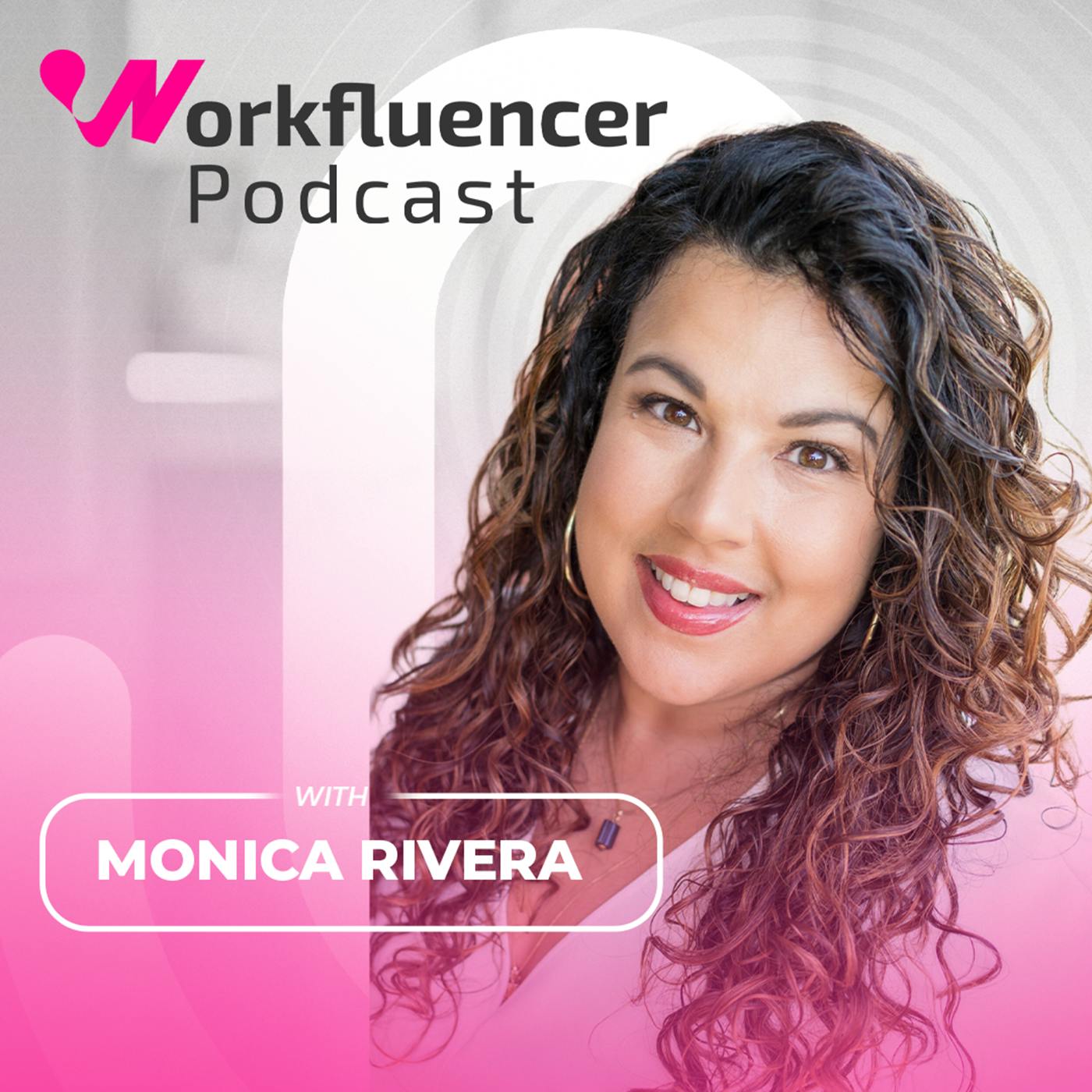
Personal branding for women over 40 who feel invisible is rarely about a lack of expertise. It's about two decades of keeping your head down, taking care of everyone else, and forgetting to tell the world what you know. In this episode, Monica Rivera breaks down what it actually takes to stop hiding and step into the visibility you've already earned.
Together, Rhona Pierce and Monica unpack why experienced women, especially women over 40, feel invisible even after 20 years of building skills, leading teams, and delivering results. They dig into what it actually takes to stop hiding and step into visible leadership.
You'll hear an honest conversation about imposter syndrome, the myth of the career ladder, how to get on stages, and why building a personal brand as a woman over 40 requires a completely different mindset than 'just start posting'.
What You'll Learn
- Why your personal brand already exists whether you manage it or not
- The real reason experienced women stay invisible despite deep expertise
- Three types of stages and how to access all of them without waiting for an invitation
- A four-step framework to go from hidden to visible
- How 90-day experiments replace the pressure of picking a permanent identity
- Why thought leadership requires a distinct perspective, not just having opinions
- The mindset shift that makes self-promotion feel like service
Resources Mentioned
- Visit Monica's website: https://youwannadowhat.com
- Subscribe to Rhona's Newsletter: https://link.rhonapierce.com/newsletter2
Connect With Us
- Connect with Monica: https://www.linkedin.com/in/monicamrivera/
- Connect with Rhona: https://www.linkedin.com/in/rhonabarnettpierce/
Want to turn your team into creators?
Visit workfluencermedia.com to learn how we help companies build video-first content systems that attract, engage, and retain talent.
FAQs
How do women over 40 build a personal brand?
Building a personal brand after 40 starts with identifying what you want to be known for and sharing your expertise publicly. Content, speaking, and thought leadership help experienced professionals become more visible in their industry.
Why do experienced professionals feel invisible at work?
Many professionals over 40 feel invisible because their expertise becomes normalized inside organizations. Without visible thought leadership or public content, their experience often goes unnoticed outside their company.
Do you need social media to build a personal brand?
No. Personal branding can include speaking, writing, podcasting, or networking. Social media simply accelerates visibility by making expertise easier to discover.
What is visible leadership?
Visible leadership is the practice of sharing expertise, perspectives, and ideas publicly so others recognize your authority and experience.
How can women over 40 become more visible in their careers?
Women over 40 can increase their professional visibility by sharing their expertise publicly through content, speaking, or thought leadership. Many experienced professionals have deep knowledge but rarely talk about it outside their company. Creating content, participating in industry conversations, and building a personal brand helps others recognize that expertise and opens the door to new opportunities.
Is it too late to build a personal brand after 40?
No. In many cases, building a personal brand after 40 is easier because professionals already have decades of experience, stories, and expertise to share. Personal branding is simply making your knowledge visible so others can learn from it. When experienced professionals start sharing their insights through content, speaking, or networking, they often gain credibility quickly because of their track record.
personal brand, personal brand for women, personal brand women over 40, personal branding, personal branding over 40, visible leadership, women over 40 career, women in leadership, thought leadership, content creation, professional content creator, corporate content creator, personal branding strategy, career transition, executive presence, professional development women, female entrepreneur, speaker coaching, creator economy, side hustle professional, women 40 plus, career reinvention, workplace visibility, content strategy, building a personal brand, HR leadership development, employer branding, workfluencer
Learn more about your ad choices. Visit megaphone.fm/adchoices
Monica Rivera (00:00.138)
think when we hit the age of 40, we almost look up and start to say, well, what do I want to do with my life? I've pivoted a lot in who I work with. But as I think specifically for women over 40, there is this idea of we need to unlearn. When I deliver these talks, one of the first questions I ask is raise your hand if you think you have a personal brand. If you don't think you have one, then someone else is deciding what it is for you.
Rhona Pierce (00:24.351)
Yes, yes
Monica Rivera (00:25.064)
So if you can just sustain the first five minutes of pressing publish on a post or the first five minutes of standing in front of a group of people or being in a podcast interview, you will drop in and you will just be in a moment of service.
Rhona Pierce (00:38.382)
love that. You work with women 40 plus who feel invisible. What do you tell them?
Monica Rivera (00:45.378)
They know that something's missing, but what's really missing is
Rhona Pierce (00:50.542)
What do you do when you've spent 20 years building expertise and suddenly the whole world is talking about personal brands and content and AI and you have no idea where you fit in? Monica Rivera is a speaker and coach who helps women, especially women 40 plus, stop hiding and step into visible leadership. Today, we're talking about why experienced women struggle to put themselves out there and what it actually takes to start. Monica, welcome to Workfluencer.
Monica Rivera (01:19.746)
Thank you so much. I'm excited to be here and thank you for sharing your community with me.
Rhona Pierce (01:24.16)
Amazing. So for those who haven't met you yet, what's the Monica Rivera story in 30 seconds?
Monica Rivera (01:30.026)
my gosh, the Reader's Digest version, that's like the hardest part, but also I do this so it's okay. So I'm a personal brand and communication strategist who help women become more visible leaders and step into those uncomfortable spaces and really harness their expertise so that people can recognize the wonderful women they are that are really hiding in plain sight. I spent 20 years of my career working in corporate marketing for some really incredible companies and then started to get this whisper.
and then this war that there was other things for me to do. And now truly it's my mission for women to feel more confident and capable telling their story, which is truly their unique leveraging point and says, be that visible leader that we want them to be.
Rhona Pierce (02:13.102)
Amazing. And I recently met you shout out to Jasmine Escalera, who I love who put us in contact. And it was such an amazing conversation. I'm like, we have to have you on the pod. So thank you so much for being here. You do a lot of speaking. You've been a content creator for a while used to have a podcast. But mostly what you do now is speaking and speaking I consider it content creation. You're just doing it live in rooms instead of online.
How did you start getting on those stages?
Monica Rivera (02:44.312)
So it's interesting. feel as if I've been a speaker really my entire life and it started from as early as a pre-K graduation. Then I went to elementary school, which really put an emphasis on public speaking. So I was very fortunate to be in the school that highlighted that from such an early age. I can remember even in fifth grade having to give these massive talks in front of first my class and then the entire school. And so I had a little bit of that training already I think baked in with me. Then as
in corporate, was the person who would deliver the talks and their presentations and almost served as a translator between two different groups of people and helped explain what one group was doing and another group needed to understand. And so I honed my skills there. Then when I went out on my own, it's really honestly quite simple. I started to ask for the opportunities, which I think people don't realize is something that's always available to them. But I knew I already had this expertise.
I was a skilled speaker. had a point of view and also an expertise that I could talk about. And so I remember going to my first conference in podcasting. This was DC PodFest. Shout out to that. It no longer exists anymore, but it was really a remarkable conference. And I met a man there who was at the time the founder of PodFest. And we had a great conversation and I shared, this is why I've gotten into the space and this is what my podcast is about. I know you have this conference coming up. I would love to speak.
And they said, okay. And it was as simple as that. It was in that conversation. And I did something that was really small. called a Pecha Kucha. And if everyone's ever heard of this, it's where you have, I think it might be a seven or 11 minute talk. So it's very short. You have slides that accompany it. So that's part of it. And you have to move at the pace of your slides. And it really forces you to one, be very disciplined as to what you're gonna speak about.
and also follow and track along. So there's no time for rambling, none of those things. And that was the first opportunity that I had to speak as my own name of my own brand and my own company. And it felt so exhilarating to say all of the things that I had been thinking that I wanted to be able to put out in the world and be able to do it under my own company. But honestly, it was simply because I asked the question.
Rhona Pierce (05:02.278)
Hey, have you subscribed? Let's fix that. It's the easiest way to support this show. So many people like don't understand that you get so many things by asking. think looking back, my first speaking engagement was also like, I just literally asked, hey, you're doing a conference. Can I speak there? I was like, that was easy.
Monica Rivera (05:23.33)
Right? Sure.
Monica Rivera (05:27.278)
It is it's all about that. I mean, I think one of the biggest pieces of advice I'd received from a corporate mentor was the squeaky wheel gets to Greece. And that was such a simple message, but it was one that I've never forgotten. And I've carried with me throughout my entire career. And it simply boils down to the person who makes the most noise and ask the questions and raises their hand is normally the person who is awarded the thing that you want. And there is a lot of thoughts that can kind of
come up and asking the question because there's rejection and all of these other things that present itself. But also the more you do it, the more comfortable you become and you get a lot more yeses than you would imagine. And every yes allows you to hone your expertise and step into whatever that next role is for yourself.
Rhona Pierce (06:16.438)
Amazing. What role has like content like online content played in building your speaking business?
Monica Rivera (06:24.952)
Well, podcasting is something that I will always, I will put my flag on that hill. I love podcasting as an entire medium. It does so many different things, but specifically in terms of creating content. One, you have a library of work. So people can go back and they can reference your library of work. It accelerates that know, like, and trust factor. So people know, do they wanna work with you? Do they wanna hire you to speak? What are you about? Do your values align? So it gives you this opportunity, one, for people to really connect.
and binge you, if you will. The second thing it does for you personally is it allows you to build your own voice. It allows you to identify what is your real perspective on something. So you can stay very topical or high level, very long in podcasting if you want to go deep into the media. Because the first 10 episodes, you can slightly sprinkle on certain topics, but in order to have a sustaining podcast career,
you need to really develop something that's more than surface level. So it allows you to really understand for yourself, what are the things that are important to you? What are the angles you wanna take about it? And then lastly, I will say, if you're in an area where maybe you haven't necessarily been in front of the camera or in front of the scene, if you will, it allows you to step into that place and be able to do that for yourself and see how comfortable or uncomfortable you are.
And with every episode, at least for me, it was an area where I could hone the skills that I didn't have. And also something interesting is I took the first six months in podcasting and I didn't interview anyone. And the reason was is I wanted to feel more comfortable behind the mic. I wanted to feel more comfortable editing. And I know that one of the most precious things someone can give you is their time. And if I didn't feel skilled enough yet to be able to do it or practiced enough,
I wanted those six months to feel comfortable as the host so that then I could lead the conversation and make sure that the episode I produced was highlighting that person and the time that they gave me in the best possible light. So there's so many benefits. I could go on and on about the idea of content specifically for podcasting. But once you can do something that's long form, the short stuff becomes easier. You have more of a repurposing system. But I think truly,
Monica Rivera (08:46.028)
Don't try to fit into what somebody else wants you to do, but there's always a way to create content that aligns with what is best for you. That could be writing, that could be video. There's different formats, but I would encourage everyone, content is here, it's not going anywhere. So please lean into the area that feels most aligned for you.
Rhona Pierce (09:05.27)
Yeah. I mean, visibility is something that you talk about, something that I talk about, something that's really key, especially if you want to be speaking. You have to have content out there. I personally think if you want to speak, you need to have a podcast at a minimum. Video really is going to help because we were just talking about just asking, right? Well, when you ask if the person doesn't know you.
and they go back, the first thing they're gonna try to do is find evidence that you can speak, that you can do what you're asking them to do. And content is an easy way for them to be like, wait, look, she's got all of these episodes or she's got all of these videos types of thing. Yes, come on my platform. So just putting that out there, it's very important.
Monica Rivera (09:54.158)
And you also build your own stage. So I say there's three types of stages. You can build your stage, you can buy a stage, or you can borrow a stage. So when you build your stage, we have these little devices called phones that are in our hands almost all the time. This is your form of a stage, and you can prop it up whenever you want, speak right into it. And it does allow you to get, again, that comfortability and that visibility so that you don't have to wait just for invitations to come. But again, to your point, you have a body of work that's already out there.
And then the buying a stage, there are spaces where you can buy a spot or sponsor on a conference that will give you maybe 10, 15 minutes on a stage. And then borrow is usually when you are invited to go into someone else's conference or community or organization to be able to get that exposure. But don't de-emphasize how important it is to just build your own stage.
Rhona Pierce (10:45.942)
Yes. And you teach visible leadership, right? But you also have to practice it yourself. What does your own visibility look like right now?
Monica Rivera (10:56.11)
Well, so it's interesting. What I, I'll just describe a little bit of how I think of Visible Leadership. So it has three components. It's personal brand, thought leadership, and executive presence or communication. And so for me, even at this stage where I've been lucky enough to speak at over 150 companies, I've been doing this for a while now, I still practice personal brand, thought leadership, and executive communication every single day. So if I take each of those,
personal brand is making sure what do I want to be known for and also checking in with that because I've been doing this for a little while that might change who I'm talking to my change where I want to go directionally in my career and in my business might shift a little bit. am I consistently known in the direction of where I want to be? So that's the first piece. Then thought leadership. There's so many things that are happening these days.
What does that look like when I think of visible leadership and the women that I support or the organizations I go into? What is being a thought leader look like today, especially in the time of AI where you can give it a prompt and say, give me 20 ideas? Well, having an opinion or a generic idea is very different than having a perspective. So I spend a lot of time reading. I spend a lot of time researching. I spend a lot of time observing trends and patterns that I'm seeing happening.
And then thinking, how is this going to affect the people that I help? What's the long-term implications of some of the things that are happening? And that's why I sharpen and continue to sharpen my own thought leadership. And then the last piece, which is communication, it's not just being on the stage, but it's also having conversations like this, meeting you and just talking, not knowing that this was gonna lead to being invited on your show, but simply having those connection points with people. It's important to maintain your network
but also to continue to expand your network. And that is the communication piece and making sure that we're staying human with each other and having conversations that aren't necessarily transactional, but they're building relationships. And so I practice those three pillars every day in my business.
Rhona Pierce (13:08.63)
I love that and I love how you break it down. I wanna talk a little about like back when you first started showing up publicly, what did you get wrong?
Monica Rivera (13:18.968)
my gosh, so many things. So if you listen to episode one of my podcast, it is a hot mess. I could actually retitle, is a hot mess episode because honestly, I had so much imposter syndrome. I had so many thoughts of, does anybody wanna listen to this? This was back in 2017. And I knew I wanted to have a podcast since 2013 because I found the receipt of the first microphone I bought.
and I was at the very end of the year in 2013, but I did not start the podcast until 2017. And that's a lot of years of talking myself out of this is what I actually wanna do. So I would say that was the first mistake delaying the inevitable because it was always something I was going to do. I just delayed it for so many years. And I think a lot of us stay in this ruminating space or at least I did of knowing we wanna do something.
but coming up with all these reasons why only for us to do it anyway. And I think what would it look like if I had started in 2013 or 2014? But here we are. So I would say that's the first thing delaying the inevitable. The second piece is in that episode itself, it was a mess. It was disjointed. It's not anywhere of how I would think about starting a story, a podcast series, a speech. I just threw all of the rules and everything I knew about creating a story.
out the window simply because I needed to get it done. And it was more for myself. I needed to finally say, I'm jumping into the pool. And the only goal I'm going to have for myself is to show up every week. And so I think if we start with small goals, that really helps. But those were the two big things that were so glaring for me. And I would say the last one, also a big mistake, I'm really honest about this, is I didn't have a direction. I knew that I was starting the podcast for myself.
partly because I needed to light myself up again. I needed to remember that I could build new skills, that there were other industries that existed other than the ones that I had been in such a long time. And so it was a very selfishly motivated reason when I first started the podcast, it was to reignite myself. And a lot of the belief that I had lost in myself working in a career, which was fine, but wasn't always what I wanted to do.
Monica Rivera (15:36.17)
And so once I was able to do that, all these doors started to open. But I would say that was the third piece of really not knowing where I wanted to go, but simply needing to do it because that, as I mentioned earlier, the whisper had become a roar and it was time to finally answer it.
Rhona Pierce (15:53.804)
I love it. And you did how many episodes did you do for your podcast total? Amazing. At what point did you realize like, okay, I know what I'm doing. Like, this is my thing.
Monica Rivera (15:57.934)
almost 200.
Monica Rivera (16:07.094)
my gosh, that's an interesting question. think when I continued to get invitations to speak on stages, I also was named a fellow for NPR. So this was in 2018 and I was the first podcaster they had ever accepted into the program. And I'll never forget, I was in a newsroom in Seattle and it's the very first day we're going around introducing ourselves and I'm listening to people say, I'm with the New York Times, I'm with the Associated Press.
And I thought this panic washed over me. They must have chosen the wrong Monica Rivera. It must not be me. And so when it finally comes to me, I have a choice of I can try to pretend to be something else and polish myself up or I can be really honest. And I said, Hi, my name is Monica and I podcast out of my closet. And it was as honest as I could be because that's where I was. And in that program, I learned so many things, but I also think being chosen
as the first podcaster to ever be in that program was more than just a pat on the shoulder. It was real recognition of what I was doing mattered and that I did have a skill set in it and it allowed me to grow even more.
Rhona Pierce (17:20.106)
I absolutely love that story. Cause I could just picture it as you were telling it. It's like, my gosh, I know how I would be freaking out. Like, wait, did they get the right? I mean, my name is not as popular. So I would be thinking like, wait, am I in the right room? Type of thing. But my gosh, that is such an amazing story. When you're building your public presence, how do you stay true to yourself when there's pressure to show up a certain way? Cause there is.
Monica Rivera (17:50.104)
So what's interesting specifically, I've pivoted a lot in who I work with, but as I think specifically for women over 40, there is this idea of we need to unlearn. And so Carl Jung, he's a Swiss psychiatrist and he has this thought. There's an essay that he wrote and it's the stages of life. And he talks about life as the morning and the afternoon. And in the morning are the first half of our life.
And in the afternoon, it's the second half, which is more of the unlearning. And I think of all of the things that we have adopted because other people have wanted us to do it because of certain responsibilities that we have in our life. And I think when we hit the age of 40, we almost look up and start to say, well, what do I want to do with my life? And does it align with everything that I've done before?
So I think honestly, when I think about that question, it's determining where directionally do I want to go now when I'm well resourced. And maybe I don't have all of the time in the world, but I know how to be more disciplined and have more discernment with the time that I have. And then you can really take a step back and say, where do I want to be in this equation, separate from everyone that I support and love and depends on me?
but I really have an opportunity now to decide and define what the next years and the next chapter of my life are gonna look like. And for me, that is something that I had to stop and say, what is it that I wanna be known for? And what is it that I really want to do? And once I started to get honest with myself, I had a whole bunch of things written down. I've always had so many interests and people say they're multi-passionate. I think we're all multi-passionate, but it's deciding.
Which direction do we want to go? So what I did was I leaned on my marketing experience. So 20 years of marketing tells me it's about experimentation. And I put all those things down on the list and I said, I'm going to pick the first one and I'm going to give myself 90 days to see how it feels. And if I feel this is not something I want to do, I'm going to cross that off and I'm going go to the next thing on the list.
Monica Rivera (20:02.574)
And again, it wasn't about their safety. It's different for us. Once you hit 40, we can't just throw caution to the wind and forget everything, but we can take these small experiments while still holding onto our safety and still try these new things. So I think that is what I would tell people to do most importantly, is to know that you're in a space of unlearning. The uncomfortability that might feel very isolating is what all of us are starting to feel at the age of 40.
this rethinking of what our life looks like and follow the experimentation knowing that you still have all the expertise, you still have all the knowledge, you still are holding on to something steady, but that there is an opportunity on the other side of it to explore something really beautiful.
Rhona Pierce (20:51.06)
like that. And I like the implied permission to because I think when people hear as someone who talks about personal branding as well, when people hear what do you want to be known for? They think like, my gosh, I have to decide this. And a lot of the paralysis comes from it's like, it has to be this thing. It could change just right now in this time when you're I think we're what's been lost and what
we mean when we talk about this is your content that you're creating in this period or how you're presenting yourself has to be about one thing. It can't be today about I want to be this person tomorrow, this person to like, like you said, 90 days here, I'm experimenting. This is what I'm going with. When that doesn't work, move on. You're not locked in. You're not married to it. You're a human and you can change. So I love that you also like
Say that in your message.
Monica Rivera (21:50.03)
would also say that every time we've been promoted in our career, we could think of it as a change to our personal brand. So when you first come into an organization and you're working and let's say you're an analyst level, and then you move up to senior analyst, and then you're a manager, and then a director, and then an executive director, with each of those changes, you are required to change. Whether it's not just the work you're doing, but even how you show up, the difference between an individual contributor
to now someone who's a people manager requires an identity shift. And I would say it requires a change to the personal brand. So when I deliver these talks, one of the first questions I ask is raise your hand if you think you have a personal brand. And there's so many people, probably two thirds of the room that still to this day will keep their hand down thinking they don't have a personal brand. And I say, well, I'm here to tell you, I'm glad you're here because every single person has a personal brand in this room.
If you don't think you have one, then someone else is deciding what it is for you. And how powerful can it be when you can control the narrative for yourself, when you can decide directionally, what is it that I want people to say about me? What is it that I think they're already saying and doesn't match with where I want to go? Not where I was, but where I want to go. And that's the thing I want to also impress upon people. Your personal brand is forward looking. It's not backwards looking.
So that's a great thing because it allows you to say if you don't like what you're doing today, then craft a personal brand in the direction that you want to go.
Rhona Pierce (23:25.602)
I love this. I'm like, for listeners that are not watching, I'm like shaking my head and be like, yes, yes, yes. Because the first slide in most of my talks is also asking people, do you have a personal brand? And I'm always shocked about how many people still till this day are like, no. And I typically follow after telling them like, everyone has a personal brand. My next slide is, when was the last time you Googled someone?
Monica Rivera (23:53.089)
Same.
Rhona Pierce (23:53.772)
And people are like, they're always writing or saying when was the last time and why they Google the person. I'm like, well, guess what? Someone's Googling you right now. And if you don't put the message out there, someone else puts that message for you because you will show up on Google. And we have the privilege of being able to control what shows up by just putting ourselves out there.
Monica Rivera (24:22.776)
Absolutely. And I would say also, if they don't find you on Google, that is also a signal. Yes. Because then people ask, well, everyone is out there in some form or fashion. Why can't I find this person? So that also leads someone to start filling in the blanks. Do you want someone to fill in the blanks for who you are? Or do you want to be able to provide that already for them? And so the personal brand allows you to be able to do that. And also, if you meet someone, you have a conversation, whether you meet them online.
and then wanna make sure that what is happening online matches when you meet them offline or vice versa, people are looking for those things. It's one of the first things we do if we see a name. I wanna see if they have a podcast, what's their LinkedIn? Do they have a book? Where do they live? We wanna get some more information and it's not stalker behavior. It's simply we wanna understand where are the similarities that lie? Where are maybe the areas that we can have commonalities and talk to each other about?
How can we support each other? Do I know someone who would love to be connected to you, similar to what Jasmine did for us? It was simply saying, okay, these two women have so much synergy, they should absolutely be in each other's orbit. And it allows you to do that because how did she connect us? She connected us on LinkedIn. But if we don't have a LinkedIn, or I have a dusty gray avatar that I haven't touched since 1992, well, that also speaks a lot of volumes, why not?
control that narrative yourself.
Rhona Pierce (25:48.978)
Yes, and I'll tell you exactly what I did when I saw that message from Jasmine who I trust and have known for for years The first thing I did was click on your profile and see because it's like yeah Jasmine wants me to meet this person But I also want to decide if I want to meet this person or not. So I clicked on your profile. I was like, okay yeah. Yeah. Yeah, I'm more interested in knowing and then I replied to the message and I'm honest about that
People will try to say or act like that's not what they do. We all do that. And it's like you said, it's not stalker behavior. It's literally 2026. These are the tools that we have available. And that's how we interact with people before meeting them. Most of the time you see something about them and unfortunately form an idea before you even talk to the person, even if you're being introduced by someone that you know.
Monica Rivera (26:44.622)
Absolutely, it's completely subconscious behavior that we have. I talk also about this when I'm speaking of executive presence. Within the first 30 seconds, your mind has already cast all these judgments about a person. And it's not always negative judgments, but it could be something, they're wearing a dress versus wearing pants, they're wearing black versus wearing blue. It's all of these things that are sort of categorized that happens subconsciously in our brain just in a matter of seconds.
And then as we spend more time with someone, then we start to shape more developed perspectives on someone. But initially, it's all a snap judgment. And if someone's going to go to your page, they are going to have a judgment. So why not lead with exactly the thing that you want to be known for? And if you don't know what that is, just spend some time with yourself, because it's there. You can absolutely figure that out. Usually when people say, don't know, it's because they have not spent enough time really sitting with that question.
and deciding what is the direction, but also those uncomfortable feelings, what are those telling you? But everyone knows, they think what they want to be known for. It's just, they feel bold enough to put it out there?
Rhona Pierce (27:53.492)
Yes, I love it. So we've talked about a lot of the beautiful parts of this, but what's been the hardest part of putting yourself out there as the face of your business?
Monica Rivera (28:04.812)
I mean, there's always going to be people who maybe misunderstand you. There's messages that can go out. mean, even things that are very innocuous, replying to someone's message. There's a thought of is this coming across the right way? You could second guess yourself when you're maybe putting a certain perspective out that might be spiky or a little bit more left of center. But I think that's ultimately the way people find you. So Arlen Hamilton is.
one of the people that I really admire and I'd spoken at her conference in 2024. And she said, people are looking for you. So when you put yourself out there, this is how other people who are like minded that are going to be part of your circle and your community are able to find you. So whenever I put something out that I think, oh, well, this could be a little contrarian, I'm actually OK with that because it helps magnetize me to the people that want to work with me, the people that I want to work with.
or even be in community with. So, I mean, there's always a little bit of that that's in the back of my mind. And then also when you go on stage and you're in front of so many people, I'm thinking, how can I explain this message so that everyone can understand it? So a lot of my teaching is to simplify the message that I'm sharing because it's more important to serve everyone in the audience.
than it is to call what I call the 50 cent words. It's not about having the most articulation or having the most verbose vocabulary, but it's really how am I connecting with my audience to make sure that I'm serving them. And so of course, when you go on a stage, I still have the jitters, but I tell my brain, I'm not nervous, I'm excited because our brain doesn't know the difference between the two. So I consistently just remind myself, I'm excited to be there.
And then there's usually a moment in the talk, probably around like five to seven minutes in, where I just drop in and I'm so present with the audience and I'm no longer in my head. So if you can just sustain the first five minutes of pressing publish on a post or the first five minutes of standing in front of a group of people or being in a podcast interview, once you get past that, you will drop in and it will just be in a moment of service.
Rhona Pierce (30:16.984)
I love that. And I'm going to start looking to see how long it takes me. Cause yeah, everyone has that freak out. my gosh. People who saw me at rec fest this year, like right before going on stage, I was freaking out. Like I've never freaked out before. And like to the point where people were coming up and saying hi to me and I was like, sorry, I need to, but as soon as I got on stage, there's just some like,
energy, you get there, you're nervous and like a few minutes in, like you said, you drop in and it's like, I don't remember the rest. think I blacked out. I I saw the after cause I filmed it, but everyone's like, Oh, this was so amazing. I don't even know what was happening. I was just there in your moment. And like that happens every single time. It's just, I love that whole like, if you can do the first five minutes, you're golden after that.
Monica Rivera (31:07.064)
Yes.
To see your point, when I had spoken at our lands event, I had a horrible fever. So I'd gone onto the plane to go to LA and I felt fine. By the time I landed, I was full blown, cold fever. Don't know what happened in the six hours that it took to travel across the United States. I remember getting to the hotel and the guy saw me, allowed me to check in early because he could see we're not going to let this woman just sit here in our lobby. Gave me two bottles of water.
let us know anything you need." I went and I slept for the first seven hours knowing I have to speak tomorrow, I don't know how I'm going to do this. And what's worse is I can't take any sort of antihistamines or anything like that because it impacts my voice. So I knew there was nothing I could do and the whole time I thought, should I pull out? Am I going to be able to serve the audience? Will I be able to do this? Do I have enough energy to hold myself on stage in front of all these people?
And I tell you, I remember the man comes up to me in the back, part of the production team. And he says, okay, when we announce you, it's going to be the voice of God. You're gonna hear your name and that's how you described it you're gonna go out on that stage. And I heard my name and he handed me the mic and I stepped out and no one knew because people who followed me afterwards had gone onto my stories and they saw me talking about feeling ill. And afterwards they said, I had no idea. Like you were so good.
And it was one of those things I feel like it's exactly where I'm supposed to be. I'm doing the work that I'm supposed to do. And it feels so in alignment that even not feeling well, I dropped in and I looked at the faces of the people in the audience and why are they here? What is the message that they need to hear? And once you think about that, all of the rest just goes away. And then afterwards I felt like crap again. But for those minutes that I was on the stage, for the 25 minutes that I was there, it was great.
Rhona Pierce (33:06.482)
Yes, yes, it's I, I love that feeling and it happens on stages virtually with content because also sometimes I like when you hit publish on a podcast episode, it's like those first few like, my God, are people going to like how we edited it and all of that. So, yeah. my gosh. I, I love these stories. You work with woman 40 plus who feel
invisible. What do you tell them?
Monica Rivera (33:42.798)
think my job truly is to reflect their brilliance back to them. So at the root of my job, yes, their strategy, of course, and I love strategy, but at the core is to reflect their brilliance back to them. And this can happen because we've been our heads down for a really long time. We might not be getting the visibility or the recognition that we want. We have all of these people that we're taking care of and these other obligations. And we may forget or diminish
the incredible work that we do because we've been doing it for so long. And we think, well, everyone knows this. And the truth is, everyone doesn't know what you know. And they don't know how you do it and the way that it happens and truly the expertise and the way you think about things and put those puzzle pieces together. And oftentimes with the women I work with, they know that something's missing, but what's really missing is them seeing themselves again.
witnessing all of the great things that they've done, which is why I spend the first session just getting to know my client. And it's almost an interview format because I'm asking them about stories. Tell me more about this. Tell me a little bit about this. Why this career? What are some of the other things that you've thought about that you haven't shared with anyone? And it's in those conversations. It allows me to see a couple of patterns and also then to be able to reflect back to them. Well, this is who I see.
And sometimes it's as simple as someone seeing you to help you see yourself again. And so that's the first thing that I do with the women that I support is to help be that mirror for them. And then of course, we have to continue to embed that throughout the time that we work together. But I really like to do that upfront because I think that is the part that women struggle with the most.
forgetting themselves, forgetting who they were before all of the commas came after their name, and also remembering what it is that they want to do.
Rhona Pierce (35:38.414)
that's so good. How much of that invisible feeling and just everything that we deal with, do you think is a product of someone's confidence getting beat down by things that happen in corporate and just life?
Monica Rivera (35:56.784)
my gosh, I think it's twofold. So as I mentioned before, where we talk about kind of the second half, this afternoon and this unlearning. So we have this internal blind spot almost towards ourselves, which is, what am I doing? How did I get here? Where do I wanna go? So there's all these existential questions that we may be asking ourselves internally. And then externally, we have pressures of systems or organizations or changes that are happening in the workforce. There's things like ageism.
There's layoffs that are happening. There's AI. There's multi-generational workforces and having to adapt to different generations. And now you came in as the 20 year olds, but now you're the 40 year olds and having to identify what does that look like in terms of communication and respect and recognition and visibility. So there's both of these things happening. These two halves that are colliding with each other and causing a lot of almost internal chaos and
just an overall feeling of confusion a lot of times is what I see. And so yes, the corporations and the organizations, do think they do play a role in that, especially around how much training and support are being given to people in these areas. Oftentimes managers are deciding not necessarily by skill set or even by desire. Someone may have not mapped this on a professional development plan.
but a re-orac happens and all of a sudden, boom, they're plucked to do this without necessarily the training, without the extra time to learn these skills or to develop, or even truly with the agency to decide, do I want to do this? Because we know that the subtext of the question isn't, do you want to do this? It's, you're going to do this. And then you have another battle to decide, do I want to do this or do I now?
put myself into a job market that I don't know what it's gonna look like for me. So I say yes, and I do this the whole time still grappling with all of those internal feelings that people have. So I think that there is more of a responsibility on the organizations, I think to carve out more time to develop managers, not just from a skill set level, but I also think from an emotional depth of having that in place.
Monica Rivera (38:14.784)
I also think the reason why I go in and want to talk to organizations about visible leadership is because women, talented women, are hiding in plain sight. And therefore, how can we help organizations find this talent that do want to be managers, that do want to accelerate in the organization, but they're struggling with their visibility at the moment? So I think it's twofold. It's this external piece and it's also this internal piece that just happened to clash in this.
terrible way right at the wrong time.
Rhona Pierce (38:46.08)
Yeah. So for someone listening, who's like, okay, I'm, I love this conversation. I'm empowered. Like they just looked up at 20 years, the whole landscape is different, right? Like you said, there's AI, there's content, personal branding everywhere, all these generations. Where does she even start?
Monica Rivera (39:06.744)
So I think there's four very simple steps. And I say there's simple steps and it's truly what I did. So this is me collapsing everything I did in these four steps. So the first one when I say is, what do you want to be known for? This is the question where I want you to think of yourself also as who are you? Who are you outside of your job title? So it's not just about a job title. It's not just about mom or daughter or niece or sister.
but who are you now without all of the things that other people have tried to put upon you? And it could be, someone who's curious. I'm someone who loves adventure. I'm someone who has a deep desire to learn more about X, Y, or Z, but spend some time with yourself of if you had two weeks off, how would you wanna spend your time? Not just the lying on the beach and all of that, but what else would you wanna do with your time? And usually we are so,
tethered, I would say, to money and to responsibility, but for a moment, suspend disbelief. And if those two things weren't a factor, what are the things that you would want to do? And I would argue that you're closer to those things than you actually realize. So that's the first step of understanding who you are and what would you want to be known for without worrying about the how. Because often we think, well, that's impossible. I don't know how to do that. Let's just hold off on that and define it in the first step.
Then the second piece is to think about what do you wanna do? What are some of the things that excite you? So for me, I knew I loved marketing, but I also loved B2C marketing. I loved being able to connect with people and see the results of what was happening with someone in real time, not in a longer tail window, which was going to take six, 12, 18 months to see what were the fingerprints on my work. So I knew I wanted to work with people more deeply.
That was important to me. I also knew I wanted to share my opinion and my voice and be able to have more latitude on the things that I talked about. So those were some of the things that worked for me, which was really deciding what do I want to do. Then the third part is, OK, what does that look like? I call it the doing zone. What are the activities that need to happen for me to start making one and two a real possibility?
Monica Rivera (41:28.202)
Now, this could be people that you need to know. So let's say you're interested in, had a client who was interested in production. Well, she didn't know anyone in production, but how could she start to know someone in production? Who could she go into her network to say, I specifically have a desire to talk to someone who works in this space. Do you know anyone? Again, we've talked about LinkedIn. People are very generous with their time if you're specific in the ask that you have.
So start filling in those gaps, whether it's conversations, it could be skill sets that you need to know, it could be learning or research that you haven't been able to do yet, but define what that doing zone is. So then you start building the how. So you've defined what it is you wanna do. This is where we start building the bridge to get you from where you are to where you wanna be.
And then the last piece, so all those pieces are really internal. So they can all happen in secret. You don't necessarily have to tell anybody about them yet. But the fourth step, this is the scary step and this is where most people stop. This is the visibility piece where you have to tell everyone what it is that you're doing. And that feels so difficult for people because they mean everyone. Yes, I mean everyone. Tell everyone what it is that you're doing because there are helpers and guides everywhere.
And this is you promoting and marketing yourself. And that marketing piece, we are all marketers. At the end of the day, we have to market our businesses ourselves. So you have to get into the space where you are telling everyone what it is that you do, which is that visibility piece. And once you start announcing it to people, sharing it with your network, and starting to put in those reps of the new identity that you have and also directionally what you want,
That's when the fly will start spinning and the opportunities come. But it's those four steps that I would recommend for everyone to start.
Rhona Pierce (43:23.384)
I love that. And can you talk a little about the mindset shift that happens once you're in that visibility mode? Like, okay, you've told everyone you've done all these steps. What happens within you?
Monica Rivera (43:40.536)
think it feels wonderful to be honest because you are living when people talk about living in authenticity, I think that's what it is. When you are living in alignment with what it is you want to do and the direction you want to go to me, that is your authentic life. It's not I'm going to cry on the Internet. That's not necessarily what I mean. If you want to cry on the Internet, then do you boo. But I honestly think.
that when you are in alignment with yourself, that is when you show up in your most authentic way. So those are the things that I would recommend because the visibility, yes, it can feel uncomfortable in the beginning, but if you get really jazzed up because you've done the other three steps, by the time you get to the visibility, you should want to bust through the wall because you're so excited to tell people what it is that you're doing. Because now you're grounded in who you are, how you want to serve.
what you want to do. And so why wouldn't you want to tell everyone? I'll share one thing for those who remember Barbara Walters. I remember growing up and seeing Barbara Walters promote 2020 and her Academy Awards specials. And I'm going to sit down with this president and this dignitary. And she would promote it like no one's business. I felt as if she would find a way to insert it into every conversation she had, whether it seemed like it fit or it didn't. And I
and always sort of irritated me, I'll be honest. And I remember she was promoting her memoir, and she kept talking about her memoir over and over to the point that the ladies on The View would playfully tease her about bringing up her memoir all the time. And she looked at them very plainly, very matter factly, and she said, if I have worked so hard for something, why wouldn't I want everyone to know about it? So simple. And when she said it, it's like, that's why she does it.
Rhona Pierce (45:26.402)
Yes.
Monica Rivera (45:30.958)
That's why she does it. She has worked so hard on something. Why would she go to get to a place where she can interview a president or a dignitary, spend hours researching, sit in the space with them, and then not want people to see it? And it was something so simple. And that's what I would want to encourage everyone to think about. Why would you do all of this work and then not have people know about it and be able to see it?
Rhona Pierce (45:56.814)
This has been an amazing, amazing conversation. But if you've ever watched the show, you know that before we wrap, there's usually a rapid fire segment. And I thought for today, we could do one. It's called Say It With Your Chest. So no softening, no corporate polish, nothing. I'm gonna throw out a bold statement and you finish it with your real take. Are you ready?
Monica Rivera (46:22.286)
I'm ready. I actually have a framework called Say It With Your Chest, which is so funny that I my clients. love it. We are lockstep.
Rhona Pierce (46:29.27)
All right, so first one, the worst advice women get about navigating their career is,
Monica Rivera (46:36.28)
to play small, to stay humble, to wait for opportunities to find them. It's trash advice.
Rhona Pierce (46:42.222)
Right. Yes. Terrible, terrible advice. One thing I wish I'd known at 30 is
Monica Rivera (46:52.826)
One thing I wish I knew at 30. Wow, I feel like there's so many things I wish I knew at 30 that I didn't expect to be stumped in this way. I think it's more personal. So this is a little bit more of a personal one. I wish at 30 I knew that I was no longer in survival mode, that I had already survived, and that I had much more space and openness around me than I realized.
I spent a long time operating in survival mode and I don't think it was until about 35 or 36 where I actually stopped to say, you're okay, kid. You did it, you're okay. You have some more space than you think you have. But I think still in 30, I was very much in this. It's all on me. There is no safety net. And I probably had a lot more space than I realized at the time.
Rhona Pierce (47:42.122)
Love that. The biggest lie we tell ourselves about climbing the career ladder is
Monica Rivera (47:49.986)
that we have to climb a ladder at all. We adopt and inherit a lot of beliefs and we think that they are truths. I think one of the best things that I see, especially working with women who are Gen Z, when I go into organizations and I'm seeing these multi-generational workforces, is that they're like, cool, your playbook, cool, not for me, but great for you. If you like it, I love it, but I'm not gonna do this. And I love that about them because they have decided
Well, I get for when you first started, this might have been the blueprint you needed to follow, but we are creating our own blueprints. We are tearing up blueprints. We're not going to stay where we are not wanted. And I think that is such a special place to be, to have that freedom to be able to do that. And so this thought that we have to climb a ladder at all, I think is kind of BS. I think that we can have success.
without having to climb any ladder. And we can stay and chill on the first floor and be just as happy and just as fulfilled and just as successful if we design it the way that we want to and it doesn't require the ladder.
Rhona Pierce (48:58.55)
Amazing. All right, last one. What's your most unpopular opinion?
Monica Rivera (49:03.598)
Ooh, I have a lot of hot takes. My most unpopular opinion. Maybe some people would say that it's popular now. My unpopular opinion is stop letting men make decisions for women. That's probably the biggest one. I say some people agree with that. don't think not enough people agree with it, quite honestly. But we have enough agency. We have enough capability. We could rule the world. And at one point in history, if you read your history books, we did rule the world.
So I want women to remember to tap into that. And we don't have to acquiesce or defer or delay any of the power and brilliance that we have to anybody else.
Rhona Pierce (49:42.998)
Amazing, amazing. Where can listeners find you?
Monica Rivera (49:48.238)
So you can find me on LinkedIn at Monica and Rivera, but also my website is youwannadowhat.com. And so from there, you can find out for speaking opportunities, working one-on-one or just my socials. And that name was born out of the idea of being in corporate thinking, you want to do what? Why would you want to rock the boat? Why would you want to go against everything that you've built to start something new? But it's one of the best decisions I've ever made.
Rhona Pierce (50:13.271)
Yeah, amazing. Amazing. Why not do what you want to do? Yeah, I have really enjoyed this conversation. Thank you so much for joining me on the show.
Monica Rivera (50:22.626)
Thank you, Rhona. It has been an absolute pleasure. could talk to you all day.
Rhona Pierce (50:26.126)
Amazing. If you're enjoying the Workfluencer pod, share it with someone who's changing how we talk about work or who should be. And hey, if this episode gave you ideas or inspiration, leave us a five-star review. Reviews help other listeners find us. And honestly, it makes my day. This show is produced by Workfluencer Media. Visit workfluencermedia.com to learn how we help companies build video-first content systems
that attract, engage, and retain qualified talent. That's WorkfluencerMedia.com. Thanks for listening and I'll chat with you next week.