

 Apple Podcasts
 Spotify
 YouTube
 PocketCasts
 Overcast
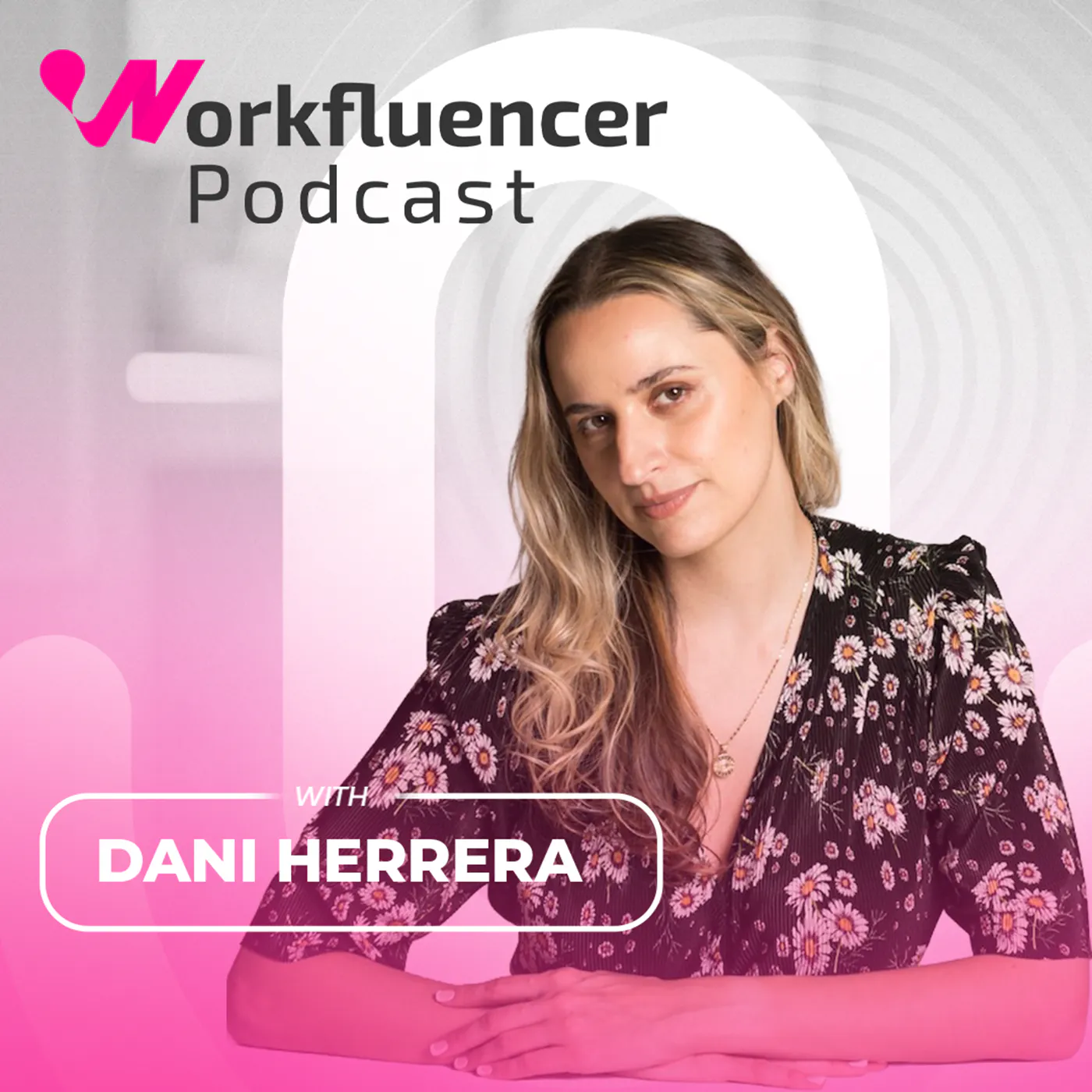
 How Dani Herrera Turns LinkedIn Posts Into Clients
Building a consulting business through content sounds simple. In reality, it requires clarity, conviction, and a willingness to say things others avoid.
In this episode of Workfluencer, talent, culture, and DEI consultant Dani Herrera shares how LinkedIn content became the engine behind her consulting business.
Dani didn’t start posting to become a creator. She started out of necessity while navigating the U.S. immigration system and needing to prove visibility in her field. What began as a practical move eventually turned into a pipeline for clients, speaking opportunities, and workshops.
Together, Rhona and Dani unpack what it actually looks like when content becomes your vetting mechanism for clients. They also discuss the tension between authenticity and strategy, why viral posts don’t matter for consultants, and how speaking openly online can filter out the wrong opportunities before they ever reach your inbox.
What You’ll Learn:
- Why LinkedIn content is a powerful client acquisition tool
- How consultants can share expertise without “giving everything away”
- The difference between posting to an audience vs speaking with your audience
- Why small, relevant audiences often outperform viral reach
- How Dani turns workplace experiences into daily content
- The role of content in pre-qualifying clients and opportunities
- Why HR and talent professionals can’t afford to stay silent online
If you’ve been playing it safe with your content, this conversation will challenge how you think about visibility, credibility, and building a personal brand that actually drives work.
Resources Mentioned
- If you've been wanting to post more consistently on LinkedIn, try Stanley for FREE - https://stanley.stan.store/?ref=rhonabarnettpierce
- Visit Dani’s Website: https://www.deibydani.com
- Subscribe to Rhona's Newsletter: https://link.rhonapierce.com/newsletter2
Connect with us
- Connect with Dani - https://www.linkedin.com/in/danielagherrera/
- Connect with Rhona - https://www.linkedin.com/in/rhonabarnettpierce/
Want to turn your team into creators?
Visit workfluencermedia.com to learn how we help companies build video-first content systems that attract, engage, and retain talent.
FAQs
How can consultants use LinkedIn to attract clients?
Consultants can use LinkedIn to share insights from real work experiences, comment on industry trends, and demonstrate their thinking. Consistent content helps potential clients understand how you approach problems before they ever contact you.
Do you need a large audience on LinkedIn to generate consulting work?
No. A smaller audience of the right people is often more valuable than viral reach. Consultants benefit more from decision-makers seeing their content than from large but irrelevant audiences.
What should consultants post about on LinkedIn?
Consultants can create posts based on client work (without revealing confidential information), workplace observations, industry trends, or lessons learned from projects. Everyday experiences often make the most relatable and engaging content.
Can posting strong opinions online cost you clients?
Yes, but it can also save time by filtering out misaligned clients. Clear viewpoints help the right clients identify you as a good fit while discouraging companies that may not align with your approach.
How often should professionals post on LinkedIn to build a personal brand?
Consistency matters more than frequency. Some professionals post several times per week, while others post daily. The key is maintaining a rhythm that allows you to share thoughtful insights regularly.
How can HR and talent professionals use LinkedIn to build a personal brand that generates clients?
HR and talent professionals can build a personal brand on LinkedIn by sharing content rooted in their actual daily work — interviews they’ve conducted, patterns they’ve noticed in hiring, training moments that revealed something real. The mistake most professionals make is waiting until they have a polished perspective before posting. Dani Herrera started posting on LinkedIn out of necessity while still in corporate, using a simple routine: coffee, computer, whatever is top of mind. Over time, the consistency of showing up and speaking in her own voice created the foundation for a consulting business. For HR professionals still in corporate, there is still room to signal where you stand and what you value in a way that builds long-term visibility without jeopardizing your current role. The most important thing is to start, because your personal brand will outlast every job you will ever have.
linkedin content strategy, personal branding for consultants, linkedin thought leadership, content marketing for consultants, building a consulting business online, HR content creators, DEI thought leadership, linkedin visibility for consultants, consulting business development, personal brand for HR professionals, workfluencer
Learn more about your ad choices. Visit megaphone.fm/adchoices
Rhona Pierce (00:00.13)
The worst advice creators get about building an audience is,
Dani Herrera (00:04.46)
Be authentic. I think that my content, it's another layer for clients and people and audience in my network to either self identify and say, OK, so this is a person that I'm really interested in working with or to self eject, right? Like, my God, this is not someone that I would ever want to be connected.
Rhona Pierce (00:25.976)
Has your content ever cost you something like a client, an opportunity, a relationship?
Dani Herrera (00:31.726)
sure it has, but I don't know.
Rhona Pierce (00:34.35)
Content is my number one vetting mechanism. don't want to get on a discovery call with someone who's not going to hire me anyway.
Dani Herrera (00:41.536)
I also created my content in a way that really reflects who I am, how I speak, how I approach the content. I know that this is a very privileged take on my end, but we live in a time and a space that we cannot afford not to share our thoughts openly. Something that I'm working on is putting together a...
Rhona Pierce (01:01.71)
What's next for you?
Rhona Pierce (01:08.77)
There's the version of DEI content that gets likes and head nods. And then there's what Dani Herrera posts, the kind that calls out broken systems and starts real conversations. She's built a consulting business by being unfiltered online. And today we're talking about how that translates to clients, workshops, and actually getting paid for the work. Dani, welcome to Workfluencer.
Dani Herrera (01:33.913)
my god, thank you. I'm so excited to be here today.
Rhona Pierce (01:37.294)
So, for those who haven't met you yet, what's the Daniel Rera story in 30 seconds?
Dani Herrera (01:43.808)
for 30 seconds. All right. So I am a talent culture and DI consultant. I've been in all things talent for almost 20 years. I don't want to do the math anymore because I'm old. But I do a lot of work. My goal is to make workplaces work for every single person in the
Rhona Pierce (02:07.342)
I love that. And we've been connected for many years, but we finally met in person last year at breakfast and it was- Last year, And it was an amazing time. So I'm excited to have you here. So let's start. What made you start creating content on LinkedIn?
Dani Herrera (02:27.438)
So for me, it was out of necessity. I'm not gonna lie, I'm not gonna sugarcoat it, but what you see is what you got here. It was out of necessity. So I was in a moment in my career where I actually needed to build visibility and a process online, just to give you a little bit more context. You know this, but your audience may not. I am an immigrant here in the United States.
And for the work visa that I had at that particular time, I had to demonstrate how extraordinary I am in my field. Those are the government words, not mine. And one of the ways to demonstrate that is, you know, by getting press and speaking engagements and media and being out there, right? Like having people know my name that are completely outside of the company that I was working at.
And at the time I was working in DI and talent operations and I already had a very, long career in recruiting. So I was like, how do I make this work? Because I didn't know anyone in journalism or, you know, like anyone that would hand me an award just because of it. And I was like, I'm already on LinkedIn. And
In my previous life, I used to have a blog, so I was like, why don't I combine those two things? So that's how I started. Again, it was out of necessity and it got me to where I am today. So I'm very grateful to LinkedIn, honestly.
Rhona Pierce (03:57.516)
Yes, everyone knocks LinkedIn, but I mean, it's helped. I get it. Was building a business in all of that? Yes, you wanted visibility and all of that, but was building a business from it ever the plan?
Dani Herrera (04:14.313)
Not at that moment. No.
Rhona Pierce (04:16.566)
If you've made it this far into the episode and you're not subscribed yet, now's a good time.
Dani Herrera (04:21.998)
As many other people, especially in my field and anything talent related, unfortunately, I was laid off a couple of years ago. And I was at a point in my career where I knew that jumping to another corporate job was not necessarily what I wanted. And I already had, you know, like a good thing going with my visibility. So I was like, OK, I'm going to jump into the consultant train and see what happens.
This is what I've always wanted to do. And I'm doing it now. I don't know if it's good or bad. I am trying. But the one thing that I know is that I wouldn't be here without putting together the content. That's how my clients find me. So yeah, it wasn't a plan, but it's working now.
Rhona Pierce (05:13.866)
And we'll get into the specifics of how your clients find you and all of that later on. But I want to know, has your content changed over the years or like have you always shown up the same way?
Dani Herrera (05:28.958)
No, it has. It has. for the first year, year and a half, and we're talking about like 2020, 2021, I was still working in corporate. I was still working for a company. I was still naming the things that needed to be said, especially at the time, especially working in DEI, but I was still trying to play it, you know, like kindness.
safe because again, I had a boss, right? And I was working for a company. And also at that time, I don't know if I had found my voice just yet. And that kind of developed as I created more content and as I understood, you know, like what I like doing, what is it that my audience resonates with.
And that is something that I'm still doing today. Like I am not a social media marketer. I am not a community manager. So I try things and if they work amazing and if they don't, I'll try something else. But yeah, I evolved quite a lot. If I look back to my content from 2020, 2021 and 2022, they are very different. Like you can still see, you know, like my voice and my authenticity in there, but it's just like,
I am speaking to the audience, but not necessarily with the audience. And I think that that's the major shift that I did just maybe a couple of years ago.
Rhona Pierce (06:57.73)
How did you come to realizing that you needed to make that shift?
Dani Herrera (07:04.712)
know if I did. I don't know. mean, there was no, you know, like moment that I was like, okay, I need to change things. I think that two things happened at the same time. First and foremost, I was laid off, right? So I had a little bit more freedom on how to say and express things. And then I started to take this a little bit more seriously, right? I realized the power of creating content as a means of
getting work, getting clients, getting awards and all of those things. And doing what I was doing was not cutting it anymore. So it's like, I'm already doing these things outside of my content. Like whenever I have a conversation, the conversation that we are having, this is how I speak. Why am I not doing the same thing on my content? So that's what happened, but it wasn't like...
a number or a metric that I saw and I was like, my God, this is doing awful. No, don't. I don't even know what my numbers look like at any given point.
Rhona Pierce (08:10.99)
Love that. So a lot of consultants are told give value by teaching their frameworks publicly. And I know from your content that you've taken a different approach. How do you think about what to share versus what to keep for clients?
Dani Herrera (08:29.996)
I don't. And again, I know that someone with marketing experience might be looking at me and might be going like, my God, what are you doing? I don't know what I'm doing. So I'm just gonna be very open and honest with everybody. This is not my job, right? Like I'm not a marketer. So my approach, what I want to do again, my goal in life is making sure that everybody, because we all have to work, right?
So my goal is to help companies do the best they can so employees can do their job in the best way possible. And then we ask talent that we are entering workplaces that are inclusive and that there are workplaces where we want to stay. And if I'm gatekeeping that information, we are not going to get anywhere. And if I'm, you know, like.
shied away from how we should be having these conversations or if I'm having the conversations in language that no one will ever understand. That's not going to be helpful for anyone. So again, there is no plan. If you are looking for someone who's planning their content, I am not that person.
Rhona Pierce (09:47.246)
No, I mean, and that's the majority of people because I actually posted something today. It's like you're a business owner. You're not a content creator. Yes, there's lots of people who like me are content creators. I'm also a business owner, but like I part of what I do is being a content creator. So you have the strategies, you're looking at stuff, all of that stuff. But most of the people out there are doing it in support of their business or visibility or stuff like that. And they're not marketers.
Dani Herrera (10:19.005)
100%. This is honestly just like a tiny piece of what I do every single day. Yes, it is my main tool for visibility. Yes, it is the tool that I use. Yes, I do have, you know, like a routine I post every single day, but I don't have any plans about what is it that I'm going to be talking about that particular day. So, yeah.
Rhona Pierce (10:45.304)
So talk to me about that. What's your routine like? tomorrow, well, today's Friday, but let's say tomorrow is Monday. You wake up, what's your routine? How does the post that we see end up on LinkedIn?
Dani Herrera (11:01.568)
tell you and people will say that I'm bananas, right? So I wake up, I have my cup of coffee, I bring my cup of coffee in front of the computer and I write whatever it is on my mind. Like there are weeks that is way easier, right? Like there are things on the news, there are things on our mind, you know, like the world is the world that we live in right now. So I never run out of content, right? But let's assume that
for whatever reason, have absolutely nothing to talk about. Like we wake up tomorrow and we are living in an ideal world and nothing happens. There are still things that we do in the workplace that are not necessarily the things that we should be doing to welcome new talent or to retain the talent that we already have because we've been doing things in the same way for decades and decades. So.
and the days that I literally have nothing to talk about. Like I think about like anything that I've done in the past, an interview question, something that a candidate told me, something that a hiring manager told me, something that I went through with a manager during the training last week. And I'll turn that moment into a post. Like literally every single thing that we do, I can break it down and I can create something out of it.
Rhona Pierce (12:21.172)
Yes, yes. And that's a big part of why your content resonates because it's like, it's real, it's it's timely because when it's talking about something that's happening, or it's something that most people can either be like, I've seen that happen. my gosh, I've done this type of thing. And it starts conversations.
Dani Herrera (12:42.508)
Yeah, and that is also my goal. It's just like, this is what we do. This is what we face every single day at work, outside of work and the conversations that we have. Like, I'm not trying, you know, to sell something that I don't do. I am trying to help you be better at work.
Rhona Pierce (13:02.976)
So like when you share these things that call out broken systems, whether it's DEI, culture, HR, what are you hoping happens on the other end?
Dani Herrera (13:15.052)
The altruistic part of me is always thinking about the fact I hope that the person who needs to read this today reads it, comprehends it, and does something about it. Like if we are talking about, I don't know, like an interview question that you've been asking that is very biased, like I'm really hoping that it reaches the recruiter that it has to reach.
and that they change their behavior. That is the altruistic part of me. I want to change the world. The business owner in me is like, I am really hoping that the company that is going through this right now sees this, learns.
the lesson that they have to learn from me, but also realize that there are other things that they have to fix in their process or the system or the company or their team and that they reach out to me. And that has happened many, many times. So I have those two things like battling in my mind every single time.
Rhona Pierce (14:17.47)
Amazing. So let's talk a little about the other side of your content, the workshops and the trainings that you deliver because that is content. What's your process for building those?
Dani Herrera (14:29.614)
Ooh, that is, I love it. the main thing that I'm gonna say is even when I am teaching or doing a workshop in the exact same topic, not two workshops will be the same. So the way that I approach it is I build everything from scratch for every single one of my clients. The frameworks that I'm gonna teach them, they're gonna be different.
from client A to client B because there is no one size fits all in the work that we do. They're dealing with different things. They might be using different language. They have different needs. So the very first thing that I do is I do as many of us do, we do an intake call. And during that call, I am trying to assess what is it that they really need. Most people, especially in talent, we think that we know what the problem is.
And then when we start having a conversation, we start, you know, discovering other layers, right? So I try to do that. And then what I do internally is I do a pain point map. And basically what I'm doing is I'm trying to parse the needs that they have and the things that I have identified that they maybe need or the things that they will need in the next six months or a year or whatever that is. And then I build a fully tailored workshop for that particular.
And in that case, I might be using frameworks that I've created in the past, or I might be doing something completely new for them. So that's how I approach it. And then I do not end it at the workshop session. One of the things that my clients love is I send them a full takeaway guide that it's usually between 20 to 40 pages long, depending on the topic and depending on how long the workshop was.
And the takeaway guide is not a summary of the workshop. It does have information of the main frameworks that we talked about, but it also has exercises and prompts and templates and things that they can actually use and implement all of the things that we learn together. Because otherwise I have a background in education. I know that if we do not practice the things that we learn, we forget about them. So I want to make sure that they learn something with me.
Dani Herrera (16:57.122)
that they implemented, that they practice it, and that they can actually implement it in their day to day.
Rhona Pierce (17:02.594)
is amazing and that is so different because I mean not to knock anyone but a lot of people give the same exact workshop or the same talk at every single company and that might work depending on what type of workshops you do but when you're doing something like what you do it has to be custom so that's amazing that you do that.
Dani Herrera (17:23.916)
Yeah, it does have to be custom. I'm not a fan of copy-paste type of, you know, presentations or workshops or talks. That's also one of the reasons why I stepped away a little bit from keynote speaking or speaking as a whole. I still love it. I still do it. I love going to panels and doing all of those things. But I really want to make sure that whatever it is I'm putting out there, it's going to help the other person. And I don't know if I can do it with one very general topic.
Rhona Pierce (17:54.862)
I get that. So on LinkedIn, you can say whatever you want, right? You own your own business, but in a training room, you've got a mixed audience. There's different backgrounds, different levels of openness to these conversations. Let's be honest. How do you navigate that?
Dani Herrera (18:11.63)
I do the same thing. So one of the things that I talk about with my clients and the very first conversation that we are having is, of course, we are assessing each other, right? And one of the things that I do want to know is I want to learn a little bit more about the audience, who's going to be in the room, like what is it that they need and what are the things that work for them and what are the things that do not work for them, right? Because I also want to assess
if I am the right person to be in front of that audience or that employee base or whatever that is. And so far it has worked. I have had clients who, and I am not lying, I'm not going to name any names, but I very recently had a client who couldn't stop saying the word that they had a PTSD from the training experiences that they've had in the past.
And it had nothing to do with the content, but it had a lot to do with the approach to the content. They've had trainers in the past who were, you know, like more in the lecture mode and they were not as engaging and all of those things. And if I have a client letting me know those things, I know what I can do for them. And I know that I will be the person for them, right? Because I will have my workshops.
They are the same thing as the conversation that you and I are having right now. I do not come in as, know, like, I am the expert and you have to listen to me and if you don't, you're doing things wrong. I'm having a conversation. I'm going to push you. I'm going to ask you questions. And if the client is looking for something different, I will be the first one to say, I am not, I am not the person that you're looking for.
And if they've read my content, if they follow me already, they kind of know what to expect already. So they kind of self, you know, eliminate from the...
Rhona Pierce (20:11.83)
is great and a great part, like the benefit of content. But have you ever had someone like see your content, which is really, it's very specific. Like you can tell what you see is what you get. But have you ever had someone come to you say, I want you to do a workshop, but can you tone it down?
Dani Herrera (20:32.866)
I did, and it was not an experience that I would take on anymore. So for a little bit more context, it was not a direct client. So one of the things that I do is I sometimes collaborate with a larger company that does trainings and workshops. So they subcontract me to work with some of their clients and they needed something for Hispanic Heritage Month. And we had the intake call, you know, just like a 15 minute call, just you
make sure that we are all aligned and everything went great and they wanted to move forward with me. And after I had the entire presentation ready for them and I sent it over so they had it, they were like, my God, we don't like you saying these words. They didn't even want to say the word, you know, like biases or equity or inclusion. They didn't want to use any GIFs or any pop culture references. And those are things that I would screen
in the very first conversation, but in this case, I couldn't because they were not my direct client. So I did it. It went well. I had to tone down a lot of the things that I do. I wouldn't do it again. And I actually had to have a conversation with that company. was just like, this is not something that I can do and not something that I want to do because I'm doing a disservice to the audience as well. This is clearly not what they were hoping for.
and this is not the language that they speak. So there is a misalignment there. So yeah, it happened only once. I learned my lesson. Not going to do that.
Rhona Pierce (22:09.58)
live and you learn, but it happens. So let's get back to your LinkedIn content, your public facing content. How do you know your content is actually working? like, has there been a moment where you saw direct proof of that?
Dani Herrera (22:26.446)
So, of course, when I get client requests, 100%, that's one-on-one. But the thing that I actually love and that actually shows me that I'm making a tiny difference in the world is getting DMs by random people that I've never met and never talked to in the past, letting me know, my God, I just read your post. It was great. I learned X, Y, and Z.
This morning, literally this morning, I got three messages from the post that I created yesterday, which was talking about ERGs and how we should be putting together and advancing ERGs moving forward, especially in the situation that we are in right now. So that's how I know that my content is working. I am clearly reaching someone and I'm clearly showing them something that they didn't know. that's that.
for me, you know, makes my morning every single time that I get one of those.
Rhona Pierce (23:24.814)
Have you ever had a client come to you and be like, I saw post X and I want you to come work or do something?
Dani Herrera (23:37.218)
yeah, like most of them, honestly. Like I would say maybe about like 70 % of my clients come through that way. Maybe they don't necessarily reference a specific post, but they do mention like, I've been following for so long or I saw you speaking about X, Y, and Z, please come do this. And it's literally happening right now. I'm in talks with Pinterest.
for their Women's History Month event, and that's how it came to be. So I know it's working. I might not have the biggest engagement numbers in the world. I am not one of those LinkedIn creators that go viral every single day, but I see the impact in so many other ways.
Rhona Pierce (24:25.492)
Yeah, I think a lot of people lose sight of that if you're doing it for to grow your business, or even if you're working in corporate and you're doing it to grow your visibility, like you were to get press or things like that, going viral and like having all of these things that you see the bigger creators do, isn't what you should be targeting. Like your your goals are different from that of someone who's trying to prove to brands
A million people are going to see this post, so pay me to post.
Dani Herrera (25:01.006)
100 % because again, that is not my job. I am not an influencer, right? If I were, my goal would be different, right? Like I would be trying to get as many eyes in my content as possible. My goal is different. So I much rather have the right eyes on my content than the wrong eyes, right? Like I much rather have a small audience of 500 people reading my content.
every single day and engaging with it and identifying me as the expert and DI in culture and talent than having five million people and none of them can actually tell me what is it that I do. So I see my content a little bit differently than an influencer would.
Rhona Pierce (25:48.384)
as you should. So on the flip side, has your content ever cost you something like a client, an opportunity, a relationship?
Dani Herrera (25:57.994)
sure it has. But I don't know it. So let me let me guide you through my logic. I've already told you that I think that my content is, you know, it's another layer for clients and people and audience and you know, my network to either, you know, self identify and say, Okay, so this is a person that I'm really interested in working with or being in the room with or whatever that is, or to self
eject, right? Like, my God, this is not someone that I would ever want to be connected with. So I had never had someone telling me, you know what, we were kind of wishing that we could bring you in. But after you posted X, Y and Z, we changed our minds. That has never happened to me. But I'm absolutely sure that companies out there are, you know, like self rejecting themselves without me even knowing.
Rhona Pierce (26:55.054)
I mean, to me, that's the beauty. I don't want to waste time. Like my content is my number one vetting mechanism. don't want to get on a discovery call with someone who's not going to hire me anyway. Just like when I was doing this as an employee, I didn't want to get interviews at a company that wasn't going to hire me. That's why there's always that conversation that goes in LinkedIn. And it was around last week of like,
should you post your photo? Because companies are racist at some people. but it's like, no, no, no, I want them to see me. And I learned this the hard way. I went through like seven interviews at a company and it was back before Zoom and it was all phone interviews. And when I walked in the room, they flew me to a different state for an interview. And when I walked in the faces and like what they said, they're like, your voice doesn't match how you dress.
Dani Herrera (27:41.895)
God, I am so.
Rhona Pierce (27:50.636)
I was like, yeah, girl, I know exactly what you were thinking.
Dani Herrera (27:55.065)
I know, I know. So that's why I also like, you know, creating my content in a way that really reflects who I am, how I speak, how I approach the content and the topics that I'm going to approach it, right? Because it is a pre-screen. If we're talking in recruiting terms, it is a pre-screen. It's the screen that you are having with a recruiter, right? Like you already know what you're going to get.
We can talk later about how we are going to do it and what the deliverables are going to be, but you already know who I am before you even met me. So that is my goal.
Rhona Pierce (28:35.628)
I love that. for someone listening who's been playing it safe with their content, what would you want them to know?
Dani Herrera (28:43.672)
So I know that this is a very privileged take on my end, but we live in a time and a space that we cannot afford not to share our thoughts openly and not to share where we stand, especially when we work in talent, in HR, in DEI, right? That is something that we cannot afford.
Yes, of course, again, this is very privileged. work for myself, so I don't necessarily have a boss and a manager telling me, oh my God, why did you say that? But there are still ways for you to signal and to talk about the things that matter to you and that matter to the work that you do in a way that is, you know, like a little bit more aligned with your brand or your company's brand as well. I think that, again, we live in a time and a space where we cannot afford
to stay silent, not only because the world, but also because we cannot afford not to have a personal brand. The job that you have today might not be the job that you have tomorrow. And your personal brand will stay with you and will grow with you no matter what is it that you do next. And the same way that my voice changed back in 2021 until now.
That is what I'm hoping that more HR and talent professionals do a little bit more of because we cannot afford not to have a brand anymore. Our resume doesn't cut it anymore.
Rhona Pierce (30:21.002)
Yes. And I mean, it blows my mind that we're not at the forefront of this because we're the ones hiring you absolutely. And like anyone who tells me they don't look at anyone's social media or they don't you're lying. Sorry. I'll tell you that to your face. Don't exactly. It's like you're lying. Let's get that over with you at a minimum. Look at their LinkedIn. I know you do. So what why do you think
other people aren't doing the same thing for you. It's not optional anymore.
Dani Herrera (30:55.31)
And it's not optional. it's also like if you work in talent, it is also a marketing attraction tool. It's a talent attraction and talent engagement tool. It's an employer brand tool. So it is there and it's free to start. We're all going to make mistakes. Like, again, if I look back at the content that I was doing in 2021, my God, that was something, right?
But you learn and you grow and you evolve and your personal brand grows and evolve with you. And tomorrow you might be doing something else and tomorrow you might want to attract, don't know, a different sort of candidate or a different type of client. And you already have the foundation. So, yeah, I don't think we can afford not to do it.
Rhona Pierce (31:41.09)
Yeah, and I want everyone listening or watching to really take from what Danny just said. It's OK. It's going to change. You have to put something out there. It will evolve because you're humans. You're not the same human you were last year. So your personal brand isn't necessarily going to be the same exact thing. I think a lot of people get scared of that, we have to get it right. It doesn't matter. Like, go back to my content from 2019.
It's absolutely, I'm not talking about the same things that I talk about now, and that's fine. So Danny, if you've ever watched the show, you know there's always a rapid fire segment. today it's time for say it with your chest. No softening, no corporate polish. I'm going to throw out a bold statement and you finish it with your real take.
Dani Herrera (32:32.654)
Okay, let's do it.
Rhona Pierce (32:34.158)
People who tone police DEI creators are really saying.
Dani Herrera (32:40.622)
And I'm not trying to not say what I'm trying to say. I'm trying to find the right words. We are saying we do not want you in this room. We do not want to hear your voice and we do not want to see your face.
Rhona Pierce (32:59.342)
The worst advice creators get about building an audience is...
Dani Herrera (33:06.134)
You have to be authentic. What does that mean? Girl, yes, you do, but what does that mean? It's not advice.
Rhona Pierce (33:15.278)
One thing you refuse to apologize for online is...
Dani Herrera (33:20.878)
So speaking in the way that I do and sharing my thoughts and sharing my opinion.
Rhona Pierce (33:26.062)
All right, the problem with self-proclaimed allies is...
Dani Herrera (33:31.874)
It's fate.
Rhona Pierce (33:34.926)
What's a hill you will die on?
Dani Herrera (33:43.975)
No DEI in a corporate setting. No DEI does less harm than performative DEI.
Rhona Pierce (33:55.854)
Tell me more.
Dani Herrera (33:59.182)
So we've seen it, right? Like we've seen it in 2020, every company was, you know, like posting the black squares and hiring diverse talent between Emily and our quotes left and right. But they had no plan to back it up, right? So they were able to hire the talent because the talent has already, you know, has always existed.
but the systems that they were hired into were not equitable, were not inclusive. So we know that that people unfortunately left those companies or were laid off or were fired because there was a huge misalignment. So that is one thing in terms of like talent and hiring, but also when it comes to talent development and the way that you treat your talent.
It is less harmful to have a CEO tell you, I do not care about any of these things and we are going to be working following the rules of work of 1950 than having someone saying, oh my yes, yes, we do care. And then the only things that they do is, you know, like Heritage Month events and panels and they bag themselves in the back like, oh my God, I'm doing so much.
work and this is going great. And it's clearly not.
Rhona Pierce (35:28.398)
100%, 100 million percent agree with that. So you survive, say it with your chest. Not that I thought you wouldn't. I knew this would be a great one for you. What's next for you? Like, what are you building right now?
Dani Herrera (35:44.014)
So right now I am happily busy. Women's History Month came in a little bit busier than I was expecting, so I'm super happy about that. cannot take another client for Hispanic Heritage Month for Women's History Month. But something that I'm working on is putting together a training program for managers. And then I have a very robust
training program for ERG leaders. So those are the two things that I'm immediately working on. And then my next thing is I'm actually doing a full rebrand of my company. So coming up soon with all the news and updates.
Rhona Pierce (36:28.364)
I'm excited! Where can listeners find you?
Dani Herrera (36:32.462)
So as of today, because of the rebrand, you can find me on LinkedIn. I spend my entire day in there, so you'll find me in there.
Rhona Pierce (36:41.356)
Right, and we'll add all of the links in the show notes. Thank you so much for being on the show today.
Dani Herrera (36:49.582)
course, I love to thank you so much for having me.
Rhona Pierce (36:52.876)
If you're enjoying the Workfluencer pod, share it with someone who's changing how we talk about work or who should be. And hey, if this episode gave you ideas or inspiration, leave us a five-star review. Reviews help other listeners find us. And honestly, it makes my day. This show is produced by Workfluencer Media. Visit workfluencermedia.com to learn how we help companies build video-first content systems that attract, engage, and retain qualified talent.
That's WorkfluencerMedia.com. Thanks for listening and I'll chat with you next week.
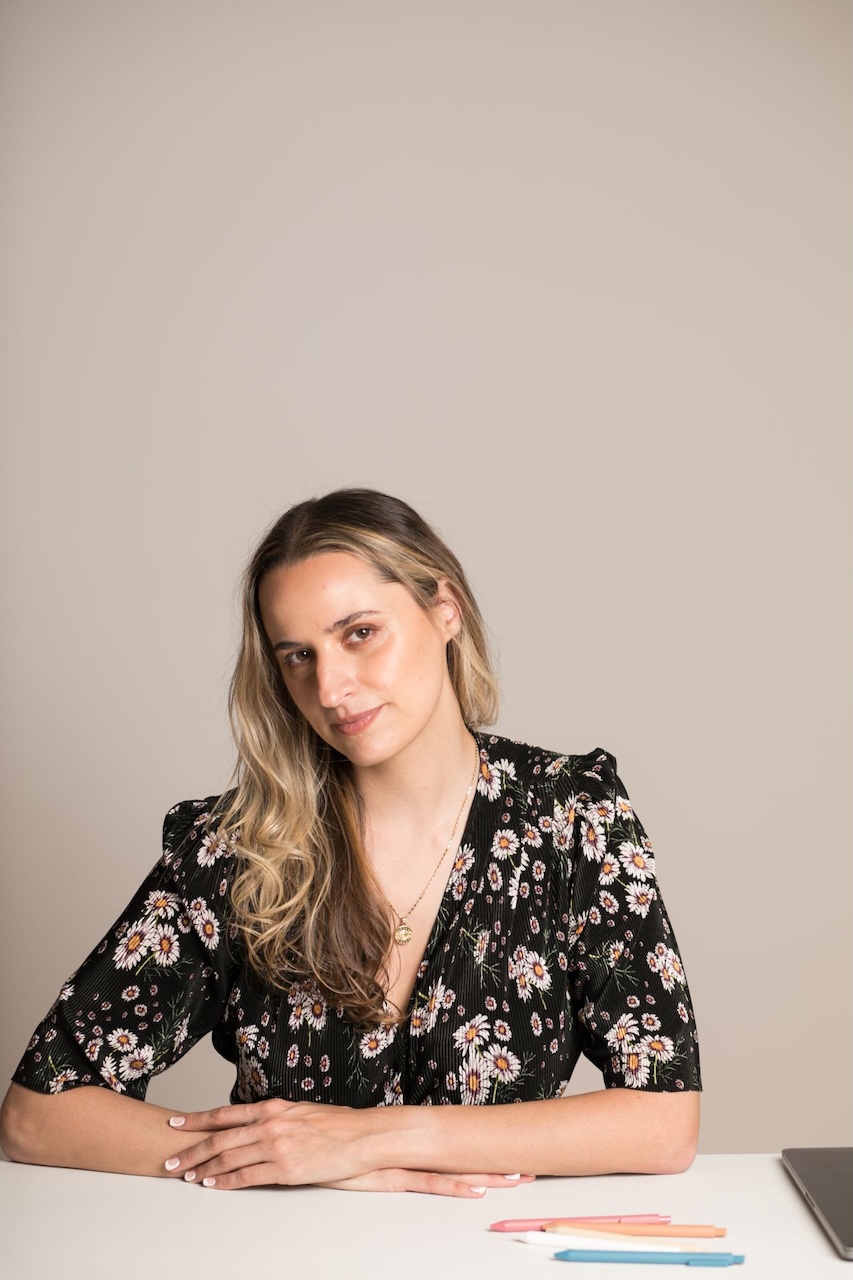
Culture, DEI, & Talent Consultant
Daniela (dani) Herrera is an award-winning, bilingual Culture, DEI & Talent Consultant with nearly 20 years of experience redesigning workplaces to work for everyone. As a Latina Immigrant, dani brings a unique cultural perspective to her work, helping organizations move from performative inclusion to measurable, systemic change. Her expertise spans global DEI strategy, inclusive leadership development, equitable talent practices, and organizational culture transformation. dani's work has been featured in Forbes, Business Insider, Inc., and BBC, and she's been recognized as a Top 100 Latina by Latino Leaders Magazine, a Top 20 DEI Expert in the US, and a Future of Work Pioneer.


