Employee Generated Content Beats Paid Recruiting Ads Every Time

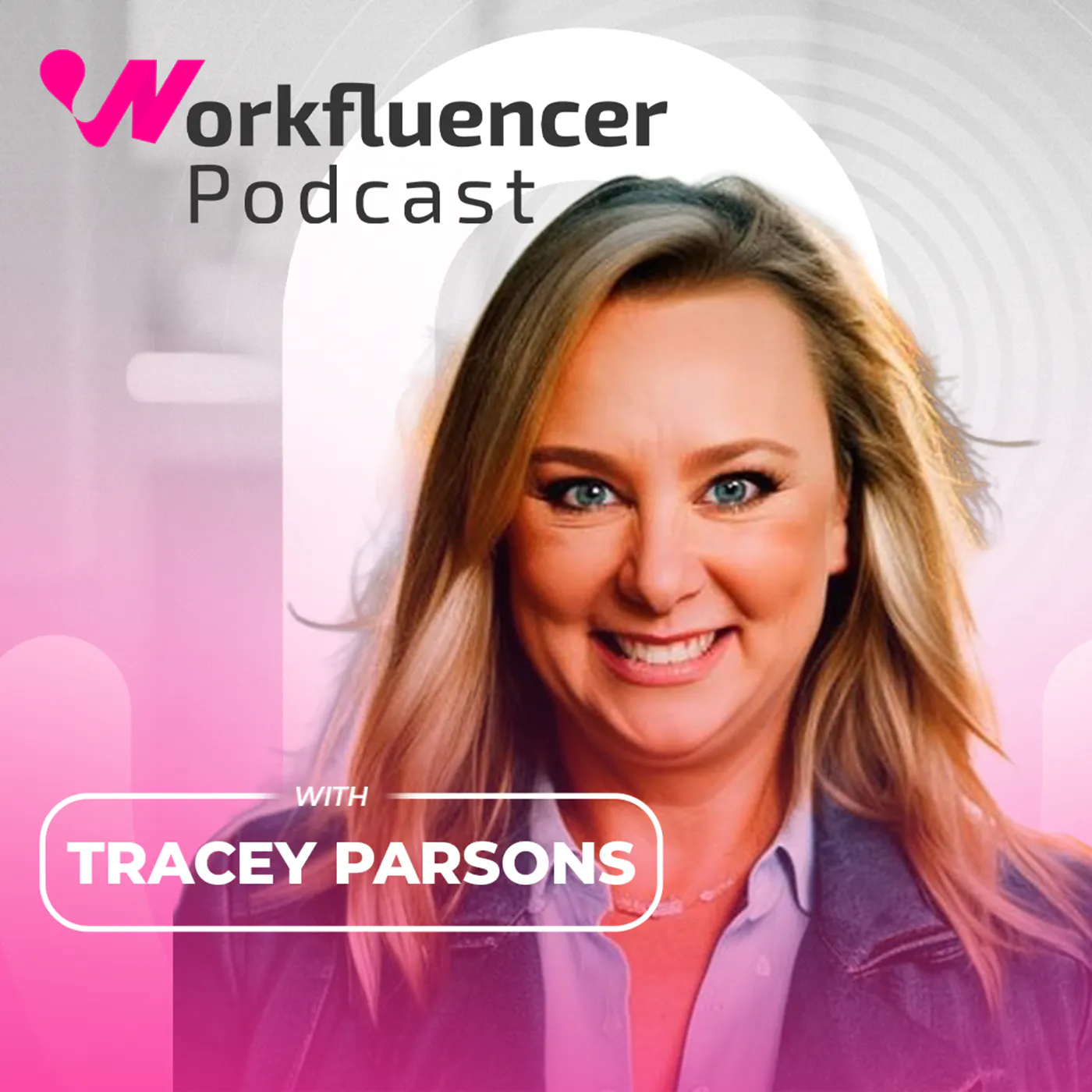


Employee generated content already outperforms every job ad you are paying for — and most companies still haven't figured out why. The real tension here isn't whether EGC works. It's that brands keep trying to control a conversation that's already happening without them.
In this episode, Rhona Pierce sits down with Tracey Parsons, recruitment marketing veteran and founder of Flockity, to unpack why employee voices convert candidates better than any sponsored post or job board listing. They cover the trust gap that kills most advocacy programs, how to activate employees without turning them into walking ads, the difference between employee-generated content and external influencer recruiting, and why the companies obsessed with controlling the message keep losing talent to competitors who let go.
At the core, this episode is about trust. Companies already trust their employees with customers, code, and client relationships. The only question is whether they will extend that same trust to a LinkedIn post. Until brands accept that they never controlled the narrative, employee generated content will stay the most under-leveraged channel in recruiting.
Listeners will hear Tracey's real story from her zero-budget days at SmashFly, where employee advocacy became the number-one source of hire almost overnight. They'll get a practical playbook for starting inside first, data on what Flockity is seeing in the field — including 90% net-new traffic and 13% conversion rates — and sharp takes on why micro and nano creators are the future of talent attraction.
What You’ll Learn:
- Why employee-generated content consistently outperforms branded job advertising — and what the data actually shows
- How to find the employees inside your company who already have the audiences you need to reach
- The two biggest gaps that stop companies from launching effective employee advocacy programs: visibility and trust
- How to prompt employees to create content that is helpful and useful — not just another ad about why they love working there
- When to expand from internal employee creators to external influencers, and how Flockity identifies the right creators for specific job families
- Why nano and micro creators (10K–100K followers) deliver four to five times higher engagement than macro influencers
- How to build a response model for EGC so you are prepared if something goes off the rails in the comments
Resources Mentioned:
- Learn more about Flockity: https://www.flockity.com/
- Subscribe to Rhona's Newsletter: https://link.rhonapierce.com/newsletter2
Connect With Us:
- Connect with Tracey: https://www.linkedin.com/in/traceyparsons/
- Connect with Rhona: https://www.linkedin.com/in/rhonabarnettpierce/
Want to turn your team into creators?
Visit workfluencermedia.com to learn how we help companies build video-first content systems that drive real results.
FAQs
What is employee generated content in recruiting?
Employee generated content (EGC) in recruiting refers to posts, videos, and stories created by employees about their work and company that attract candidates organically. Unlike branded job ads, EGC comes from real people with real audiences. Because people trust people more than brands, this content drives higher engagement and conversion rates than most paid channels.
How do you start an employee advocacy program with no budget?
Start by identifying the employees who already have a social following — even a few thousand followers in the right niche is valuable. Give them tools and prompts, not scripts. The goal is to empower them to share what it is genuinely like to work there, including solved problems, benefits experiences, and daily wins. Close the loop with a simple link to your open jobs so followers can take action.
Why do companies struggle to trust employees with content creation?
The biggest blocker is fear of losing control over the brand message. But companies already have no control over what employees say on Glassdoor, at dinner, or on TikTok. The real question is whether you want to be part of that conversation or just let it happen without you. Companies that invest in response models and trust-based activation see far better outcomes than those trying to control every word.
What types of employee content actually attract job seekers?
Content that helps people do their jobs better consistently performs best. This includes posts about problems solved at work, lessons from a product launch or sales challenge, and concrete examples of company values in action. Benefits stories — like an employee sharing what paid parental leave actually meant for their family — outperform generic 'great place to work' messaging every time because they are specific, credible, and human.
When should a company bring in external creators for recruiting?
Once you have established internal employee advocacy and can see it generating the right kind of traffic and applicants, it is time to expand to external creators. Look for career coaches, software developers, marketers, or salespeople who are already talking about their field online. They do not need to know your culture to drive people to a job — candidates come for the role and convert for the brand.
Are micro influencers better than macro influencers for employer branding?
Yes, in almost every measurable way. Nano creators (1K–10K) and micro creators (10K–100K) deliver engagement rates four to five times higher than macro influencers. They have built highly specific communities of people who trust their recommendations. For talent attraction, this niche trust matters far more than raw follower count, especially when you are targeting candidates in specific job families.
How does employee generated content outperform traditional recruiting job ads?
Employee generated content outperforms traditional job advertising because it operates on trust rather than interruption. When an employee shares a post about solving a problem at work or a real experience with company benefits, their audience already believes them. According to Flockity's data, EGC-driven campaigns are delivering 90% net-new traffic to career sites — meaning the majority of visitors had never engaged with that employer's brand before. Candidates driven by EGC are also spending three times longer on career sites compared to other channels, and converting at roughly 13%. Traditional job boards rely on active job seekers who are already in the market. EGC reaches passive candidates in their natural scroll environment, stopping them at the moment of interest rather than waiting for them to go looking. This makes employee generated content both a top-of-funnel awareness channel and a high-converting bottom-of-funnel driver.
What is the right way to activate employees for content without scripting them?
The right approach to employee activation is empowerment, not scripting. Rather than writing content for employees to copy and paste — which most will refuse to do because it feels inauthentic — give them prompts that spark a real conversation. Good prompts tie back to your company values, actual benefits, or a professional challenge the employee overcame. For example, instead of asking employees to say they love working at the company, ask them to share how a specific benefit impacted their life, or what they learned from a difficult project. The goal is to help employees articulate what is genuinely valuable about their work in their own voice. Providing employees with a simple link to route their audience to open jobs closes the loop without adding friction. The companies seeing the best results are the ones treating EGC as a trust and empowerment exercise, not a content distribution problem.
employee generated content, employee advocacy, EGC, recruitment marketing, employer brand, employer branding, employee influencers, creator economy, talent acquisition, recruiting strategy, personal brand, content creator, thought leadership, professional content creator, HR marketing, talent attraction, social recruiting, micro influencers, nano influencers, employee trust, internal influencers, external influencers, recruitment advertising, recruitment content, candidate experience, employee referral, trust marketing, influencer recruiting, Flockity, Linkity, B2B influencer marketing, HR content strategy, workfluencer
Learn more about your ad choices. Visit megaphone.fm/adchoices
Tracey Parsons (00:00.118)
I'm obsessed with helping companies understand that their message is falling on deaf ears. Exactly. I had zero dollar budget. said, you know what? The best voices that we have.
sit within our walks. I launched a very early employee advocacy campaign with SmashFly in think 2016. And I basically went to the company meeting, I said, Okay, everybody, welcome to the team. You are all now recruitment marketers, you're going to go to LinkedIn, you're going to go to Instagram, you're going to go on any channel that you have. And here's some content to spark the conversation with your network, it quickly became our number one source of hire. A lot of companies don't realize 50 people within your organization that have 20,000 followers on a specific channel. So that's one
gap and then the other one obviously.
Rhona Pierce (00:44.566)
Your employees are already talking about your company at dinner with friends on TikTok. The only question is, are you going to get out of the way and let it work for you? Tracy Parsons has spent decades proving what most companies still resist. People trust people, not brands. And she's built her career and now her company around that truth. Today, we're talking about why your employees are your most under-leveraged recruiting channel and what happens when you finally start trusting them.
Tracy, welcome to Workfluencer.
Tracey Parsons (01:16.216)
Thank you so much for having me. It's good to see you.
Rhona Pierce (01:19.17)
Yes, so for those who haven't met you yet, what's the Tracy Parson story in 30 seconds?
Tracey Parsons (01:25.966)
Well, the Tracy Parsons story is that I've been in the recruitment marketing space since the late 1900s. I've helped all of us get involved with digital from banner advertising to social recruiting in 05 to now working with internal and external influencers.
Rhona Pierce (01:43.528)
it. And you've been pushing this industry forward for a long time. What are you
Tracey Parsons (01:49.964)
My arms are very tired. My arms are so tired.
Rhona Pierce (01:53.752)
for pushing, what are you obsessed with right now?
Tracey Parsons (01:58.082)
obsessed with helping companies understand that their message is falling on deaf ears. And we've spent decades polishing and developing and putting forth employer brand messaging only to see results that aren't resulting. mean, the results are there, but it's not the same as when you're talking to friends over dinner, talking to friends over coffee about what it's really like to work at your company.
Rhona Pierce (02:26.286)
Exactly. then that everyone's talking about employee advocacy now and employee generated content. But for you, you've been doing this for a while. Like, where did that come from? Like, was there a moment that it clicked or did it build over time?
Tracey Parsons (02:42.606)
So years ago, probably a decade ago, I was working with Smashly. I was there, head of the Recruitment Marketing Center of Excellence. And we were working with customers, but I was also in charge of the Smashly employer brand and our recruitment marketing efforts. And I had zero dollar budget to work with because it was a smaller company and it was an emerging startup. And I said, you know what, the best voices that we have sit within our walls.
And they're all connected to people. They're all having these conversations about the work that they're doing, the difference in the change that we're making at SmashFly. Why won't we leverage our own talent to talk about working here? And so I launched a very early employee advocacy campaign with SmashFly in, I think, 2016. And I basically went to the company meeting. I said, Okay, everybody, welcome to the team. You are all now recruitment marketers. And they were like, Excuse me. And I was like, Well, that's what we're doing now.
So you're going to go to LinkedIn, you're going to go to Instagram, you're going to go on any channel that you have. And here's some content to spark the conversation with your network. And so we started getting them talking about what it's like to work there, and then driving to jobs. And it quickly became our number one source of hire, our number one source of... And we've known this for decades, Employee referral programs have always been the number one creator of talent generation.
is having people refer people into the company. So we just created a digital angle on it and helped drive, you know, our employees to the jobs that we had open at Smashly and giving them links to share and, and getting them talking about it.
Rhona Pierce (04:23.982)
If you've made it this far into the episode and you're not subscribed yet, now's a good time. It always blows my mind because every time you like hear it said like that, it's like, well, duh, of course. But it's like, why hasn't this been a thing for longer? Like, why don't companies get it?
Tracey Parsons (04:44.078)
Well, I think there's a couple different gaps. So one of them is that a lot of companies don't realize just how big of a following their employees have. They don't understand the numbers in there. And they don't understand that you probably have, I don't know, 50 people within your organization that have 20,000 followers on a specific channel. And so I don't think that they have that visibility into the names and the accounts and the people that could be sharing.
So that's one gap. And then the other one obviously is the trust gap. Well, what are they going to say? What if they have a bad day? I'm like, well, what if they do have a bad day? They're already going to Glassdoor to talk about it. So like, you've got to start putting these two things together and realize that not only do they have a following that is following your employees, your employees could be activated to be sharing information about your company and sharing jobs about your company.
Rhona Pierce (05:24.013)
Yes.
Tracey Parsons (05:39.192)
But you have to trust them to do it. Like that's one of the gaps that we found in that early experiment with SmashFly. They're like, I don't want to copy and paste the content you've written for me. was like, then don't. Then don't just treat it as a prompt. And we have to start like, if we're trusting our employees with our customers, we're trusting our employees with our code, our marketing, we have to be able to trust them to talk about what it's like to work there. So we've got it.
I have a really good coach that I work with and she was just talking to me today and I've been saying for years, we've got to let it go. And like Elsa and I've come to realize and through this coach, she's like, letting it go is is sad. so she's like, think about it and let it be and let it sit. Right. So let your employees be, let them live.
and they're going to do amazing things for your brand if you just let them live.
Rhona Pierce (06:38.53)
What's the biggest pushback that you get when you walk into companies and you talk to them about doing employee advocacy?
Tracey Parsons (06:46.906)
control. Right? So how do we control the message? And how do we find the right people to be talking about our company? And those are the two big points. Like we don't have anybody that has a social following. I'm like, you're a company of 100,000 people, I guarantee you, there is somebody out there creating content for you. And then just encouraging them to let it be like let them live, let them go out there and talk about it. Because people believe people you said it at the top of the time.
People believe people well before they believe brands. Like how fast do you scroll past an ad? You just, you could sprain your thumb from that activity.
Rhona Pierce (07:26.636)
You're just so trained to like skip over it. You are.
Tracey Parsons (07:30.816)
It just feels, mean, nobody wants to be marketed to. And I remember in, you know, my days coming up in consumer marketing, there was always this conversation of like, how do we get in front of people? And I'm like, we have to change that language instantaneously, because I don't know about you, but I don't want anybody to get in front of me. Right? Like we have to change. We have to bring them in as opposed to put and put ourselves in front of them. You can't put yourself in front of somebody and expect a good reaction.
They're going to trip. They're going to push you. Right. So so start to collaborate with your employees that people already believe.
Rhona Pierce (08:09.048)
I think that's the piece that people miss a lot. People already believe them. Every marketer out there is trying to get in front of people and how can we make this ad not look like an ad? Don't make it an ad.
Tracey Parsons (08:24.622)
Maybe don't make it an ad. I think I saw at end of last year, L'Oreal, the cosmetics company is shifting their entire marketing budget to influencers and creators. Like this is where we're going kids. And the easiest way for employer brands and recruitment marketers to get involved in that is something safe by leveraging employee voices.
Rhona Pierce (08:34.456)
Yes.
Rhona Pierce (08:46.988)
Yeah. And like you said, I mean, so many of us, I always say budget is a trigger word in AI and TA and employer branding, because it's like, there's never any budget. There's never any money for us, anything. But using your employees is it's like, no, I shouldn't say using your employees, but leveraging your employees is such a low cost thing that has such ROI.
Tracey Parsons (09:11.372)
Yeah, and we don't even talk about it as leveraging. We talk about it as activating, empowering. Like if you are empowering people and activating them and giving them permission to go out there and talk about their work, and then you just bear the fruit like this is it is low hanging fruit. It is something that we should all be doing. I had a post on LinkedIn, I think last week or this week where somebody was like, I remember doing this with Hilton and it was so successful. Like, yes, this is doable. Because again,
Their networks believe them.
Rhona Pierce (09:44.482)
What do you tell companies that are still insistent on the, we have to control the message?
Tracey Parsons (09:50.68)
Then enjoy missing out.
That's the reality. You control nothing. You did not control that you woke up today. You did not control anybody that's putting a bad Glassdoor review out there. You don't control anything. You don't control anybody out there talking about your brand currently on the internet. You barely control where your jobs are distributed.
Rhona Pierce (10:16.107)
Yes.
Tracey Parsons (10:17.102)
So you're gonna have to get over it. Or the other option is it gets past you.
Rhona Pierce (10:26.54)
What are you seeing out there that's working as far as like companies that are doing this well?
Tracey Parsons (10:35.134)
well, the one that everybody's talking about of late is Staples Batty. Like if you're not following Oblivion on TikTok, she is that diva is everything. And I think that they just started by going around and making content about planners and printers and calculators and paper and pencils. And then what Staples did that was remarkable was they were like, this is amazing.
Right. And they're they're always commenting on oblivion's content. They're supporting this creator. Right. That is one of the things that I tell people all the time. And if you look at the data, like the data is out of hand. So oblivion has almost 50000 followers on TikTok. Staples has less than 50000. It's a 10x reach of somebody that is entertaining, enjoyable, interesting and clearly loves what they're doing.
And so when you see something like that happening, some brands like back in the day Sherwin-Williams, right? Some brands like, no, you can't do this. We're gonna fire you. And guess what? Somebody else is gonna pick that creator up and run circles around you. And I would say the other, another company that's doing a great job is Travel and Leisure. They have so many people out there creating content about what it's like to work there, whether it's in sales or technology, they're talking about their jobs and then Travel and Leisure
has given them an opportunity to just set it and forget it on an automated link in bio, right? So they're like, great, you're talking about the job, which we want you to do. And now we're closing the loop by driving those people who are following you to jobs.
Rhona Pierce (12:15.37)
That is amazing. I mean, there's just so many examples. I talk to people about this every day, obviously with what I do. And it's like, I'm even seeing in Europe, this is really big. There's so many companies in Europe that are doing it. And I have no clue why the US were behind on that. But there's like Price Waterhouse Coopers. mean, really, PWC Switzerland has like amazing EGC.
Really guys, we all know what it's like to work at a consultant. I mean, I've done it like we all know what it's like to work at these places. I mean, it has their people and people love it. But like, if they're not controlling what's being said, why are we over here with great companies with great perks and just like great places to work trying to control that?
Tracey Parsons (13:11.126)
Yes, and it's just fear based, right? Like we're also wound up in our own like nonsense around like, well, what if somebody says something wrong? Well, what if they do? Chances are they're not going to, but what if they do? So what's your plan? What's your activation plan when something goes wrong? Great, let's talk about that. Great, let's talk about that. But to control it again, it's just gonna pass you by and that's okay. You can make that choice.
Rhona Pierce (13:32.206)
Exactly.
Tracey Parsons (13:40.108)
Life is all about choices.
Rhona Pierce (13:41.74)
What are some examples that you've seen of companies that have those guardrails? Because yes, it is possible that something goes wrong. What have you seen companies do in those cases or have in place?
Tracey Parsons (13:53.144)
Well, I've seen people with really strong response models. So like when you see somebody creating content about their job and somebody has something negative to say, right? Because that's usually what happens. Like employees aren't out there bitching about their job on the public internet. And if they are, you should probably have a plan in place for that. Like, hey, let's talk about this. Let's have a conversation about what's gone wrong. But it doesn't happen that frequently. And when you do have
When it does go off the rails, it's usually in the comment section. And when somebody is having a negative experience, you have a response model. And that response model, I've seen companies have amazing response models that are really grounded in empathy, right? That are like, okay, so this person appears to be yelling. They're not. It's not in all caps, but they have something negative to say. What's driving that negative response? Right?
And then you respond to it based on what the driver of that negative response is. And you work through it in the comments section. But then of course, you'll get into situations like on TikTok where almost all EGC for specific brands is comments off. I'm like, that's not the point. You're missing the point kids. You could actually learn something.
Rhona Pierce (15:09.29)
Yeah, I don't know about you, but when I see someone talking negative, okay, let's go back to like the basics. When you read Glassdoor reviews, it's just a data point. I've never not interviewed at a company because they had bad Glassdoor reviews. It just made me know what I should be asking or looking out for. It's just a data point.
Tracey Parsons (15:34.392)
Well, and I've interviewed thousands of job seekers in my career, and I always ask them about Glassdoor. I always ask them about reviews, right? And so the bulk of them never read reviews. The ones that do read reviews only read the threes because they always tell me the ones are just disgruntled people and the fives are just paid for. And that is exactly how they use them. They use them as talking points and things to dig in on.
Rhona Pierce (16:02.732)
And that's the same thing that happens with EGC. think it's like, yes, you trust the person, but you're still someone who trusts yourself and like you want to have experiences for yourself. So, okay, maybe it sucks for this person to work there. That doesn't mean it would suck for me. like, we really need to let go of that control of trying to like, make sure everything looks beautiful because everyone knows it isn't.
Like everyone knows there's some BS happening at every company in the world.
Tracey Parsons (16:35.914)
It's work, they pay you to show up. Like this is not a hobby. is, I have a famous quote from when I worked at a company once and I was like, you guys, jobs are hard. I'm so sorry you forgot that today. Like you're there because somebody's paying you. You have unique skills and you are doing work. Is it perfect all the time? No, if it was, it would be your hobby.
Rhona Pierce (17:03.886)
So at some point you stopped just advising companies about this and like doing it internally and you actually built something that addresses this. What made you go, I need to make this exist?
Tracey Parsons (17:20.033)
Well, I actually went to a conference about three years ago and I saw the same 10 people talking about the same 10 things we've been talking about for 10 years. And I was like, you've got to be kidding me. Like there's more to be had in recruitment marketing and recruitment advertising. And everything kept pointing again from my days at SmashFly to the modern market of how we discover products and events and news. It's through other people. And I was like, why not jobs? And so...
we just said, okay, let's start talking about influencer, external influencer. And through that experience, our creators asked, could we have like, could you automate some of the sharing for us? And we were like, we can, but it's gonna, we're gonna build this thing for you. And so we built Linkity. And then some of our prospects were like, wait, can we license that for me for our own employees? And so it was, it's just that.
that thing of taking that consulting background, that advising background, and really listening to your customer and listening to your creators and listening to the people who are leveraging your tools for themselves and saying, where are the gaps? How can we make this better for you? And then building against it.
Rhona Pierce (18:32.118)
So for someone who's listening and okay, they're sold, they want to start, where do they start?
Tracey Parsons (18:41.41)
So I think that the easiest place to start when you're coming, when you're talking about influencer, because it is so new for so many brands, is you got to start inside. And when you start inside, the best place to start is either with your recruiters. Your recruiters are probably already on LinkedIn. They probably have some sort of Instagram following or TikTok following. Put information in their hands. Start driving them.
to your jobs and then start exploring who within your company has a following. Like you can go on any tool and start looking at who at your company has 10,000 followers. If somebody has 10,000 followers, start looking at their content. Are they sharing about their job? Are they giving people pro tips? Put a link in their bio, give them a tool to drive them back to your jobs. It's the easiest way to start with influencer is starting in house. Like it just makes sense.
and it's a lot more comfortable. So if you're already doing EGC, close the loop with a tool like Lincolty.
Rhona Pierce (19:41.26)
What type of content are you seeing that's working for people? Because when we think of EGC, or a lot of people think of day in the life, but is there something beyond day in the life that works for people?
Tracey Parsons (19:55.308)
You know what it is? What really gets people's attention is being helpful and being useful. So it could be a video about a problem they solved at their job. It could be a written post on LinkedIn about a problem that they solved on the job and what they learned from that. So if you're out there sharing how you overcame a sales challenge or how you overcame some difficulties in a product marketing launch or a product development launch,
All of those things, making a better sprint, sharing that information with people is really what draws them in, right? You're helping, you're coming from a place of help and a place of usefulness. And as soon as you start doing that, you start amassing followers because you're helpful and you're useful. Like what other reason does anybody follow anybody other than entertainment? And very few people are just naturally entertaining.
Rhona Pierce (20:50.968)
For sure. No, yeah. And I think it's important for people to know, like, when you start this and when you, like, find the employees that you're going to work with, you start activating them and give them the tools and everything to do this. Tell them that it's more than just saying, I love working here, because then you're just activating your employees to be an ad. Exactly.
Tracey Parsons (21:19.95)
Yeah, and I think that's one of the things I remember back in the day I was working with one of the video EGC companies and I was like, let's work on your prompts. Like let's talk about how we're prompting employees to make a video and why are we need to talk about the entire continuum of the account experience like not just what it's like to do this job, but maybe interview tips, right? Maybe there are things that
Hey, this is what stands out at our company as opposed to I love working here for this reason. Nobody believes you. But if you are going to market with an employee that's talking about what's great about working here, an easy one, one of the easiest pieces of content that you can create as an employee is how you use the benefits. I never see that. And I'm always telling people like, if you have a pet insurance policy,
Go get somebody on camera talking about how that really helps them be a better employee because they didn't have to worry about this thing about their doc.
Rhona Pierce (22:25.356)
I remember working somewhere leading rec ops and one of the recruiters was on maternity leave. Then they came back and she was like so excited about like the fact that she didn't have to worry and got everything. And she's like, would you mind if I posted about this? I'm like, you know, I don't mind. Please do. I know. And that post was so beneficial. Like it just people were like,
this is what it means because there's one thing for us to say, we've got excellent benefits and great maternity leave and paternity leave. That doesn't mean anything. But when someone sees a picture of the baby and how she's so grateful that she was able to like totally disconnect and blah, blah, blah, and everything was taken care of. That's what you want to know when you're researching a company.
Tracey Parsons (23:18.766)
hot, right? Like any of those benefits conversations. And I tell people all the time, if it lives on your corporate career site, and it's in some sort of text bubble with a little graphic behind it, that's a story. Right? If you have, you know, your core values, every core value should have a litany of stories behind it, not what the core value is. Nobody gives a crap about that. What they care about is that how that core value
empowers you or pushes you to be better at your job. What that means for you. So there's some really great core values around there like don't screw over the customer. Tell me about a time that you were empowered to really not screw over the customer.
Rhona Pierce (24:04.49)
Exactly. are, I love that. Those are your prompts. They're right there on your website.
Tracey Parsons (24:06.294)
content.
Tracey Parsons (24:11.502)
You've it. You've already written it.
Rhona Pierce (24:16.568)
So there's a lot of talk nowadays about influencer marketing and employee generated content and all of this stuff, right? How do you marry this, right? Okay, you've activated your employees, but now you're ready to take it to the next step and include some external creators. How do you know when it's time for that and how do you go about starting?
Tracey Parsons (24:39.604)
Once you see really good data, once you see what the results are of trusting your employees to go out there and tell your story, once you see that it's generating the right kind of traffic, the traffic that you're looking for, then it's time to expand, right? Then it's time to expand and look at a stable of external creators.
who are already out there talking about the job families that you're hiring for. And that's what we look for at Flockety. We look for career coaches, we look for software developers, we look for salespeople, and they're already out there online talking about their jobs. So it's a very natural extension for them to just say, hey, you guys have got some new jobs in engineering, go check them out. And trust this when I say, they're not gonna pretend like they work for you.
They don't work for you. Everybody knows they don't work for you. So it's not a bait and switch because I've said this a thousand times. There is a hierarchy of work on how people discover work. They come for the job, they convert for the brand and they stay for the culture. And as much as I want to work for Beyonce and if Beyonce you're listening to this, please call me. I can't wait to. Please, Beyonce. We're right here.
Rhona Pierce (25:39.679)
Yes.
Rhona Pierce (25:47.221)
Please be honest
Tracey Parsons (25:51.17)
But if Beyonce doesn't have a job that I can do, I can't work for Beyonce, no matter how bought into the culture of Beyonce I am. Right? So I'm going to convert for the brands and I'm going to stay for the culture. So that's why our creators and that's why most creators that are talking about things on the Internet about specifically about work, they're talking about the job.
They're not necessarily gonna say so and so is this company and this is what they pay. Like they can say that if it's in your job description. Look, honey, people are already talking about your jobs on the internet right now. There are already people out there talking about XYZ brand is hiring, go check it out. Yes. You're just not involved yet. And so you want to be part of that conversation, but always start internal first.
Rhona Pierce (26:41.036)
I love that. I've heard some people have concerns about bringing in external creators to talk about their jobs because they feel that they don't know the culture piece. What do you tell those people?
Tracey Parsons (27:00.078)
Well, what do I tell those people is that show me where you're showing your culture anyway. A, and B, they're not talking about the culture. They're literally trying to redirect their audience to your jobs where they will then do the research about your culture. Like this is, does anybody on Indeed know about your culture when you put a job description? Same, it's no different. It's no different.
Rhona Pierce (27:24.12)
Exactly.
Tracey Parsons (27:29.774)
you know, 30, 40 % of people visit Indeed that are looking for a job, whereas most people are scrolling social media all day every day. So you've got to them where they are.
Rhona Pierce (27:41.792)
Yes, all day every day and meet them where they are. Is there something about this conversation, EGC, IGC, that I haven't asked you that you feel is important for listeners to know?
Tracey Parsons (27:57.198)
I just want to double down on one thing, right? And this is the thing. You're either, you're already being talked about. You're either going to get into this movement or the movement is going to blow past you, right? This is a unique moment in time. This is a relatively new offering in the market for hiring. It's working, right? You're either going to get involved
or you're gonna get passed by and see conversations are already happening about your company, your jobs already on the internet. So do you wanna be part of the conversation or do you want it to just exist without you?
Rhona Pierce (28:39.662)
Exactly. And you've been doing this for a while and you've had companies have success and we don't have to mention specific companies, but a lot of people are usually the block that they have is, don't think this is going to work. Can you tell us about some of the successes that your clients have had using Fluckity and Linkity?
Tracey Parsons (29:00.136)
yeah. mean, if you are hiring in any kind of corporate and professional environment, like if you are talking about software developers, if you need to hire salespeople, marketers, product managers, project managers, amazing. We've got you. Where we're seeing a little bit less success is like retail. We're seeing... We don't see success in retail. We don't see success in food service.
We don't see those successes because there are not a ton of content creators out there talking positively about that job. So we don't do a ton in frontline. We're seeing some skilled trade being emergent. So there's definitely some skilled trade creators out there and we're seeing some success there. But it's really like the people who are not looking for jobs on any given day, they're finding jobs through our creators.
And some of the successes that we're seeing is like 90 % of the traffic that we're driving is net new. They've never been to your career site before. And that blows my mind because we work with some very, very broadly known brands. And I've had this conversation with some broadly known brands and they're like, yeah, I can't believe that people don't think to work with us. I was like, nobody wakes up and thinking that they should go get a job at XYZ Brand. So you've got to...
stop the scroll, you've got to get them interested. then so not only are we driving a ton of net new traffic around technology roles, around sales roles, we're converting it like 13%.
So while it is an amazing awareness channel at the top of the funnel, they're spending three times more time on your career site against other channels. So they're definitely shopping around. They're doing that research that we were talking about about your culture. And then they're converting in a really high clip.
Rhona Pierce (30:55.342)
I love that. talking about some of something that comes up a lot and I've had two episodes that I'll also link to about this, but some companies mostly in beauty and retail because they are the ones that have been doing the influencer marketing thing. They actually pay their employees for EGC.
Tracey Parsons (31:18.794)
is this?
Rhona Pierce (31:19.862)
Yes, Ulta is one. They launched their Ulta Beauties program last year and they've activated and they've seen success with getting customers. And I always think if only these same creators that are driving, because I'm the one scrolling seeing, my gosh, they have this at Ulta. Let me go and spend my money. If I were looking for a job and if this creator also had a link to jobs or also spoke about the jobs. It's like.
Tracey Parsons (31:46.402)
Guess.
Rhona Pierce (31:48.884)
The perfect thing right there.
Tracey Parsons (31:51.352)
It is the perfect thing right there. And they're already like, we've seen it with Staples, Batty, we've seen it with Ulta Beauty. These are actual brand ambassadors who are taking what they're doing in store and putting it out for everyone to see. And they're starting to drive more foot traffic into retail stores. We need to take those same principles and apply it to hiring. And that's all we're doing.
Rhona Pierce (32:14.882)
And I think it's easy for brands to see like, if I'm going to pay my employees, because I do think if you're going to expect people to create content on a regular basis, they should, there should be some sort of compensation because it's, it's, additional from their job unless they're hired to be content creators. Right. But I think companies see it easily like, yeah, we could convert this into clients, but like, how do we make the case for let's also
pay them, maybe you don't have clients that like B2C, right? Maybe it's more B2B and no one's going to go buy a million dollar software from a link. But how do you, how do we sell this to a company? Like we should pay them for doing this EGC.
Tracey Parsons (32:59.966)
Yeah, that's the harder lift, right? Because they're trying to figure out how to do that. And I believe that you should be paying your employees to be sharing things out there. I am sure some of the vendors in our space would completely disagree with me. I'm sure they would be like, Yeah, just send them a gift card. And I'm like, No, no, this is not a gift cardable moment. This is driving applications. This is driving sales.
This is driving customer engagement and candidate engagement and that is worth something.
Rhona Pierce (33:34.936)
Yes, if you pay indeed, I mean, I don't mean to bash them or maybe I do. but if you pay indeed and all of these people for the jobs and the clicks and the stuff like that, why not pay the people who are already, in my opinion, giving you a better quality lead?
Tracey Parsons (33:57.486)
Yes. No, same team.
Rhona Pierce (34:01.934)
So if you've ever watched the show, you know, there's always a rapid fire segment at the end. this month, woman's history month, I'm wanting to ask women that are really killing it out there some questions. So it's time for say it with your chest. No softening, no corporate polish. I'm just going to throw out a bold statement and finish it with the first thing that comes to mind. Are you ready?
Tracey Parsons (34:29.538)
I am ready.
Rhona Pierce (34:30.797)
All right, the worst advice women get about navigating their careers is...
Tracey Parsons (34:38.35)
that it's one size fits all.
Rhona Pierce (34:41.678)
Tell me more.
Tracey Parsons (34:43.2)
So we have families. We want to take care of those families from time to time. We have aging parents. And it's not about a ladder. It's about a lattice. And the assumption that a lot of hiring agents make is that because I've done x, y, things in my career that I want to continue to go up. Sometimes I want to go sideways. Sometimes I want less. don't settle.
Rhona Pierce (35:14.456)
All right, the most overrated platform for professionals right now is.
Tracey Parsons (35:20.78)
LinkedIn.
Rhona Pierce (35:22.614)
Why?
Tracey Parsons (35:24.398)
It's fluff. The algorithm is gone to garbage. If I hear one more, went to the beach and these were my lessons, like, stop, just freaking stop. So it's just getting very, very muddy. I can't decide if they want to be TikTok work or like pick a lane, LinkedIn, be in your lane. And it's very performative and annoying.
even though I'm there all the time.
Rhona Pierce (35:56.236)
same. One thing you're done being polite about is
Tracey Parsons (36:00.15)
almost everything.
Rhona Pierce (36:04.405)
I love.
Tracey Parsons (36:05.526)
Almost everything. I've kind of... I'm just kind of done with it. I will tell... I will shoot you straight. I was in a slightly uncomfortable space last week, taking care of an aging parent. And the team was like, you're very direct. And I was like, yeah, I don't have time to not be direct. So I'm going to tell you this is what it is. And this is how... What we're going to do about it. And this is how I feel about it. And we're going to all make choices based on that.
Rhona Pierce (36:37.26)
Your most unpopular opinion about the creator economy is.
Tracey Parsons (36:42.178)
that brands have power.
Rhona Pierce (36:47.566)
They do not. Who has the real power?
Tracey Parsons (36:50.154)
It's adorable. I just want to pinch their little cheeks when they say things like that. Who has the real power? The creators. The creators have the audience. The creators have the trust. I would love to see if we can start repositioning influencer marketing as trust marketing because influencer kind of has an ugly taint to it now. But I really do think that it is about borrowing trust from people and brands. You can throw all the money you want at...
Some creators, they're never going to want to do your project. And you can find a creator that'll do anything for money that some of them are coin operated. And that's cool, too. There's room for all of us there. But yeah, you don't you don't hold squat.
Rhona Pierce (37:32.43)
All right, last one, Hill You Will Die On.
Tracey Parsons (37:38.001)
Oh, that micro creators aren't the way forward. It's between 10, well, nanos are 1000 to 10,000 and they have, that's the future. It's that 10,000 to 50,000, 10,000 to 100,000. Yeah, their engagement rates are four or five X of a macro creator. Their engagement rates are four or five X of a branded post.
They have the community, they have a voice, they have a niche, they have found the audience that is going to follow and grow with them. And that is the hill I was at. Your best solution is in that nano and micro creator community.
Rhona Pierce (38:20.686)
100 % agree. What's next for you?
Tracey Parsons (38:26.63)
I'm gonna go play darts in a little bit, but you mean like not next. what's next for me? Growing and scaling the shit out of this business, right? So helping more companies see the power of their own employees and to see the power of the creator economy and voices that are out there trusted already. It is going to be nothing but growth and scale for me. And that is what I'm focused on.
Rhona Pierce (38:52.51)
I love that. I've enjoyed this conversation, like every conversation with you. Where can people find you?
Tracey Parsons (38:58.328)
Shamesies girl.
Yeah, Tracy Parsons on LinkedIn that I just got done bashing. am the bringer of sunshine and spice. And my company is floccity floccity.com fl o c k i t y.com. And you can find me in Los Angeles most days.
Rhona Pierce (39:19.662)
Amazing. Thanks so much for being on the show.
Tracey Parsons (39:22.616)
Thanks for having me.
Rhona Pierce (39:24.11)
you're enjoying the Workfluencer pod, share it with someone who's changing how we talk about work or who should be. And hey, if this episode gave you ideas or inspiration, leave us a five-star review. Reviews help other listeners find us. And honestly, it makes my day. This show is produced by Workfluencer Media. Visit workfluencermedia.com to learn how we help companies build video-first content systems that attract, engage, and retain qualified talent.
That's WorkfluencerMedia.com. Thanks for listening and I'll chat with you next week.