How to Write a Book That Builds Authority with Hady Mendez


Writing a book isn’t just a creative goal. It’s a credibility move.
In this episode of Workfluencer, bestselling author and leadership coach Hady Méndez breaks down the real process of turning lived experience into a book that builds professional authority.
We go behind the scenes of writing Calladita No More. What stories made it in. What she intentionally left out. And how the act of writing forced clarity around voice, boundaries, and visibility at work.
This conversation is for professionals who want to write a book without turning it into a personal overshare. And who want their ideas to translate into influence, not just attention.
If you’re thinking about writing a book, this episode is for you.
What You’ll Learn in This Episode
- How Hady turned lived experience into a bestselling book
The behind-the-scenes process of shaping raw stories into a clear message
What she chose to leave out — and why restraint matters in personal storytelling
How writing the book forced her to confront her own visibility gaps
The role confidence and boundaries played during the writing process
How content, authorship, and voice reinforce professional authority
Why not every story belongs online, even when it’s true
How creators can use long-form work to build credibility without oversharing
RESOURCES MENTIONED:
- Buy Calladita No More: https://www.calladitanomore.com
- Get Rhona's Newsletter: https://link.rhonapierce.com/YZEviw
CONNECT WITH US:
- Connect with Hady: https://www.linkedin.com/in/hadymendez/
- Connect with Rhona: https://www.linkedin.com/in/rhonabarnettpierce/
Want to turn your team into creators?
Visit workfluencermedia.com to learn how we help companies build video-first content systems that attract, engage, and retain talent.
how to write a book, writing a book, book writing process, becoming an author, professional authority, thought leadership, personal branding, content creation, career growth, speaking up at work, leadership development, women in leadership, creators at work, building credibility, writing nonfiction, storytelling for professionals, content strategy, career visibility, author journey, workfluencer
Learn more about your ad choices. Visit megaphone.fm/adchoices
Hady Mendez (00:00.106)
It actually is costing me more to sit here in silence than it is to say something and run, you know, take the risk and see what happens.
Your book, Calladita No More, is amazing.
My primary reader is someone in their 20s and 30s who's starting off their career, who identifies as a Latina or woman of color, and who is noticing that her peers are starting to get ahead of her, things that people needed to hear, especially because a lot of people didn't have the lived experience.
Tell me about a time when like turning up your volume actually changed the room.
I got more brave in that space because I felt that people saw me, saw what I was bringing to the table. And if you listen to what I say, then I'm going to say more things and maybe I'm going to have a couple of good ideas. Who knows? You know? So we might be a better team because of it.
Rhona Pierce (00:49.208)
There's a saying in Spanish, calladita te ves más bonita. You look prettier when you're quiet. Hady Mendez wrote a bestselling book and built a LinkedIn following by doing the exact opposite. From staying silent in corporate boardrooms to teaching thousands of Latinas how to turn up their volume, she's redefining what it means to speak boldly while staying safe. Hady welcome to Workfluencer.
Thank you for having me. I'm so excited to be here.
So for those who haven't met you yet, can you tell us who you are and what you do best?
Yeah, so my name's Hady and I am a bestselling author, which is still, it feels fake. It's like when you first get married and you're like, this is my husband and you're like, my God, he was like my boyfriend until the other day. But anyway, so I'm a bestselling author. I'm a speaker and I do a lot of fireside chats and I also host a few shows here on LinkedIn.
And then I am also a coach. I'm a leadership coach. And I love that. That's like my favorite. I think that's my favorite thing to do. I kind of go back and forth sometimes. Like obviously when I was writing the book, writing was like a lot of fun for me. But I think I enjoy coaching even more now. And I love integrating the book into the process. So that's been really fun.
Rhona Pierce (02:04.824)
So I'm so excited to have you here today because you, like you said, you are a bestselling author. Your book, Calladita No More, is amazing. I was just telling you before, I'm reading it and listening to it and I love it. But before you ever wrote Calladita No More, what was the moment you realized being quiet wasn't actually protecting you, it was shrinking you?
Yeah, I would definitely say there were lots of those moments. So it wasn't just like one. I would say it was like, you know, how people say, what is it, that by a thousand cuts type of situation, like it, just, it happened a lot. And, know, over time I was like, there's gotta be like a different way. Like that didn't feel good. It didn't feel good not to say the thing I wanted to say. It didn't feel good that I didn't feel safe to disagree. It, it doesn't feel good that I don't think my
my colleagues want to listen to what I have to say. All those things didn't feel that or if I did, let's say in the off chance, you know, they were small, small times off when I would say something and people would kind of just dismiss it, you know, and they were just like, yeah, let's move on to something else. And I think all of those moments, you know, over time kind of chipped away at me to the point where I think it was like something.
you know, switch. And I was like, you know what? It actually is costing me more to sit here in silence than it is to say something and run, you know, take the risk and see what happens. So, you know, there was a moment where I was like, I'm just going to say it, you know, and I think a lot of those moments were related to like DEI related topics. That's when it really was like, was like, it was in me, it was in my belly. Those were very important moments. Those were things that people needed to hear, especially because
a lot of people didn't have the lived experience. And so all of a sudden I'm the expert and I'm like, you didn't, I didn't talk up before because I wasn't the expert. You didn't want to listen to me because I wasn't the expert, but you can tell me I'm not an expert in being a Latina woman of color and what that feels like in the world. So now I am the expert and now I'm going to have to say something.
Rhona Pierce (04:14.198)
I love that. How was that received?
I guess it depends on the audience. I actually just wrote a post on LinkedIn today because I was promoting another conversation that I had with another content creator. You might know her. name is Gigi Gonzalez, and she's the author of the award-winning book, Cultura en Cash. And she and I were talking about how we were brainwashed in corporate to not say the things that we wanted to say.
and then how we had to unlearn that, and then we had to learn to be brave and bold, and how we now kind of have really stepped into that role in terms of content and the work that we do. So it's been a journey, and it's up and down, and you have to kind of find your footing, because the truth is that it's scary to speak up and speak out. And to answer your question now about, sometimes it felt safe, because...
the context was we were talking about DEI, or we were talking about ERGs, or we were talking about employee retention, or we were talking about representation, then in those moments, it was okay to talk about it. There were other moments where I was having a conversation with a senior sales leader and I'm like, do you realize that you only hire white men to be an account executive? That there has never, you know, I have yet to see anybody other than a white male in that role. Like, are you aware of that? And I had to have that conversation too.
And I only did it because I was in the meeting crying because I was like, I can't believe that like it, no one else sees this. How could no one else see what I see? And the truth is once you see it, you can't unsee it. Yes, you cannot unsee when there is injustice and when there is inequality, you cannot unsee that. And as someone who lives it, and I know you do too, you.
Hady Mendez (05:59.222)
Like we already know, we're like, okay, here we are. We're about to go. We're about to go there. Like someone's going to say something and people are going to try to like smooth it out. And then we're just going to gloss over it we're going to move on to something else. And, you know, I think there's a little bit of responsibility that I feel to be like, wait, hold up before we move on. Let's go back to that comment you made and why that's a harmful comment. And like I said, I didn't always feel comfortable doing it. You know,
Sometimes, you know, I would literally pray about it and be like, God used me to be an instrument of like learning and like growth and so that we could get to a better place because this is not working. Like, this is not good. And, you know, so I had to trust that the possible good that could come out of the comment or what I was raising, the issue I was raising was greater than the risk to me.
and which could have been, know, people could have just told me to be quiet or, you know, maybe I could have been passed over for a promotion. Maybe people could have fired me. I don't know. I'm not sure. guess anything is possible. But like, yeah, you hit a you I think you hit a point where it's like something happens. And then the once that switch goes off, it's like, you know, you get brave. And then if you have good outcomes, you get more brave. And sometimes you get bad outcomes and you kind of like retrieve and then you're like, OK, now I got to be brave again and you got to come back out. So it's like, you know, it's it's a process.
If you've made it this far into the episode and you're not subscribed yet, now's a good time. Talk to me about the, cause a lot of people, always tend to focus on the bad outcomes of the cost of speaking up, but I'm curious about the wins. Like, can you tell me about a time when like turning up your volume actually changed the room? Yep.
Well, with that, was talking about the senior leader who was like only hiring white males to be account executives. And why that was so problematic, there was a lot of reasons why it's problematic. But one of the main reasons that I could see was that on our all hands calls, we always used to ask the account executive to do the customer spotlight. So it was always white males who would have the opportunity to talk. And it seemed, it appeared,
Hady Mendez (08:13.752)
that they were the only ones that knew how to deal with customers. And the rest of us were like chopped liver. And that bothered me because I was a customer success manager and I was a good customer success manager. And I like gave everything I had. And I was, I believe that I was very, I was an important part of the team and why we were winning. And so, but I never got any room or space to talk about what I knew and what I was noticing and how I was doing things differently. And so I had the conversation with him and I'm like, and here's why it's problematic. And he's like, okay.
got it, he received it in the way that I intended it. So that was very important because it has to land well. So he received it and he said, first thing we're gonna do is we're gonna spotlight one of your customers and you're gonna be the one to conduct the interview. So get ready for that. I'm gonna let you know when we're doing that. And I said, amen, let's do it.
You know, that's the other thing, like that be ready because somebody might actually take you up on like the solution because he was like, OK, how do we fix this? And I said, well, here's some things we can do in the meantime. You got to like and I literally told him, I'm like, I don't know if you know you're you're familiar with the organization or I think they're like a nonprofit or networking group called Sisters in Sales. was like, need to you need to go to Sisters in Sales and recruit some people. That's what you need to do. Because, you know, like obviously that was not where they were going. They were I don't know where they were going. But I can only guess where they were going. But.
You know, I said, I put them on to us and go to Sisters in Sales. There's a lot of there's a lot of qualified people in that group. And and the other thing that they were doing is like, OK, we're going to bring them on and they're going to be business development managers and then they'll be customer success managers. And like in five years, they can be. No, we don't. We don't need five years to be an account executive. We could be an account executive day one. Why? Why? In your logic and thinking has led you to believe that we need five years to be an account executive when other people can just walk in and do the job they want.
So that was the other thing. A lot of it was like bias that was, you know, that people bring to the conversation. But anyway, going back to how it was a positive outcome, he was open. I ended up starting a reverse mentoring program in that, in that department. He supported me. told him, you need to be part of it. We're going to do it. You need to be part of it. And I'm going to be your, I'm going to be your mentor. He was like, let's do it. So he was down. He was totally down. And I never forget that I was asked to be part of,
Hady Mendez (10:32.874)
a customer video for one of the company's largest customers. and and yeah, they picked me. They didn't pick the account executive who was a white man. And I remember because I'm a fair person. And I went to him and I was like, hey, I know they picked me, but I want to make sure you and I are in agreement with the things that I'm going to talk about and what I'm going to spot. He's like, you got it. Like you. know I trust you. You got it. Don't worry about me. Do you shine your light? You know, go get yours.
And I appreciated that because I had a senior leader who was open to to, you know, exploring other options. I had a colleague who believed in me and was like really confident in my abilities and who saw, you know, like my potential. And, you know, that that made that led to a different experience for me. And I have to tell you that, you know, I got more brave in that space because I felt that people saw me saw what I was bringing to the table. And when that happens.
then you can say more and you feel safe to say more. And P.S. the group is a better group because of stuff like that because then there's more diversity. There's more, know, people have a greater sense of belonging. People are going to work harder. I was happy to be there. I was willing to work hard because people were listening to me. If you listen to what I say, then I'm going to say more things and maybe I'm going to have a couple of good ideas. Who knows?
So we might be a better team because of it.
And that also helps chip away at that bias because the reason why they think or they were thinking that someone needed five years, someone not a white male needed five years is because they weren't seeing other people do it, come in and kill it and do it without having those five years. So the more that you speak up, the more that you can make change, the more that mentally they start thinking like,
Rhona Pierce (12:27.722)
No, when they go to their next company or when they get promoted, it's like, we don't need the Hidies of the world to wait five years because I remember, I don't know, let's say a name, Emma, I remember she came in and she killed it in the first day. The first week she sold. it's like those little things matter so much more.
became a thought partner for them. They were like, let's ask Cotty and I was like, let's go come ask me anything.
Amazing. So let's talk more about the book and like the behind the scenes of the book. So when you were writing it, walk when you were writing Calladita No More, walk me through the messiest chapter to write. What did you delete? Argue with yourself about or almost leave out?
have to tell you that I got most of it in there. there are things, stories that I left out. I'll have to let me back up and tell you a little bit about my process because I had to be like a little puzzle person behind the scenes. So I made a list of, of the Ferranes that I love the scenes that I love that I wanted to get in. And these things are really important because they're very tied to my roots, to my culture, to my parents, to my grandparents. So like, that was a very, like, I, didn't know what I was writing about, but I knew the
refranes were going in there from day one. So I had the list of refranes. I had the list of stories of things that happened to me that I was like, yeah, I got to talk about this. Some of it was not good. A lot of it was not good. But some of it was. I have a really good chapter. As you know, no, or have you gotten to the end? Okay, then I won't tell you. there's a really good chapter close to the end that you're going to really like. I basically talk about what a good leader looks like. And, and I describe a leader in my life and how
Rhona Pierce (14:00.608)
Not yet.
Hady Mendez (14:13.704)
I learned from her how to be a leader. But anyway, so I had the stories, had the refraines, and then I had to extract the lessons from the stories. So I had to like kind of, so it was like piecing it all together. So then it was like, and then it had to kind of flow a little bit. And it was like, you know, it's not linear, but it is kind of like builds on each other. So, you know, I start off with family, I move on to confidence, I talk about boundaries so that, you know, these are
like kind of very fundamental foundational things as a leader that you need to like consider and you need to be thinking about and you need to cultivate the skill if you don't have it already, you know, build that skill set. So I would say it was that was I wouldn't describe it as messy, but it was just like, oh my God, like, how am I going to piece all this together? And then like I was like, that if Ron doesn't feel like perfect enough, I had to find another if wrong and.
Anyway, it was more fun than anything else. It was just a little bit of a struggle, but once it all came together, was like, wow, this is how I wanted it to be, how I hoped it would turn out. So I was really happy with the stories that I was able to include. There's more stories. Somebody asked me in a podcast, were there some more stories? I came up with like five or six, like right on the spot. And I'm like, yeah, there were more stories. There definitely were. But I think I picked a lot of the ones that
are like me too-ish, which people were like, yeah, me too. Like, my God, that's what happened to me. So I tried to kind of like stay and play in that area because I wanted people to feel seen and for it to be relatable. And as I talked about earlier, I'm starting to use the book with the coaching. And so it's really helpful to be like, these are the, like a lot of the common things that people talk about when they come, you know, for coaching, you know, help. And so I can like direct them and be like, you're having like issues around.
imposter syndrome, I'm going to send you to the confia and you cat chapter because that's where I talk about that. And I think you'll hear a story that's probably going to sound really familiar. And it's been like, yeah, yep, yep, yep. That's how I felt too.
Rhona Pierce (16:22.932)
That's been my entire experience while reading the book. It's been like, my gosh, yes, and you can remember a story. And what I love about the Spanish language and just not so much the Spanish language, but our culture as Latinas is the the refrains, those sayings, because there's always a saying in any I'm married to an American. He doesn't speak Spanish.
But anytime something happens, I was like, there's this perfect saying in Spanish for this situation. And I really wish it existed in English. And when you try to translate it, it doesn't always work. But I love that in the book. And it's like, yes, that's exactly what I was thinking. And I have a similar situation. So who did you imagine reading the book as you were writing it? And how did that shape what you felt safe saying in the book?
Great question. So I worked with a book coach to write this book and not everybody does, you know, but I knew that I wanted to work with the book coach and it was a six month program. So I was in an accelerator program, six month program. The goal was for you to have a draft at the end of the six months. By the way, I had a draft like four months in or maybe less, but I didn't even start writing until two months in because the first two months you're just trying to piece your ideas together and you're like,
What am I known for? What do I want to be known for? How is this book going to tie into my business? What is it that I have to say? What do people ask me about already? So was like, there's a lot of like contemplation and reflection that you need to do upfront. And then you kind of come up with like your personas. So I was like, okay, I'm writing this book kind of for Young Hottie for sure. I actually gave Young Hottie a name. And I said, this is her name. And it wasn't Hottie. It was called something else.
And I said, and here's how old she is and here's how she feels. like my primary reader is someone in their twenties and thirties who's starting off their career, who identifies as a Latina or woman of color and who is noticing that her peers are starting to get ahead of her and she doesn't and she's doing great work and everybody's like, keep doing what you're doing. You're doing great. But she's not getting what they're getting. She's starting to fall behind. She's noticing now.
Hady Mendez (18:39.958)
Like in the beginning, everybody starts off the same. I remember when I first started my my when I started my first job, I worked at Accenture and I remember everybody got paid the exact same number, the exact same number to begin with. It was like it didn't matter if you graduated from Harvard, University of Pennsylvania. I graduated from a local college, Manhattan College in the Bronx. I got paid the same exact money everybody else got paid by year two. We were starting to notice a difference by year three, the same. And so I think
is the primary reader, the secondary reader. For me, what I was thinking was also a Latina woman of color, but a little further ahead in their career. And someone who maybe is like, you know, the system's broken, not much you can do about it, just got to go with the flow. And I'm like, no, you can still live a life that you want to live. And you can still like be content and add value and do work that's meaningful to you.
and have purpose. And I really want you to give yourself a chance to do that. So don't just throw in the towel and be like, well, this is how it is. No, I want you to also have a purposeful life. And so those were my primary and secondary readers. And then after that, anybody who loves us, anybody who wants to know what our experience is like, I mean, I think it's like an interesting read. A lot of people that have read it are like, I only meant to read the first chapter and then I was like 100 pages in before I knew it. So I feel like
It's easy enough that anybody can read it and maybe you take something away from it. I think almost anybody can take something from it.
Yeah, I agree with that. What did writing a book about reclaiming your voice force you to confront in your own life?
Hady Mendez (20:22.016)
Excellent question. And I've talked about this too, because my company is called Boley Speaking. My book is called Calladita No More. I have a sub stack called Hottie on filters in Pelos en la Lengua. All of those are aspirational. I'm trying to be that person. You know what saying? Like, I'm not saying I'm that person all the time, but I want to be that person all the time. I am aspiring. am...
You know, that is my goal is to be the person that just says it. And I talk in the book, I describe myself two ways because I've heard in the early part of my career, people always used to say this is a very nineties term, I think, or maybe 2000 terms. They used to say, how do you such a straight shooter? That was what people used to call me, which I think they meant as a compliment. I took it that way. But they were like, girl, you ain't playing. You just say what needs to be said. And I did used to say what you you know, this is not like
It's not like I was like quiet and then I started talking. I would be quiet, maybe with some people I was safe with, I would say some stuff. so the people that knew me and that were around me and that were with me, they're like, wow, you're a straight shooter. But everybody didn't see me that way because I wasn't like that all the time. I didn't feel safe to be that way all the time. I was like, I felt like I was waiting for an invitation to be like, how do you what do you think? And it was like nobody was ever nobody ever asked me. Nobody invited me to the prom. They were like, you want to come to the prom, show up, you know, get dressed and come on in.
Like there was no invitation. I think, you know, I talk about like, there's no permission needed. You need to claim this and you need to give yourself permission to claim it. This is, there is, I have a whole chapter called Nadia is coming to save you. No one is going to come and be like, let me hold your hand and let me bring you. That's not happening. At least that's not happened. That has not happened in my life. And I have had a over 30 years career and that has not happened to me. And I don't think it will. So it's more of.
you decide, hey, I got something that I'm going to contribute to the conversation. I feel like I have something important to say. Even if you have a question, I have a concern, a question, a curiosity about something. I want to learn more about this thing. Can you tell me more about the data you're talking about? I want to understand the source. It doesn't all have to be that you're adding value. You could just be participating. And I didn't even sometimes participate. And I'm madabarigüenza that I didn't even do that.
Hady Mendez (22:42.648)
But I was so afraid to say the wrong thing or so afraid that they were gonna be like, need to hit that. Who does she think she is? Why is she speaking in this meeting? Who asked her? That was the self-talk that I had and I had to shed that and I had to adapt a mindset that was like, I belong here too. I deserve to be here. I'm smart. I have superpowers. I have skills that you don't have. I have competencies that some people in this room don't have.
And there are some people in the room that are not afraid to talk that don't even know as much as I do. And I had to sit there and listen to them say things that were like not even always correct all the time. And I'm like, wow, wow. You know, they have so much confidence in themselves that they'll even say something wrong and say it loud and proud. And I'm still sitting here in a corner making sure that I have 100 % of my ducks in a row before I say anything.
And I had to change that. Like that just wasn't serving me. And it wasn't also, I think also once I knew that I was not only advocating for myself, but for my communities, whether it's team members, colleagues, customers, an ERG, that's when I also got a little bolder. Cause I was like, this is not even about me. Now, now there's people relying on me and my voice now is speaking on behalf of others. And that's a very important like value for me to be able to advocate for other people.
Was there that specific moment or like a story or something when you realize like your voice isn't just yours. It's like you're it's a permission slip for other people in the community watching you.
Yeah, and that's that's actually an important point about people are always watching you. And I feel like, again, when I talk about like the book, the name of my company, the name of my sub stack, people are always watching me. So it's aspirational. And I have to be living that truth right now. And I would say writing the book gave me a lot of courage. It reinforced a lot of the things like I'm like, we have to show up for each other. Well, that meant that like and I was like, well, that means that as I'm writing this book.
Hady Mendez (24:48.322)
I'm gonna hire as many Latinas and women of color to be part of this journey. So I was like, I got a Latina editor, I got a Latina illustrator, I got a Latina PR coach. My publisher is a queer woman and I'm like, I needed to live that truth all the time as much as possible. And I feel like, you know, I don't know if I'm answering your question directly, but the permission slip. But it's like, you gotta live what you preach in the book.
definitely forced me to do that, to align myself more with what I was saying. I'm like, I can't say these things and write these things and not live these things. People have to be able to look at me and be like, she not only wrote that, but that's how she does. That's how she lives her life. And as much as possible, we're not perfect. But as much as possible, try to really align my values with how I live.
and the intention that I put behind things. that all of that is very important so that people that are watching and people that are noticing and they're like, I also, you know, feel like there were people who did that for me. So I want to do that for other people. There were other people that came that were brave before I was. And I was like, snap. You know, I talk about in the book in one of the very first chapters, the lesson that I learned from my sister. Do you remember the lesson about black women? Yeah. The black community in general. Then I said, I really
have always admired black women because they have been like, I'm like, wow, like they just said that. And I'm like, that means I could say it too. they, you know, like they modeled what good looked like for me. oftentimes were the inspiration for me to be brave in a lot of corporate moments.
That was a part of the book that I really liked because as someone who has both identities, right, I am Latina and I'm also black. Obviously most people, the first thing they see is black. But a lot of us in the Latin community, like forget and we think we're in our own little struggle and we forget that no, no, no, it's not a different team. We're all on this same team. We're all in this struggle. So yeah.
Hady Mendez (27:02.734)
Yes. Yeah, and that I learned that when I was like 10 and I never forget that. like my my sister passed for her children. She left behind four children and they're like, mommy said that. I'm like, yeah, girl, mommy's that, you know, mommy just say that. That's what I learned from your mother. And anyway, it was a that's a tender moment for me because it was an important lesson that I learned that I still carry with me. And, you know,
When I think about role models, and it's not just even at work, I even think, you know, as an author, Minda Hartz was one of my role models as an author. Like I always tell her, you're always my goals. You're always my goals forever. Like that book, The Memo, was one of the first times ever that I saw myself in a book. And I was, I'll never forget that, like what it felt like to read that book. And that opened my eyes. I was like, wow, it's okay for us to talk about this. It's okay for us to say this because
That happened. Everything she said, I felt it. And I actually got her to endorse my book. And I was like, you know, yeah, that was a really special moment for me. I do love her. there's other lots of other Black leaders that I really look up to, especially Black women.
Yeah, Minda is amazing. A friend of the podcast, her episodes actually going to be out before this one. Yeah, she came on to talk about her new book. But yeah, the memo again. Yes, exactly. Again, the
I was just going to say real quick, she also came on Latina's Front and Center. I invited her and she was amazing. I think she was excellent at talking about the thing you said before, where it's like, are one. We should be acting like it, walking like it, talking like it, doing all the things like it, because we really do have more in common than we realize.
Rhona Pierce (28:54.124)
We absolutely do. So the internet loves bold woman until it doesn't. What was the first time that speaking up online actually cost you something?
I I've had that moment yet. Which means that I probably need to say, I need to say even more hard things. That's what that brings up for me. I did have one guy, so I had like a little bit of a LinkedIn troll. he, you'll like this, he sent me a message and he said, it feels like you're excluding Latino men from the work that you're doing and I just wanted to ask you why. And then I have a bag, I'm just, I'm like Tamala.
I have a bag that says, you have a look at me that I got. And I did a video for him. And I said to the guy who came in, who, you know, slipped into my DMS and was asking about why I'm not doing stuff for Latino men. You're going to at me that I got. And you should too. If you want something for Latino men, knock yourself out. You know, like that's not, that's not where I'm playing. I'm playing in my space and we can all play in the space that we want to. We are not obligated to.
cater to everybody. That's not part of the deal. We can do the things that matter to us. for me, have women, Latinas and women of color is the space that I want to be in. Almost everything I do is for that group of people. And I'm not trying to exclude anybody. So if anybody else ever wants to work with me, they're always welcome and invited because my tent is broad.
and inclusive, but Latinas and women of color are the ones that I feel need the most support and I feel that I'm in the best position to extend that support too. So that's where I play.
Rhona Pierce (30:47.784)
wondered when you get those trolls and those people, it's like, why would you want me to speak and be the inspiration for someone whose lived experience I haven't had?
I don't know. I just feel like, yeah, and the audacity, it's like, and why aren't you excluding us? I'm like, I don't even know you.
It's like you don't know how to navigate the world as a Latino man. You've never done it. like, why would you?
Yeah, it's so cool. I also don't understand it, but I thought it was funny and I and I had like fun with it. And I was like really proud of myself because I try to keep it positive. And I think that's another thing this book did for me. These last nine months or however many months has been since the election. Actually, it's been like a year since the election, I guess, this point. So it's been hard to stay grounded and positive and joyful and hopeful.
And the book was a big part of my strategy for doing that. was like, this book is going to, I'm pouring love into this book. I want anybody who reads it to walk away feeling better about themselves, feeling seen, celebrated. Like this book is very important. I had to write it when some of the worst possible things in our history are happening right now to the Latino community. And I had to write this book and say, I love you. You're great. You're, you're a chingona. You're, you know, una mujer poderosa.
Hady Mendez (32:13.356)
You're a half. You know, I had to say these things. And like, that's definitely not the message I was hearing, you know, necessarily day to day. But I knew that that's what I wanted to pour into the book. So it was interesting. There was a lot of tension there, but it was part of that. I talked about early on the two months before we wrote the book, that book concept, it was like, well, what do you want people to feel? I'm like, I want them to feel seen and celebrated. Period. You know, that's it. So like I had to keep
that top of mind. And it helped me to feel seen and celebrated, to be honest, to write the things that I wrote. Sometimes I was inspired by my own writing. I was like, my God, would, the chapter on my father, I cried almost every time I've read it, you know, because it was like really also very tender look back at my experience with my dad and the things that he taught me. And so, yeah, it was a really interesting experience and I highly recommend it.
And actually the book ends with an invitation for people to share their story. Like that's what I want people to do because this is not for us. I didn't write the book for me. I wrote it for the next generation. And I want people to continue to write and inspire other people and know that like when we do that, when we share our story, we're helping someone else feel seen and celebrated. Like again, to the point of.
people are noticing, people see what we do. When Minda wrote her book, she made me feel seen and celebrated. Now I'm writing my book for other people and so on and so forth. And that ripple effect, that's the impact that we can make in the world. So it's really important.
Amazing. One last thing about content and just showing up online, which could also translate to the book and sharing your story, right? Everyone, especially underestimated creators, were told up to show up authentically. That's the buzzword. But authenticity can get you fired. Like, how do you know when something is worth posting and when it's safer to hold it back?
Hady Mendez (34:12.939)
Yeah, I mean, are you talking about someone will get fired from like a corporate job? Yeah. Yeah. OK.
or not be able to get clients if you're on your.
Yeah, that's true too. Okay, fair enough. I definitely think that you need to be intimately familiar with your values and what you stand for, because that is going to be how you decide yes or no, in or out, black or white, know, like, go, no go. If you feel strongly about something, if this is like a core belief, and this is like what your business or your job or your you know, like this is what you stand for, then I think
you almost have an obligation to speak out. like tone matters, know, words you use matter, context matters, you know, examples you provide matters. So I like, feel like just because you choose to say something or to speak out about something, how you do it, like there's so many ways you can do that. And, you know, that's, think how you cover yourself and you, you potentially prevent yourself from getting canceled or fired or, you know,
getting people to be like, I'm never going to hire that person because they're just trouble. You could bring it up in a way that I think has sparks conversation. to that degree, that's good. You're contributing in a really good way because it's like not everybody has to agree with you, but we're talking about it and we're kind of re-evaluating maybe how we've ever looked at that situation. it's like, if someone says something, let's say a lot of people were talking about Snap.
Hady Mendez (35:49.782)
people were sharing some personal stories on Snap and things like that a couple of weeks ago. And I thought I liked it. I really enjoyed it. I thought it was really interesting. The other thing that I personally do is I don't talk about everything. like I don't jump into every thing that people are talking about. Like, do I have a Snap story? Maybe. But like, does that mean I need to share it? No. Like, I don't have to talk about everything. I could talk about things that I want to talk about. And I feel like that's also, again, rooted in your values and your purpose. I just.
You know, you just don't need to. And also, I think it kind of waters down. Like a lot of people talk about like everybody's an expert in everything is like the war in Russia. They in Ukraine, everybody knew about that. Everybody knew about, you know, what's happening, you know, in the Middle East. Everybody knew about, you know, Bitcoin is like AI. Everybody's an expert on AI is like, I don't know that kind of I think I'm not I don't get down with that. Like, I just feel like I'm staying my lane. You stay in your lane and, you know.
It doesn't mean that we can't talk about other things. You know, certainly if something is interesting to you or you find a good article and you're like kind of curious about it and you want to explore, go for it. But I also feel like if you are going to be authentic and you are going to be someone that has like you're known for a certain thing, I think then you should like try to talk about that thing and different aspects of that thing as much as you can. And so, like, you know, I love like the work you're doing and, you you like
I think you attack it from a lot of different ways. that's the thing that, you know, these topics, most topics are broad enough that you could talk about them in a lot of different ways and you could apply them to a lot of different, you know, current events and situations that are happening. you know, DEI was under attack for a long time, but like, I talked about it for a little bit, but I was like, I'm over it. I'm not talking about, you know, like I can't, I don't want to keep talking about this. I have to talk about something else now. So.
And I agree with you. Like authenticity doesn't mean that you share every single thought that comes through your head. And like you said, there's so many events happening that like there's a lot happening that I don't necessarily understand because for whatever reason, maybe I just haven't read enough or whatever. I have no business talking about it. And yeah, just talk about the things that you one know about unless you're asking a question and that two that really align with you and
Hady Mendez (38:12.5)
passionate about that in your heart. You're like, this is important to me. I cannot let the, you know, the day go by or the week go by without saying something about this because it's that like so aligned with me and the things that are important to me. Yeah, I agree.
So, for our listeners who aren't Latina but they recognize their own version of calladita mas bonita, which means you look prettier when you're quiet, what's the universal truth in your message?
So for me, my universal truth is that we have absolutely the right to advocate for ourself and speak up on our own behalf. And we don't need permission to do that. That is like 101. You don't need anybody's permission to say, I'm going to step into my power. I'm going to take up space. I'm going to use my voice. I'm going to advocate for myself. I'm going to advocate for other people. I'm going to show up for my group, my community, my ERG, whatever the case might be.
So I feel like that is the basic message. And I feel like that is definitely applicable to everybody, every single person that's true for. And there's a lot of power behind that, a lot of power, a lot of freedom. There's, you know, some people describe it as liberation when you can do that and you can, and you feel like, um, safe, not only safe doing it, but like you can do it even scared because this notion of like being fearless and it's like, well, actually I'm so a little scared, but I'm gonna do it anyway. So feel like I'm more brave than fearless.
But if you're brave and you're scared, but you do it anyway, and you take the risk, and sometimes it doesn't go well. You need further soil for things to grow, and sometimes there's bad soil, and it's just not going to be received well. I've had my situations. I remember talking to a senior leader when I was in a very critical role, and I was talking to him. He was an engineering leader.
Hady Mendez (40:05.902)
And he was like, and I said, you know, this is really important and we're going to have some goals around, you know, getting more women onto the team. And he was like, and where am I getting all these women from? And I just, you know, like I stopped and I was like, I don't know that I'm going to be able to change this person's mind. And I don't know that I want to try to do it either, to be honest with you. Like, you know, and I think that's also part of like this journey is
how you spend your time, how you invest your time, how you invest your energy. It's like, is it worth it for me to really try? If this person who is like a senior leader at a major corporation is talking about where am I supposed to get these women from? I don't know. I don't know. There's a lot that I'm going to do to change that person's mind. And I don't know that I want to. I'm like, that is somebody else's problem. don't know. That's beyond me. I'm going to invest my time and energy with people that care about this and that see the value.
to me, that's how I view
Yeah, I mean, in this day and age, if you're still thinking it's a pipeline problem, that's like you said, someone else, someone else's ministry, someone else might want to take exactly it's like, that's not my jam. And good for you. So if someone's listening right now and thinking, I've been keeping my volume at a three, would I could be at eight? What's the very first thing they should do right after this conversation?
Well, I took a course called I Am Remarkable. And I don't know if it still exists, but it was a free course offered by Google. And it it taught you a lot of things. It taught you, for me, it taught me that men don't like women that advocate for themselves and women don't like women that advocate for themselves. So there's like some basic fundamental issues with just how things operate in the world and how we see and view each other. So if you don't,
Hady Mendez (42:00.15)
like speaking up, maybe it's because you've gotten the feeling that people are unlikable when they speak up. So that's the message you got. And you're like, well, you know, I want to be liked. I'm a people pleaser. Maybe, I just want to say everybody's good graces. So maybe that's a reason I won't speak up. But we have to anyway. And I also learned in that course that it's a muscle. So it's not just like, you know, you know, maybe some people arguably, Dave, they're born with it. But like the rest of us, by and large,
need to build the muscle, need to get comfortable with it. We need to shed the beliefs that say, okay, that the best must when you time in my case, it was like in Bocas Serrano and Tramoca. That's what my mother used to say all the time. And that taught me to just if you don't, if you're not going to contribute in a way that's going to be well received, you better not say anything. And so I had to unlearn that. And then I had to relearn that if I advocate for myself,
Maybe I'm going to get the things that I want. Maybe I can ask for help. Maybe, you know, if I'm not only self advocating, but self promoting, maybe people are going to be aware of the ways I'm contributing. They're going to recognize or like be aware of my achievements. Like, you know, there's so much that we can gain by speaking up on our own behalf. And we can't assume that people know these things about us. We can't assume that people can read our minds. I'm going to like take ownership of that and say, you know, when I wanted to get promoted and I talk about this in the book.
My manager didn't know I wanted to get promoted. Now, could I, should I have gotten promoted anyway? Maybe, but he didn't know it. So we're, so we're going to say it was my job, Hattie's job to make sure that she, when, when I met with my manager to be clear about what my goals are and say, my goal is to be promoted in the next 12 to 18 months. I want to have a conversation about where you think I need to work on. What are the things that I need to work on to make that happen? What kind of project or success?
Do I need to have to demonstrate that I'm working and operating in a capacity that I think I belong in? And let's have that conversation. And if you think there's someone that I should be meeting with, a mentor, a coach, share the names, because I want to start talking to these people. So I do feel like you start by, if you could take the course, great. If you can't take the course, just realize that people can read your mind, that this is a muscle, and a lot of people struggle with this.
Hady Mendez (44:22.624)
And a lot of people, the reason they don't do it is because culturally they have been, I guess, you know, meant to think that, you know, when people talk about themselves, it's like, that's not a good look. And it's like, no, it's not that it's a good look or a bad look. We're just kind of stating facts. And if I achieve something and I say I'm a bestselling author, that's actually facts. And, you know, I shouldn't like feel bad about sharing that about myself. It's it's, you know, it's just facts.
And I think if you that's a great suggestion with the course. I my suggestion and the way I would answer that question is get Hattie's book really. And I'm not saying it because she's here, but Calladita no more. There's so many stories that you can take inspiration from. So whether you're a Latina woman, whether you're not, the stories of the book and how Hattie has approached things.
are an inspiration because like you said, at some point in our life, all of us have had the experience where we've been conditioned that for whatever reason, staying quiet is the safer route and it's not. In the end, it's not. So I would really recommend for people to read the book. It's an amazing, amazing book. everyone who listens to this show knows that I do not endorse things that I don't believe in. this is for me.
Excited. I appreciate that. I really do. I feel really blessed that it's been received in the way that I intended it for it to be. And a lot of people have shared that they felt really seen in the book. And many people have shared that it feels like a conversation with me, like that, you know, I'm like their Amiga or like their coach or their mentor, just like sharing all of my stories, spilling the tea and they've they've enjoyed it. So I feel just really grateful that that I'm
I've been able to have to make this kind of impact because that was really what I wanted to do.
Rhona Pierce (46:18.926)
Thank you so much for this conversation. I've really enjoyed it. How can listeners connect with you and where can they get the book?
So you can get the book anywhere. Books are sold. I like bookshop myself, but you know, your whatever favorite online retailer or indie bookstores. If you have a local bookstore that you want to support, you can get it there as well. I have four formats. I have the ebook. I have the paperback, the hardcover, and then the audio book. And the audio book I narrated myself. So that's always the one I recommend because it does feel like I'm having a conversation with you.
It really does. It's like, she's telling me she is breaking it down. And I had so much fun recording it. And shout out to Steven, who was the producer and the only man on my team. But he came through. He was an amazing partner. And I really like the way that book came. The audio book came out. So I want to really recommend that one. I have a website called Calladita no more. So it's really easy to find. And I'm and I'm on LinkedIn. I'm on Instagram on Instagram. I'm Calladita no more book and on
And I'm on Substack and I actually have like a fun Substack and I talk about a lot of different topics. It's really, I think it's fun and I have fun with it. So that's, I think that's what matters. And hopefully the fun comes through to the reader. And I'm under just Hady Mendez on Substack and my Substack is called Hady Unfiltered.
Amazing. And I'll include the links to all of that in the show notes. Thank you so much for joining me on the show.
Hady Mendez (47:48.504)
I loved it. Thank you so much for having me.
If you're enjoying the Workfluencer pod, share it with someone who's changing how we talk about work or who should be. And hey, if this episode gave you ideas or inspiration, leave us a five-star review. Reviews help other listeners find us. And honestly, it makes my day. This show is produced by Workfluencer Media. Visit workfluencermedia.com to learn how we help companies build video-first content systems that attract, engage, and retain qualified talent.
That's WorkfluencerMedia.com. Thanks for listening and I'll chat with you next week.
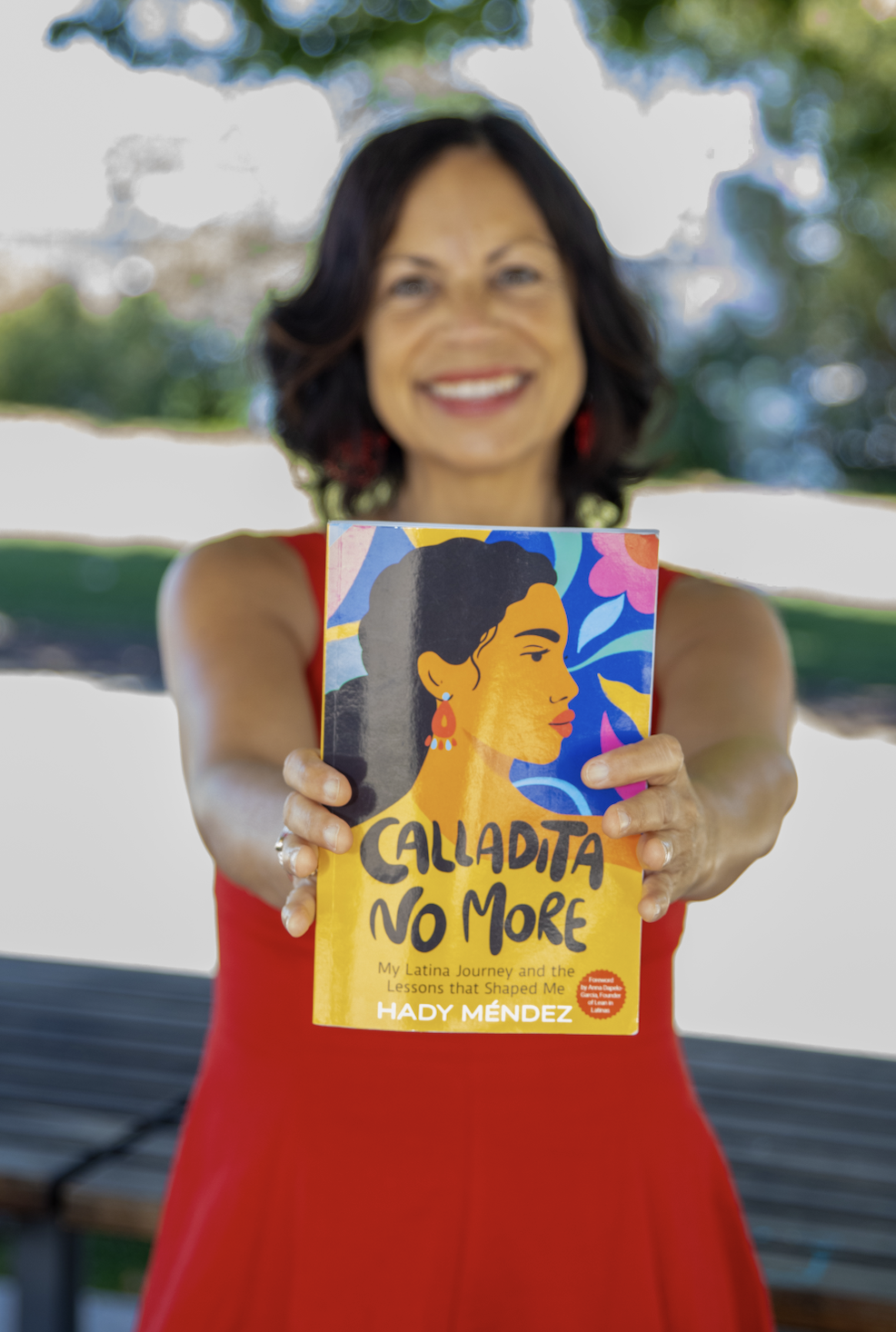
Author, Calladita No More
Hady Méndez is an Amazon best-selling author, proud Puerto Rican, and leadership coach based in New York. As founder of Boldly Speaking LLC, she empowers underestimated employees to self-advocate, self-promote, and step into leadership roles.
Recognized as a LinkedIn Top Coaching & Mentoring Voice, her thought leadership has been featured in Business Insider, #WeAllGrow Latina, and by organizations including Lean In Latinas and Ellevate Network.


