

 Apple Podcasts
 Spotify
 YouTube
 PocketCasts
 Overcast
 #90: Rebuilding a Personal Brand After a Layoff

Strong POV content feels risky for most creators, but Jillian O'Malior built her audience by removing the corporate pleasing filter completely. After being laid off in November 2024, she ran a 90-day experiment leaning into “strategically unhinged” content about layoffs, labor reform, and the dehumanization of workers — and the inbound work, brand deals, and podcast invites started rolling in.
In this episode of Workfluencer, Rhona Pierce sits down with brand strategist and workplace advocate Jillian O'Malior about the moment she dropped corporate Jillian, the dinner-party framework she uses to keep her voice consistent, and the seven-story-plot approach she applies to every post. They cover how to be vulnerable without overexposing yourself, why a strong POV content strategy doubles as a filter, and how to build a personal brand without sounding like a rant.
At its core, this episode is about what happens when you stop optimizing for the broadest possible audience and start saying what only you can say. The professionals who try to please everyone get scrolled past. The ones who plant a stake in the ground get hired.
You'll hear Jillian's exact content framework, the difference between venting and a strong POV, why “strategically unhinged” outperforms safe corporate content, how she handled friends who thought she'd “gone off the deep end,” and the specific advice she gives clients building their personal brand from scratch.
What You’ll Learn:
-
How to build a personal brand after a layoff
-
Why authentic content outperforms sanitized corporate posting
-
How to use content as a filter for career opportunities
-
The difference between vulnerability and unhinged oversharing
-
How layoffs are reshaping conversations around work
-
Why AI-generated content is the reason for the loss of originality online
-
Why having a strong POV online is less risky than people think
-
How to create content that actually sounds like you
-
Jillian’s framework for developing a memorable personal brand
-
The future of work, portfolio careers, and labor reform
Resources Mentioned:
- Jillian's Website: https://www.jilliandoesbranding.com/
- The Liquidity of Truth Case Study: https://www.jilliandoesbranding.com/showrunner-methodology
Connect With Us:
- Connect with Jillian: https://www.linkedin.com/in/jillian-omalior
- Connect with Rhona: https://www.linkedin.com/in/rhonabarnettpierce
Want to turn your team into creators? Visit workfluencermedia.com to learn how we help companies build video-first content systems that attract, engage, and retain talent.
FAQs
Is having a strong POV online actually risky for your career?
It is risky if your goal is broad appeal across every employer, but it is an asset when you want to attract the right roles and clients. A strong POV filters out workplaces that wouldn't be a fit and pulls in the ones that need what you actually do. Jillian's inbound work and brand deals started arriving only after she stopped trying to be palatable to everyone.
What does “strategically unhinged” content actually mean?
It is content that sounds bold and unfiltered on the surface but sits on a deliberate brand framework underneath. Every post serves a specific story, a specific audience reaction, and a defined topic pillar. The voice feels raw, but the structure is engineered.
How do you build a personal brand after being laid off?
Start with the topic you already think about the most, then identify the specific reaction you want your audience to have. Pick one or two platforms where your audience already spends time, post consistently, and let your content double as a filter for the work you actually want. Resist the urge to sanitize yourself to look hireable to everyone.
How do you stay authentic in content without oversharing?
Vulnerability is a muscle, so train it in small reps before going deep. Share what is true to your point of view and useful to your audience, but you don't owe the internet every detail of your story. The goal is to make people feel seen, not to make yourself the headline.
Why does broad-appeal content underperform on LinkedIn and TikTok?
Audiences scroll past content that feels one-dimensional or recycled, even when the topic is good. Platforms reward dimensionality — specific angles, specific stakes, specific opinions. Generic positive takes blend into the feed, while a clear POV stops the scroll.
How do you build a content strategy with a strong point of view without sounding like you're just venting?
A strong POV content strategy starts with a framework rather than a feeling. Jillian O'Malior uses what she calls a “dinner party” approach: she picks three real or fictional characters whose perspectives would resonate with her content, then writes every post as if those three would lean in at the table. She layers that with the seven classic story plots, choosing which plot a given post is serving, and a defined set of topic pillars — for her, the experience of being laid off, the current job market, technology eroding humanity at work, and worker rights. The result reads as bold and unfiltered, but each post is engineered to advance a long-term narrative for a specific audience. Venting reacts to a moment; a strong POV strategy uses each moment to advance the story you are already telling.
What actually happens to your career when you start posting strong-POV content after a layoff?
The short answer is that the right opportunities accelerate and the wrong ones disqualify themselves, which is exactly what you want when you are rebuilding. Jillian O'Malior was laid off in November 2024 and spent about a year posting sanitized corporate-friendly content that did not perform. When she pivoted to deliberately unfiltered content on layoffs, labor reform, AI's impact on creative work, and the dehumanization of workers, the inbound flow flipped: publications, podcasts, brand deals, and consulting work started coming directly to her, including the contract work she is currently building on. Some friends and former colleagues thought she had “gone off the deep end,” but the people who reached out were companies and leaders who specifically wanted that voice in the room. Strong POV content acts as a filter — it repels environments where you wouldn't thrive anyway and pulls in the ones built for what you actually do.
Learn more about your ad choices. Visit megaphone.fm/adchoices
Jillian O'Malior (00:00.142)
I had completely removed the corporate pleasing filter from myself. When I was first posting, I got a lot of feedback around, you should smile more. People don't like women who talk like this.
Rhona Pierce (00:12.044)
People think that having a strong POV online is risky.
Jillian O'Malior (00:16.778)
I started getting people reaching out to me to do interviews for publications, to do podcasts. I had people reaching out to me to do brand work with them. One of the big things that I talked about in one of my earlier videos on TikTok was people love a story of struggle and oppression and triumph. Nobody wants to hear you going through it.
Rhona Pierce (00:45.614)
Most people think having a strong POV online is a career risk. Jillian O'Malleyer ran a 90-day experiment on her own brand to find out, and the results might make you rethink everything you've been afraid to post. Today, we're talking about what happens when you stop playing it safe and start saying what only you can say. Jillian, welcome to Workfluencer.
Jillian O'Malior (01:08.28)
Thank you so much for having me.
Rhona Pierce (01:11.51)
excited to have you. for folks who haven't met you yet, what's the Gillian story in 30 seconds?
Jillian O'Malior (01:19.118)
Jillian's story in 30 seconds. So I am a talent brand and culture strategist. I've been doing that for specifically for almost a decade now, but I've been in the world of branding for over 15 years. And I am just a huge advocate for the way you show up for your employees is vital to the success of your company.
Rhona Pierce (01:45.856)
Love it. So like you said, you spent years and like talent brand, employer brand, whatever we want to call it. So you understood storytelling at a high level, I'm sure. But were you actually building your own brand before your layoff?
Jillian O'Malior (02:03.182)
At the time, wasn't really, I had it in my head of like, I need to do more. need to do more. need to put myself out there in all these ways because I have all these thoughts that I want to put out into the world. And I kept finding reasons to delay it. But I'll have time. I'll have time. I got to focus over here. I got to work with this client. I got to do the CVP, whatever it was. I'll deal with that later. And then, yeah, in November 2024, I was
very, you know, abruptly as most people are laid off. And I went, okay, well, I guess we have the time now to do what we need to do.
Rhona Pierce (02:43.916)
What was your original goal like when you started creating content like post your layoff and how much of like corporate Jillian was showing up in that early content?
Jillian O'Malior (02:55.552)
It's so funny because when I look back now, it's so much of like corporate people pleasing Gillian was there. I was I've always been someone who's been really comfortable kind of pushing the envelope, but it was always in like a very pleasant sort of way or as pleasant a way as possible. And so after my layoff, when I first started launching my own thing, I
You know, one of the big things that I thought was really helpful was, I don't have the red tape of like an agency where I've got to do things in the approved way. I need to talk about things in the approved way. I can talk about them the way that makes the most sense for me. But I was also still really mindful of like, but, you got to you got to stay like the corporate lady, you know, the corporate girl, whatever it is. And so I always thought of it as like, if this is kind of the box, I'm just like right on the edge of it.
you know, just edgy enough that people might kind of feel like, this is something different, but still it was very people pleasing. And yeah, so, and I did that for about a year, that kind of voice.
Rhona Pierce (04:09.708)
If you've made it this far into the episode and you're not subscribed yet, now's a good time. And what was your goal? Were you trying to find another job? Were you trying to get clients for your own thing?
Jillian O'Malior (04:22.668)
both really. You know, having my own thing has been really important for me. And it's been something I've been continuing to build. But the goal was always to find something that was a little more steady as well to support. But I really wanted to kind of further position myself as I know, I know what I'm doing here. I know what I'm talking about. I've been doing it for a long time. You know, let me into the room, so to speak.
Rhona Pierce (04:51.042)
And what platforms are you, I know you're mostly on TikTok and LinkedIn right now. Was that the platforms that you started working on like immediately or how?
Jillian O'Malior (05:03.116)
Yeah, I started working on those and also on Substack. So doing more long form essay style writing on Substack. And those were the three main platforms. I do a little bit on Instagram, but I think a lot of us know the Instagram algorithm is just like, if you're starting Instagram now, like such an uphill battle to get seen. So I don't do a whole lot over there, but it it's mainly LinkedIn.
TikTok and then occasionally on Substack when I have a way deeper topic to go into.
Rhona Pierce (05:39.488)
And for people who aren't familiar with your content, but I don't know how they wouldn't be, what do you specifically talk about?
Jillian O'Malior (05:49.39)
So right now, because so sort of what happens because there's two different acts to the story of my content. So, you know, was laid off November 20, 24, started doing a lot of, you know, fairly sanitized content around talent brand, employer brand, company culture, leadership, accountability, all of this. And I was I it was not performing.
really, it wasn't doing that. I was just kind of getting lost in the sea of a lot of these topics. And I wasn't having the impact I wanted to have. And I didn't feel super comfortable in it because it didn't feel I didn't feel connected to it the way I was hoping to. And so then once I hit the one year anniversary of my layoff, I went, OK, we're going to do something very specific, which is we're going to completely pivot and
So a lot of the things that I talk about now, I still talk about employer brand and brand in general, and I still talk about culture. A lot of what I talk about is the normalization of layoffs. I talk a lot about worker protections and labor reform. I talk a lot about AI and the way that I think it's just sort of dumbed us down as a society already. Just in the few years, it's really been pushed and
what that means specifically for creatives because being content and brand and everything creatives are those are my people. Yeah. And but one of the big things that I did is I said, we are going to go lean fully into my integrity. I'm going to talk about really uncomfortable topics, and I'm going to talk about them in potentially uncomfortable ways. And let's see what happens with us.
Rhona Pierce (07:47.042)
I love it. What did that actually feel like to make that shift like professionally, personally? What did that feel like?
Jillian O'Malior (07:56.608)
It was terrifying at first because even though it was so much more rooted in the way I actually think and show up in the world, I had completely removed the corporate pleasing filter from myself. And that is really scary to do, especially because I still hadn't, I had some contract infractional work, but not
enough to sustain me and I had not secured anything full time. So I was very much in a you have nothing to lose and everything to gain, which is also actually a very scary position to be in sometimes. And it was really interesting because when I first started, a lot of people who know me or had worked with me before had this reaction like, my God, she's gone off the deep end. She's lost it.
Poor thing is just struggling. She's having such a hard time. But the more I did it, the more empowered and in control I felt because I was in a very, I was in sort of a period of life that I had zero control over anything. And that felt so closely tied to who I am and how I show up in the world.
And so there was a little bit of that at first. I got, when I was first posting, I got a lot of feedback around like, like, you should smile more. Like people don't like women who talk like this. And cause I use curse words and I get a little aggressive sometimes, but mostly good natured aggressive. and there was a bit of that kind of noise at first that was happening.
And then as it continued, what started replacing that noise was people saying, this is exactly how I've been feeling and nobody's been talking about it in this way. And it feels so good to read this and I feel so validated because a lot of what, you know, a lot of my goal was one, you know, we always want to assert our own expertise very much with our content. You know, I didn't.
Rhona Pierce (10:10.114)
Yes.
Jillian O'Malior (10:14.26)
ever wanted to feel like ranting because that was not where it came from. But it was coming from very specifically, a place that I've always been rooted in with the work that I do with the leadership that I do, which is the people matter above everything else. And the complexity of their humanity is so vital. And we have gotten to this place where we have forgotten
that the people who are the ones that cause all of our success as a company, that they're people. And we lay them off and we go, well, you were the most expensive number on that spreadsheet. So we just deleted you right off and you should be fine. It's just business. It's not personal. And I'm like, it is deeply personal.
Rhona Pierce (11:04.334)
100%.
Jillian O'Malior (11:05.59)
And it's better for you as a company to connect to how personal it is so that you're making more human decisions as an organization.
Rhona Pierce (11:17.154)
So tell me about that because like when people that know you are thinking like, my gosh, she's gone off the deep end or words that you typically hear are like, she's unhinged, etc, etc. But you are a brand professional. Was there any strategy behind what you were doing?
Jillian O'Malior (11:34.062)
Mm-hmm.
Jillian O'Malior (11:37.672)
yeah, that was the big thing that I always talked about when people would ask me, was like, I'm unhinged, but it's all strategic. is strategically unhinged. I know exactly what I'm doing. I'm actually being incredibly deliberate with the things that I say, the way that I say them, the language that I use. I'm not just popping something off at 6 a.m. from a place of frustration.
I'm writing it and I'm like, no, let's tweak this. This is more what I want people to get from this content. It is so deliberate and it is so not calculated, but it's so based in a very specific story that I'm trying to tell. so at first when people saw it, and I know it was a reaction of people understanding what I was going through, knowing that I was still unemployed and how
stressful that is. And they're like, are you okay? And I'm like, I'm the most okay I've been so far. Actually, this feels good. This feels right. And this is also, you know, a big part of what I was doing is let's, let's do a bit of a brand experiment here. And let's see what happens if you build a brand that is based like not in the
the sort of label of authenticity that a lot of brands like to use, but genuine authenticity where it is the uglier sides and it is the nicer sides and it is the whole gray area of certain topics and certain stories. And what if we just purely lean into that? And what does that look like when so much of the noise, especially on LinkedIn, what you get is
hyper corporate, very buzzword filled kind of content. And then on TikTok, what they want is very digestible, black and white. Your opinion has to be firmly in this direction or firmly in that direction. And all of my stuff is like, it's all gray. It's all gray. It's everything and, and let's talk on TikTok for seven minutes about
Jillian O'Malior (14:01.922)
how complex this particular topic is in reality.
Rhona Pierce (14:06.646)
I love that. I love that you leaned into it. Can you tell us a bit about like what were your findings? Because a lot of people here like, this is a bad thing. Like, especially brand people are like, no, never do this. Be authentic, but nice, authentic. Thank people for your layoff. Don't tell them you're not supposed to be laying people off.
Jillian O'Malior (14:28.77)
Yeah, it was really interesting because we are so trained. I think particularly in the US, we have this hyper individualized culture, right? Where you should always be looking out for number one. And the way we've been trained to always look out for number one is by positioning ourselves in the best light possible for as many people as possible.
And it's very much a like try broad appeal is how you will succeed. And that's what that looks like is it looks like either, you know, sort of one dimensional takes totally avoiding specific topics and always looking at the silver lining, always looking at the bright side. That's what people want. That's what they want. One of the big things that I talked about in one of my earlier videos on TikTok
was people love a story of struggle and oppression and triumph, but they only want to hear it once you're on the other side. Nobody wants to hear you going through it. And that is a way more important story because so many people are going through struggle and they don't feel seen when they hear about the other side of it.
They go, why am I not there yet? they found a job in six months, but I'm at 10 months. And so maybe I'm a loser and all this. And what is far more helpful is the like, I'm there too. This is what I'm doing. This is how I'm getting through. And yeah, from a brand perspective, it probably would have been smarter to have stayed very positive and very like, yeah, well,
It's hard, but you triumph and you get up every day and this and that. And I thought, if you just acknowledged the reality, which is like, no, today sucked. It was awful. All I did was apply to jobs and get rejected within 30 minutes. And I hate this system so much. I'm still going to do it again tomorrow. But I'm going to complain about it today because I earned that.
Rhona Pierce (16:47.807)
you
A lot of people think that having a strong POV online is risky, that it's going to cost you opportunities. What's been your experience in that route?
Jillian O'Malior (17:01.72)
So the way, because that was always something that was sort of in my mind just because of where I was at when I started this content. And what I decided was we're not going to look at the potential loss that might come from this. We're going to treat this content as a massive filter because the people who are going to look at it and say, she's too loud.
She's talking about stuff that we prefer to have brushed under the rug. She's trying to change things that suit us to stay the way they are. Therefore, we don't want to work with her. Those are people I can't work with anyways. I'm not good in those kinds of environments. I won't succeed. You won't get the best out of me. But if what happens is I do this content and instead, companies or individuals who are going, that's exactly
the kind of voice that we need. That's the kind of change that we need. That's the kind of like assertiveness that we need. They will find me. And so it was, I was really looking at it as this massive filter. The people who are uncomfortable are the people who are going to be uncomfortable with me regardless. And I would have to shrink myself down. The people who feel expansive with it, they're going to find it and they're going to connect with it.
Rhona Pierce (18:25.006)
And I 100 % agree with you. think content is a filter. It's my number one vetting mechanism, all of that stuff. But in talking to people and doing this for so long, people are scared, especially when it's your personal brand. And when you're like in the thick of it, because I've been laid off to, I've been like, I have no clue how I'm paying my mortgage.
next month, like where is the money coming from? How do you find that strength to still be that filter and not like still like be yourself, go with a strong POV and filter people out in a moment where you're like, I just need to pay bills, I just need money.
Jillian O'Malior (19:05.71)
think those, because I've definitely had those moments and those were the times where rather than trying to censor myself or shrink myself down, I would say, well, let's lean more into this side of the story we're trying to tell. And so a lot of times that's where I would lean into more of the humanity of like, hey, these people have been laid off, like reach out to them, check in on them.
They're having a hard time. They don't want to be resilient all the time. They don't want to be strong all the time. They want a soft place to land. And we can be that for each other, you know? And I did, I was going through a particularly hard time at one point. And I remember I did a post about instead of trying to fix it for people, cause that can sometimes when someone's really in the thick of it, that can almost feel worse, even though you are incredibly well-intended.
just sit next to them. Just let them talk about what's on their mind. And instead of trying to fix it, or instead of trying to help them see the bright side, just like rub their back and say, that sucks, I'm so sorry. Sometimes that is all people need. And so I would, know, when I was feeling myself getting a little worried about the filter and wondering like, am I doing all of this and just like destroying my reputation?
I would lean more into that kind of content that was still very aligned with what I was trying to do, but was the softer, more human side of it, because it made me feel more human in the moment when I really needed to feel that way. And it also showed like, this is, you know, like I said, this is not just venting, that is not just ranting. This is about see the humanity that is right in front of you.
Rhona Pierce (21:00.782)
Let's talk about like some of the positive stuff like on the flip side, what opened up for you since you started showing up in this way?
Jillian O'Malior (21:09.646)
So much. One is that just on a personal side, it made me feel so much more purposeful. I was getting really stuck and that was having a massive effect on my mental health. That was having a massive effect on my motivation and drive and the way that I just need to show up in my life. And so having something
that I was fully in control of, that nobody else had a say over, and that was purely about exercising my voice and my talent and my experience and my point of view, felt incredibly empowering and helped me get past some of those humps. But also from sort of a professional side, I started getting people reaching out to me to do interviews for publications, to do podcasts.
I had people reaching out to me to do brand work with them. I mean, all kinds of, some, the work that I'm doing right now came by way of this content. Someone said, I love everything you're doing. I got laid off. I just got hired at this company.
I think you would be a great person to work with. So all of the things that I was fearful of when I was starting it of like, I won't be able to get these things. Those were all the doors that got opened as a result.
Rhona Pierce (22:40.61)
I love that. And thank you for sharing that because it's so important. And look, I know people who've seen my content know that I'm always saying like, don't I don't talk about I don't tell people what to do. I say I don't talk about struggles while I'm in the middle of it. And I stand by that to a point. But what I mean is the like unstrategic, unhinged ranting that you find out there now seeing someone like you. And that's what really drew me to your content.
seeing someone like you that's like, this isn't like, you can tell a difference, like she's sharing something, but this isn't like unhinged. This is, I love how you say strategically unhinged. How do you like actually approach content creation, right? Because it's like, okay, I'm gonna lean all in, I'm gonna do this, I'm gonna be strategically unhinged. Here's a blank word doc.
Where do you start?
Jillian O'Malior (23:40.942)
So one of the things is like being a brand person, there's nothing I love more than a framework to operate under. Like I love a strategic framework to do all of this. And so I basically took a lot of ideas I had around brand and how to approach brand in a very storytelling narrative sense. And I said, okay, let's formalize all these ideas I have into a framework.
And then we're going apply it to myself and we're going to see if it really works. And so the way I think about it a lot is very sort of world building. Like what does the world of Gillian's brand look like? And so the first thing I thought of was, you know, a lot of times when people are building brands, they look at building like archetypes and, you know, are you the outlaw? Are you the this? And I used to use some of those frameworks and I don't anymore.
because I think what tends to happen is instead of finding your own voice, you start to mimic other voices when you lean a little too hard into there and you start to shift a little bit away from like the authentic voice. And so what I did instead is I said, okay, if I was having a dinner party, who are the three people or characters like real or fictional?
who would be at this dinner party that would resonate with my content and with my voice and with the things I want to talk about. And so I built this dinner party of like, if all my content was a conversation, these three people would be fully bought into what we're talking about from different angles. That keeps me from mimicking voices, but it keeps the thread kind of well-laced.
And then the other thing I do is I love like the seven story plot points. I love this idea that like every story we tell is aligned with these seven kind of general plots. And so I said, what are some of what are some of the plots that my content really kind of serves to tell? Because I want this to be very story centered and I want this to be very narrative. And so I identified what those were. And I said, OK, and then what are the topics?
Jillian O'Malior (26:07.468)
Like what are we, cause we can't just talk about anything. So where are we going to talk about? We're going to talk about the experience of a layoff. What happens when, you know, it's not personal, it's business when you're just a line item. We're going to talk about this job market and how difficult it is with the technology, with the stagnation of jobs. and what this job market looks like when it's, you know, it's so many.
very experienced, very educated people that are mid-career on the market right now. And how unique that is. And then let's talk a little bit about how technology is keeping us further away from each other. And the best work always comes from humanity at its core.
And that kind of ties into like worker rights and worker protections and things like that. And I said, okay, those are the things we're going to talk about. And so just on any given day or week as I'm planning out my content, I'll kind of say, where do I want to, what feels important right now? And sometimes I look at like, what's going, what's going on in the world right now? What's going on in the news? You know, Oh, Oracle just laid off 30,000 people. Well, there's a lot of ways we can talk about.
what this means because this is about the technology. This is about the layoffs and the lack of humanity. And this is about, you know, a full mid-sized towns worth of human beings being thrown into an incredibly difficult job market. there's so much here that really needs to be talked about more than just the dollars and cents of it. And, you know, the sort of thoughts and prayers that we put out there anytime there's this mass layoff.
Rhona Pierce (27:59.022)
And I'm so glad for people like you that talk about this because at some point, we started hearing the numbers getting bigger and bigger. Because it started with like, oh, so and so laid off 2,000 people today. And we're like, And now it's like, oh, it was only 2,000 because Oracle did 30. It's like, no, no, no. No.
Even if it was no, this is not okay. This is not normal. And we shouldn't like, let it become normal, just because everyone's doing it. Like it's absolutely not normal.
Jillian O'Malior (28:37.976)
Well, I talked about how in March, the number of layoffs we had seen in 2026 so far, just the number of public layoffs, not even talking about these smaller organizations that never make the news, it was the equivalent plus a little more of the population of Palo Alto. So the city we think of as the hub of Silicon Valley
where all of this is happening, I'm like, if you wiped out the whole town, that's what we've done so far. What does that mean?
Rhona Pierce (29:15.244)
and no jobs created, like there's nowhere for them to go.
Jillian O'Malior (29:19.681)
nowhere.
Rhona Pierce (29:21.942)
I know it's just like these are the types of things that it's like, why is no one thinking about this? Why is no one talking about this? Because I'm lots of people are thinking about it and talking about it in their private circles. And that's what big corporations want us to do. They want you to talk about it at the dinner table. No, you're not exactly the dinner table isn't going to change. Well, most dinner tables aren't going to change it because if we keep
just talking about it at the dinner table, you're going to be sitting at a dinner table where everyone's in that same situation and that's not where we want to go. So talking about it, using your platform the way that you can, I think is powerful and courageous.
Jillian O'Malior (30:03.55)
Exactly. I appreciate that. I also think, you know, there are lots of great conversations that are coming out of this job market, which is about, you know, the way work is changing and the way our relationship to work is changing. And there's great conversations that are happening about maybe it's time for universal basic income. Maybe it's maybe what we're really looking at is the world is moving away from people having these like singular W-2s and it's moving into fractional and all of these.
And I think these are really fantastic conversations for us to have. And I love people getting creative about the way they go through life and the way they look at their income. But I'm also a big believer in like, we have to have all of this, though. Because, you know, yes, the move towards more, your fractional and its portfolio based careers. And that's where people are going. I'm like, that's going to work amazing for a subset of people.
Not everyone is suited to that kind of work, not just with their skills, but with their personality. And that matters. And those are people who deserve to have a job that they go to every day with their steady paycheck, and they succeed and they excel, and they're able to live their life. Like we have to have all of this to have a truly functioning society and economy. And we keep
trying to shove ourselves into these little narrow boxes to suit someone else and something else. But we need to continue to have these conversations as uncomfortable as they might be because ultimately things only change when we actually start to talk about them.
Rhona Pierce (31:57.912)
And I have so many thoughts on this and just like not to get away from the topic because I'm sure most folks are listening or watching and thinking, okay, great, I want to say something, but I'm still like, how do they start? What's your advice for them?
Jillian O'Malior (32:22.126)
My advice is that it is not easy doing something that's uncomfortable. I'm someone just through my own life experience and the way I kind of uniquely move through the world, I'm very comfortable with uncomfortable things. And so leaning into that was a little bit easier for me, but I know that that's me uniquely.
And so sometimes, you know, when I've talked to people about this, because I have a few people who I've been working with to kind of help build their personal brand with this same idea. And I always tell them that doesn't mean you have to be like me. You don't have to start throwing out bombs on LinkedIn and, you know, calling Elon Musk baby boy and things like that. Like, you don't have to do all that. That's me. That is uniquely me. But what you can do
is start to look at what is a topic that you're really passionate about, that you think a lot about, that you feel like you have a strong understanding of, a strong opinion of, but you know it's not something that sort of fits neatly into the world of content creation as we think about it. Start with that topic.
Because it's something that you already feel really strongly about, or you already feel that you have a specific expertise and understanding in. Figure out what is that opinion that you have, or that point of view, and what is the best way to get that expressed. I'm really big on thinking about your audience. Who exactly are you trying to reach, and what are you trying to elicit within them?
Do you want them to feel understood? Do you want them to feel seen? Do want them to feel better educated on a topic? Do want them to feel more comfortable with a topic? Like thinking about your audience and the reaction you want them to have as opposed to like, I want to get a bunch of views. I want to go viral. What do you want your audience to get? How can you be the guide to getting them there?
Jillian O'Malior (34:46.006)
And then figuring out, know, what is your voice? You know, someone that I've been talking to a lot. I've been very much, you know, for her, I'm like, your voice is in how like, so sort of peaceful you are. Like, there's so much strength in just people come around you and they're like, like, you just like put peace out there. And so you don't need to be strong in this sort of
you know, assertive way, you need to be strong in the way that like you provide grounding to people. And that is how you are going to not get lost in the white noise of content, because people are going to get to you and they're going to breathe a sigh of relief and they're going to sit with your content and say, I just like feel good when I watch her stuff.
Rhona Pierce (35:40.014)
I love that. thank you for bringing that up because it's like, yes, having a point of view. think people just hear that and think confrontation or like you have to be against like, no, like your point of view might be like, look, I'm as vanilla as it gets. And I'm so
proud of being vanilla that I'm going to talk about how vanilla I am all day every day. Okay, that's your point of view. But it has to be something that you have expertise in. You are not going to get tired of talking about it and you feel strongly about it. That's literally the definition. It doesn't mean you have to be against what everyone else is saying.
Jillian O'Malior (36:20.702)
Exactly. It's far more about dimensionality than anything else because I have found the content that I might like it at first and then it gets really old is where I'm like, this is very one note. It feels like it's the same thing over and over, even though the first time I watched your video or I read your post, I really liked the point of view or I liked the angle or I liked the aesthetic or whatever it was. And then I was like, but
You haven't provided dimensionality to it. You haven't been taken that in other directions. It's just like a little bit of a regurgitation. And I'm like, and it's still nice. And I don't dislike you. But like, I'm probably going to scroll on a lot faster. I'm not going to engage the same way because I felt like I've already engaged with this. And I want to I want more. I want something deeper. And
You know, one of interesting things with my content is that on the surface, it can look confrontational, some of it. And I'm like, but one of my big goals is just to get people to think differently and to really kind of say like, you know, I had I had talked last week, I think it was about the Amazon warehouse worker who had died at work.
And because that story just like, I know we've heard those stories before and every time it just kind of like stops me in my tracks. And someone had engaged on it and he had said, well, what do you expect the factory do? Just shut down every time there's a death, they have a business to run. And I said, well, here's the stats on how many deaths actually happen in these factories, which is not a lot. And so, yeah, actually I do. I do expect them to shut down for the day.
I do expect that your protein powder might get delayed a day when it's being delivered to you because this man's humanity was actually more important. And that's okay for us to like, we do need to acknowledge that. It's not gonna shut down the entire function of the company. But yeah, you can send your workers home for the day to deal with the fact that their coworker passed away in front of them. And that is traumatic.
Rhona Pierce (38:42.242)
We need to redefine mission critical. yes, because every job out there isn't like seriously, if my Amazon is delayed because someone at the factory at the warehouse died in front of all of their coworkers and they shut down to give their coworkers time to like deal with that. Because if you've ever had that happen to you, like, like, come on guys, I am okay. I like.
seriously might if I didn't hear the news will I call Amazon and be like where's my package and they'll be like well we shut down the warehouse yesterday because of this. perfect sure got it got it like you have to be an a-hole to not be okay with that sorry like.
Jillian O'Malior (39:31.054)
If a conveyor belt manufacturing can shut it down for a day, then the death of a human being can too. We can give the same mission critical positioning to the loss of human life.
Rhona Pierce (39:38.656)
Exactly.
Rhona Pierce (39:52.142)
So I've loved this conversation. But if you've ever watched the show, you know, there's always a segment. So I thought we would.
Sweat the small stuff, right? It's time to air out your most petty content creation grievances. Like we're focusing on the tiny things that shouldn't matter, but today we're giving them the spotlight that they absolutely deserve. Are you ready?
Jillian O'Malior (40:21.708)
Yes.
Rhona Pierce (40:23.502)
the post format that makes you irrationally annoyed every time you see it.
Jillian O'Malior (40:30.324)
Anything that is so obviously copy and pasted from AI. Like obvious, not like AI helped me write this, but I put a one sentence prompt in and then I copy and pasted it because it's got no point of view and it's following the same format. every time I won't read, like my eyes won't read it. Scroll pass. No, thank you.
Rhona Pierce (40:56.43)
My eyes won't read it. love that because yes, that is the same reactions. I refuse to read this. right. What's a word or phrase that creators use that should be permanently banned?
Jillian O'Malior (41:09.686)
Take.
Hot take, very specifically hot take followed by something totally demeaning and dehumanizing. Hot take followed by like a genuine hot take, I'll allow it. But like hot take, anyone with a green banner on LinkedIn is pathetic and desperate. And I'm like, no, the hot take is that you suck. Sorry.
Rhona Pierce (41:38.57)
Okay, what's something that creators do in their hooks that makes you scroll faster?
Jillian O'Malior (41:44.792)
No.
that's a great question.
I think anyone who starts with story time.
Rhona Pierce (41:58.658)
Yes.
Jillian O'Malior (41:59.674)
Because I do love a personal story, but I just think it's gotten overused maybe. And I've started to associate it with very salesy content as opposed to genuine storytelling. And so I tend to scroll past. Once I see story time, I'm like,
Rhona Pierce (42:21.036)
And just tell me the story, like be more creative, use an actual hook to hook me into your story and I'll listen to your story time.
Jillian O'Malior (42:29.656)
Give me a shocking sentence, because I'll be like, I'm sorry, what?
Rhona Pierce (42:34.51)
That's like, do you really go up to your friends and be like, Hey, Jillian story time? No, that's not how you. Yes. A hundred percent on that one. All right. What's the type of comment on your post that low key annoys you even though it's nice?
Jillian O'Malior (42:52.344)
So I think what's really interesting, it's not that it annoys me, but it makes me realize kind of the way people consume my content is any time I do these posts that are really about understanding the humanity in people, and I get a lot of comments of like, buck up, things will be better. I'm like.
Jillian O'Malior (43:18.43)
No, like I know that's so well intended, but I didn't need that. This wasn't even about me. This was about people in general. And it's interesting that your reaction is like, you're going through a hard time. It's like, no, I'm just caring. I'm just caring, that's all.
Rhona Pierce (43:38.99)
I totally get what you mean. right, last one. What's something that you used to do as a creator that now drives you crazy when you see others doing it?
Jillian O'Malior (43:49.846)
that's really good. I think anything...
That's trying.
It's trying too hard to be an expert and trying too hard to assert like, no, I know what I'm talking about. And it is it's really based on like how I used to do content. And when I look back now and I'm like, I can't even find myself in all of this. And so when I see that, I'm like, I trust that you're an expert. Show me like who you are now. That's what I'm interested in.
Rhona Pierce (44:30.1)
it. I love it. I love I don't love sweating the small stuff. But I love this segment. Because it's always like interesting to hear what people have to say. So is there anything that I haven't asked you today that you think folks should know?
Jillian O'Malior (44:48.79)
No, think the thing to just know is that being really authentic and very specifically, because we didn't touch on this too much, being vulnerable in your content, being genuinely vulnerable in your content, it's a muscle. And you have to work it out in order for it to be really comfortable, in order for you to flex it without.
feeling overexposed or underexposed. Vulnerability and authenticity is very much a muscle. so you start at this same way you start a workout, you do something small and something manageable. And you build on that don't come out the gate with like, here's my whole life story. And just like laying it all bare, but find the ways to kind of engage with that stuff first, as you get comfortable and then
And then push yourself more, push yourself, like always challenge yourself more. But don't challenge yourself too hard out the gate. Don't be an expert on day one, flex your way into it.
Rhona Pierce (45:55.562)
that. Where can folks connect with you?
Jillian O'Malior (45:59.746)
You can connect with me. I'm on LinkedIn at Jillian O'Malleyer, which is as hard to spell as it sounds. It's O-M-A-L-I-O-R. And then I'm on TikTok at Jillian Does Branding, which is also my website right now. I'm actually a little bit of a sneak preview. I'm in the middle of a rebranding of my actual like...
business and consulting and everything because it's expanded so much. So that's going to change soon. But for now, you can find me at Jillian does branding.com.
Rhona Pierce (46:38.254)
Can we get more of a preview of what's changing?
Jillian O'Malior (46:41.47)
Yes. So because I have started doing a lot more than just brand and culture work, I have started to move into activism. I have started to move into things that are more related to layoff reform and labor reform. And I've been moving into bigger kinds of projects with companies around how they approach humanity and culture. And so I have been building out
less about, know, Jillian does branding and I've been building out sort of a proper organization, which is called New World Labs. And it's going to be a much bigger kind of entity for everything having to do with the future of work and how I think we can make it a lot more human centered than it's ever been before.
Rhona Pierce (47:35.65)
I love that and can't wait to see that. Thank you so much for being on the show today. Thank you so much. I'm so happy. If you're enjoying the Workfluencer pod, share it with someone who's changing how we talk about work or who should be. And hey, if this episode gave you ideas or inspiration, leave us a five-star review. Reviews help other listeners find us. And honestly, it makes my day. This show is produced by Workfluencer Media.
Jillian O'Malior (47:42.772)
to have been here.
Rhona Pierce (48:03.618)
Visit workfluencermedia.com to learn how we help companies build video first content systems that attract, engage and retain qualified talent. That's workfluencermedia.com. Thanks for listening and I'll chat with you next week.
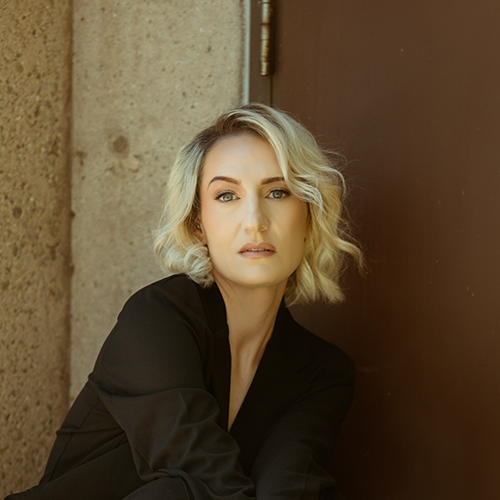
Founder & Principal Strategist
Jillian is an employer brand and culture strategist with over 15 years building brand stories, narratives, and culture advocacy for companies, from startups to Fortune 500s. She's developed two proprietary models, the ATTRACT EVP Model and the Showrunner Brand Methodology, that share a common belief: organizing around integrity is the only way forward.
Jillian has also built a strong following speaking about the future of work, leadership accountability, cultural trust erosion, the evolving expectations of Gen Z and Millennials, and the collapse of performative workplace messaging. At the core of everything she creates is the throughline that a voice that challenges the norms of what we've all passively accepted is how trust and change is built. That the stories worth telling are the ones that scare us slightly to tell them.


