What Internal Comms Can Learn From Creators




Most internal comms get ignored. Deleted emails. Skimmed Slack posts. Zero follow-through. HR Leader, Lia Seth flipped that script.
In this episode, we break down how she used memes, creator instincts, and vulnerability to get 100% employee open enrollment completed 24 hours early. Yes. Really.
She wasn’t thinking like HR. She was thinking like a content creator.
We get tactical. We get honest. And we talk about when this approach works, and when it absolutely doesn’t.
What You’ll Learn
Why traditional internal comms fail
How memes drive real behavior change at work
The cadence Lia used to sustain attention
How to explain complex benefits simply
When not to use humor or memes
How vulnerability builds trust internally
Accessibility tips for creative comms
Tools Lia actually uses to make memes
CONNECT WITH US
- Connect with Lia - https://www.linkedin.com/in/liaseth/
- Connect with Rhona - https://www.linkedin.com/in/rhonabarnettpierce/
Want to turn your team into creators?
Visit workfluencermedia.com to learn how we help companies build video-first content systems that attract, engage, and retain talent.
internal comms, internal communications, employee communication, workplace communication, HR communications, people ops, HR leadership, employee engagement, content strategy, creator mindset, content creators at work, corporate communication, internal messaging, change management, employee experience, modern HR, workplace culture, internal content strategy, communication at work, HR best practices, workfluencer
Learn more about your ad choices. Visit megaphone.fm/adchoices
Lia Seth (00:00.288)
My philosophy was how can I get people's attention in a way that makes them take action? I could talk in all hands meetings, in team meetings until I'm blue in the face, but like, have to do this, you have to do this. They're not going to remember. I can put it in emails. No one's going to read the emails. I made a what's known as the Kabocha Girl meme or Britney Broski.
Did you ask permission to do this?
I've definitely made some missteps when I started. People want to see what you feel. In my experience, the best leaders are a little vulnerable. Hey, things are hard right now, and I'm going to be honest, I don't really know how to talk about it. People respond to that. Everyone at my company knows that I'm always just going to be 100 % myself on Slack. But people trust me as a result.
Most internal communications get deleted before they are even opened. Lia Seth, they get emoji reactions, actual engagement, and get this, actual follow through. She's not thinking like an HR professional. She's thinking like a content creator. And today we're unpacking how she turned the most dreaded corporate task, open enrollment, into something employees actually wanted to engage with and why every company should be taking notes. Lia, welcome to Workfluencer.
Thanks so much, Rona. I'm so excited to have this conversation today.
Rhona Pierce (01:19.04)
I know, I know. So for folks who haven't met you yet, can you tell us a bit about who you are and what you do best?
Absolutely. So I have been in the HR and people space for round about a decade with about half of that in startups. So I have been in health tech for most of that startup time. And it's a really, really great industry. There are some people who just really, really care about what they're doing. I love being at the intersection of like technology and mission driven. It it hits everything I care about because
The reason I'm in HR and people operations is to help people do their jobs. So I work with the people who are helping the people. So I help those people be able to do what they need to do to help others. So I really, really love to make the employee experience as accessible, inclusive, and as delightful as possible.
I love that. And I'm so excited for this conversation. So how it all started is I saw a post where you shared that you got a hundred percent of your employees to complete open enrollment 24 hours before the deadline. Like that is unheard of anyone who's done HR, anyone who's worked at a company for like, this is unheard of. How did you pull this off?
Honestly, memes and my strategy was unusual and I had to convince a couple of people, but I just kind of went in and I was like, listen, I feel like this is going to work. So just let me run with it. And it worked. And this is like the biggest professional feather in my cap. I have been talking about this nonstop for a year. I've been getting shout outs every single time I tell anyone 100 % completion 24 hours before the deadline.
Lia Seth (03:08.418)
people's jaws drop. mean, not just open enrollment, getting anyone to do anything 24 hours before a deadline is, it just doesn't happen.
I know it's like every HR professional out there knows like there's times where we like say a fake deadline because we just know no one's going to do it by the actual deadline. So the fact that you got it done 24 hours before I it's amazing. And I love that it was in unconventional way by using memes. Take me back. How did that idea come about?
Yeah, so I got the idea a few years ago. I'm in like a couple of HR community groups on LinkedIn back when I was on Facebook on Facebook. And I remember someone shared a meme in one of the groups that was really just meant for HR people. That was kind of like, I think it was like a Hunger Games meme. And it was like, open enrollment is starting. May the odds ever be in your favor. Just kind of recognizing that.
Hey, this is a slog for a lot of us. This is that time of year where we are having to kind of pull people along with us like, okay, everybody, can you get this done? Sending reminders, sending those like individual reach outs like, hey, you know, the deadline's tomorrow. Have you done this yet? Hey, the deadline has passed. You know how you need to do this. So just knowing that no one in HR looks forward.
to open enrollment. Everyone knows it's a time that we've been working on it for months. We've been working on the renewals. We've been working with our brokers and our covered our insurance providers. And now we're in this like two week stretch where the employees have to care about it and they don't care. And so I just thought that was really funny and just felt very like seen by the community of like, okay, yeah, we're all in this boat together.
Lia Seth (05:05.122)
But that post got so many reactions and I was thinking about how often that's used in these industry spaces. I feel like I see it a lot in HR spaces. I'm sure other industries and other spaces do something similar where they're sharing these memes with each other as a way of relating and communicating and saying like, hey, I see you. We're in this like weird struggle boat together. And here's a way that we can kind of make light of it, have it be a little fun and
You know, people react and people respond to that as opposed to just the walls of text. So I had the idea of, let me take some of these open enrollment memes and why wouldn't I just share them with the company and let people know like, Hey, I recognize that this is not everyone's favorite thing, but I can see some humor in it that like, yeah, I'm kind of pulling you all along. So guys like, come on, like, come with me with these silly little memes and, and let's do this together. And people just responded to that.
I love that. What was the first one you shared and how did people react to that?
Trying to remember the very first one. So I officially launched this last year. I wanted to do it at a previous company. like, you know, saw the meme in the group, got the idea. I had it all queued up. I was ready to go. And then ended up getting laid off from that company before open enrollment started. So my whole communications plan and strategy was just sort of dashed. And I was honestly really bummed about that because I had been really looking forward to doing something that I thought would just be fun.
So I kept all the memes, saved them in my back pocket. It's like, I will come back to these. I know I'm going to use them again. And with this job, I knew that it was going to be extra important last year to do this. So at my company last year, just kind of give a little bit of background, the end of 2024, our company was moving off of a PEO, professional employer organization, to an ASO, an administrative services organization.
Lia Seth (07:07.35)
And that meant that we were no longer going to have the same benefits plans that the PEO offered, which everyone had been used to for the last, you know, three, four five years. We were going to be, we now had a new benefits broker. were moving to new plans and there was all this change happening. And it was most of my year was preparing for that transition, moving through all of the things, talking to people, getting everything together, making decisions. That was most of my year. And once we got to
November when I knew people were going to have to start making those changes, people didn't need to know the nitty gritty. They didn't know the detail of all the agreements that were being signed, who's managing what, they don't care that we have a new benefits broker. They care that they can get the health coverage that they need and that they're used to. So the company had done passive open enrollments for the last three years before this, where, you know, here's our plans, they're not changing. If you like your plan, don't do anything and you'll just keep the same plan.
This was the first year that our company was doing an active open enrollment where all the plans are changing. We have a new provider. If you don't make a selection, you will not have health insurance in 2025. You can't keep your same plan. So I knew that it was going to be extra important to get eyeballs on that. So my philosophy was how can I get people's attention in a way that makes them take action? So the first meme I shared
was something really simple. think it was, you it wasn't the Hunger Games one, but it was something silly like that. It may have been something like a Game of Thrones, instead of a winter is coming, it's like, open enrollment is coming. Something really simple and silly, but something unusual that people don't usually see, you know, coming across their Slack timeline. So it got people paying attention like, okay, hang on, what is this? Because honestly, I think we all know I could talk.
in all hands meetings, in team meetings until I'm blue in the face, but like, you have to do this, you have to do this. People hear it, they move on really quickly. There's a million other things happening. People are multitasking. People aren't totally paying attention. There's six other things shared in that meeting they need to do. They're not going to remember. I can put it in emails. No one's going to read the emails. So what's the smallest, quickest, punchiest thing I can share that someone's going to actually see and react to?
Rhona Pierce (09:29.986)
Hey, have you subscribed? Let's fix that. It's the easiest way to support this show. That is amazing. And I like how you approached it and just your thought process. Like a content creator, at the end of the day, like that's what we want. We want the attention of the people so that they actually do what you want them to do. So I can imagine that's like, okay, because HR doesn't send memes.
Usually HR is the one being like, maybe not that meme or like the fun police kind of, you know, reputation that we have. So I'm sure when they saw that first one, they're like, whoa, what, like you've got their attention. What was your cadence? Like, were you sending one every week after that every day? How did that, what was the process?
Yeah, so I sent one to a week before open enrollment started like, hey, this is happening. We're making announcements. This is going to launch on this day. You're going to have to take action. We're going to have our new benefits broker come in and give a presentation. So I did one one week beforehand and then I did one on launch day. And then every two days from there, there was a fresh meme in in Slack in the morning like, hey, this is what you have to know. And I really tried to make it not just
Like, okay, let's get your eyeballs on this and like share something silly. I also found it's a great way to explain details. Like we offered a high deductible health plan for the first time. And I used a meme to explain to people why they might want that as opposed to, you know, an HSO or a PPO that they were used to, or sorry, an HMO or a PPO that they were used to. So I made a what's known as the kombucha girl meme or Brittany Broski where she's kind of
making an unsure face and says, hi, I sign up for a high deductible plan? It's like, I don't think so. And then the second one where she's considering it's like, and you'll get access to a health savings account. And I shared, you know, what is a health savings account? Here's how it works. Here's how it can help you save money. If you're someone who, you know, maybe has low utilization of your of your health plan, you go in to see your primary care provider for your annual physical once a year, you don't see a lot of specialists, you don't have chronic conditions.
Lia Seth (11:48.354)
this might be a good plan for you. And I multiple people say, I never thought about this. I didn't know what that was. I assumed it was something bad, but like just seeing that post made me realize, hey, this actually might be the right plan for me. So that cadence and then using that as not just saying the same thing every time, just new memes saying do open enrollment, new memes, do open enrollment. There was new information in each one, which also helped people continue to pay attention.
I absolutely love that and I am sure they did too. I'm going to go back a little. Did you ask permission to do this or did you just do it?
kind of just did it. I told my manager that I would be doing this. One of our goals for that quarter was come up with a communication strategy around open enrollment because we knew again, this is an active enrollment. People aren't used to having to take action to get this done. A lot of people will just let their same plan roll over here to here. So I knew we needed, okay, we need a new communication strategy so that people are aware.
that this is something you have to take action on. This is something you have to do. Something is changing. I just took that initiative of we need a communication strategy and kind of ran with it. I said, my communication strategy is memes. Trust me. luckily my manager had trust in me. And our leadership team, our executive team got on board. Our CEO even gave me a shout out and said, hey, you know, congratulations for bringing the funny to.
something that normally is not very fun or funny and it was successful. So that worked out really well, but I recognize that I'm in a company and a culture where that is accepted and that does translate. And I recognize that there are lines, right? In some companies, you could post some really out there memes. Any meme might be fair game. I recognize that in a company where we're doing healthcare,
Lia Seth (13:47.294)
And given that we've got people with different comfort levels, different beliefs, different opinions, I'm not going to be posting just absolutely whatever comes to mind. Right? So I recognize like, okay, let's keep it relatively PG with the memes. And that I think was the right call.
What was your like, cause when you go memes, the internet, like there's so many options. Did you like, how do you decide what's the PG version for your company? Because I'm sure it's different at every company.
Absolutely. I've definitely made some missteps when I started. I've done what I call risky clicks. I posted one and then immediately reached out to my manager and said, hey, was this one okay to post? She was like, I think so. Then she came back later and said, actually, let's swap that one out. So I think there's a little bit of give and take. There's a little bit of figuring it out. But I...
I do make most of my memes. I found a few open enrollment memes. If you go onto Google images and search open enrollment memes, there are some out there. And what I actually was inspired by is some of them are outdated memes or they're really cringy and they're done kind of badly. They're clearly done by someone who doesn't fully understand the joke or the internet. And I took that as my inspiration. I'm admittedly chronically online.
I pay attention to what's on TikTok, what's trending, what's happening on Reddit, what's going on. I love watching red carpet coverage to see what's happening. I remember the year at the Oscars where Angelina Jolie stood with her leg out and then suddenly the Angelina leg was just everywhere and everyone was talking about that. So I love knowing that kind of thing and what's trending.
Lia Seth (15:42.68)
So I'll pay attention to that, but I also write the memes in a way where even if someone isn't super tapped into what's going on, they're still effective because, you know, just having that as an image stands out against all the other corporate text and the black and white noise. So I think it's just sort of, you know, like you said, knowing your audience, recognizing, okay, what is going to resonate with people and what's going to work? So if you're in an organization where
You know, it's a lot of parents, kids. Having a bluey meme is excellent. People react so strongly to that. This year I did a K-pop demon hunters meme and everyone loved it because again, we've got a lot of parents, but we also have a lot of folks who aren't parents, but have watched the movie and loved it. And even if you didn't watch the movie, it's just a funny clip of what looks like, you know, okay, here's a cartoon that's explaining something where we had
an email go out from our benefits broker, but it went out early. So people didn't know what it was. And so I use that as an opportunity to, you know, say like, okay, benefits broker is here to help. And then everyone, you know, responding just like, is this spam? So it worked out really nicely in that way. So I try to kind of like, respond quickly to what's happening.
So guess, let's get a little tactical. What do you use to make your memes?
I use a meme generator online. I think there's one that's like called like image flip. So I usually just go to that. It's got all of the templates. It's got the way to just put the text exactly where it needs to be. There are one or two that I knew exactly the template I wanted in my mind and I couldn't find it. So then I'll just find the image, take a screenshot and literally just use preview to type.
Lia Seth (17:38.73)
impact text on top of it. They're not very high tech. And I feel like that's kind of the point. They're a little off. They're a little weird. They're a little bad. And I think that adds to the charm. They're not these polished, beautiful things that clearly took tons of time and energy in Photoshop or Canva. I found a template. I added some text. Sometimes it's wrong. Sometimes there's misspellings on purpose.
And people like that.
I love that. But yeah, like that's the whole point of a meme. Like really though, we see the ones that make it on the internet, the ones that go viral, they aren't the polished ones. It doesn't look like a designer sat there and did it. Like, no. So I love that. Has there ever been approach that you had or like an idea that you had of communicating something creatively that flopped, that totally didn't work?
I'm trying to think. I don't know about creatively, but I think so much of it depends on the culture. I'm really lucky to be in a culture where this kind of communication strategy works. I was in a culture before where people just did not like any kind of change or updates or anything. I once posted an announcement on Slack, like, hey, here's going to be this new change to this process. It really wasn't a huge change for most people. It was just like,
Hey, legally, we have to change this. It's really not going to change your day to day, but everyone's going to be required to like sign off on this one new thing. I got thumbs down emoji reactions. People just were not happy. So that kind of company, not the place where I'm going to start posting memes because I'm like, no one wants to hear from me. This is not, this is not the energy for this kind of culture.
Rhona Pierce (19:30.828)
I mean, they reacted like thumbs down emoji means that they read it in my book. That's like success. I don't know.
absolutely. For me, success isn't like everybody loves me and wants to be my best friend. It's, did you read it? Right? And I can go back to America's Next Top Model. I'm not here to make friends, but it's a nice bonus. But just on the level of trying to communicate, I was at a retail organization. This was many years ago.
And we did have to send a communication out to all of our store managers that there was going to be a change in our payroll process. And it was one of those like, no one has to do anything, but you do need to make sure that all of the employees in your store get this information. Because if they don't get it, then they're going to have questions about like, you know, where's my paycheck? Because for one cycle, it was going to show up differently. I don't remember the exact details, but so I spent a long time writing out a document.
for all the managers, I kept it as punchy as possible. were going bullet points. It was a very corporate environment, so I couldn't include emojis or GIFs or memes or anything. I was like, let's keep this short, let's keep this snappy, let's keep this. Hey, managers, this is changing on this date. This is what you have to do. Tell your employees. If you have questions, go here. I sent that out to store managers by email, and one minute later, my phone rang.
and it was one of the store managers and they called me and they said, hey, I got this email. What do I need to do?
Rhona Pierce (21:09.856)
Every HR person's favorite call.
And I was a little dumbstruck, but luckily our recruiting coordinator was sitting right next to me and she had tenure at the company and she had worked with the store manager for a while and she just took the phone and she just said, you need to read the email. I think which is I think how all of us wish we could respond. We get that question, but having to explain to these managers like, hey, if all 150 of you call me and ask for an explanation.
Like, I don't have time for that and you don't have time for that, which is why I just sent this email out so you could read it and understand what to do. So that's always what I'm trying to avoid in my communication. It's like those follow-up questions. I want it to be as easy as possible. Let's put links. Let's put screenshots with like the button that you need to click on circled in red. Let's make it as easy as possible for people, but let's also make it engaging. So that's always the balance I'm trying to hit.
I like that. So last year it was popular, right? Open enrollment, everyone loved it, 100 % completion before the deadline. Were you like, okay, now like this is your thing now, now you're committed to it, right? Did you use the memes throughout the year or did you save them just for open enrollment?
I knew that the memes would lose their power if I used them for everything. So at the end of open enrollment, when we hit that number, when our HR as administrator and our benefits broker and everyone were emailing me saying, I cannot believe these numbers that were done. said, I will not be this powerful again if I use memes for everything. But I knew if I didn't,
Lia Seth (23:02.146)
You know, there's still so many other things. How can I keep up communication that's engaging for annual performance reviews, the engagement survey, all these other things that employees don't want to do, right? If I use a meme for every single one of them, it's no fun. And which was the right decision because all year I've had people messaging me saying, I can't wait to see what this year's open enrollment memes are going to be. People are messaging me.
in July saying I can't wait for open enrollment because I want to see the beams. Like again, unheard of. So the strategy I've taken is same energy, but just kind of taken down a bit. Okay. If I'm not using memes, what is it other than just, you know, the impact font that's resonating with people and really what it is, is it's humanizing myself and all my announcements. So I'm using emojis. I'm reacting. I'm using real emotions.
heard of.
Lia Seth (23:59.394)
You know, I'll talk about FOMO, I'll talk about fear of missing out. We had just had our company offsite and when I was announcing a training session, I said, hey, do you have post-offsite blues? Me too, like come see all of your friends again in this training session, we'll all be there. I'll talk about, you know, changing seasons and weather. I'll talk about other trends, just things that are actually happening because people respond to humanity. No one's going to respond to
Dear employees, please complete the below regards. No one cares about that. No one's gonna look at that. People wanna see what you feel. In my experience, the best leaders are a little vulnerable. So I try to make that my philosophy in everything. You work with a leader who says, this is what we're going to do. KPIs look good, investments look bad. Here's what it means for our bottom line. People don't really know what that means. But you have a leader who comes in and says,
Hey, things are hard right now. And I'm going to be honest, I don't really know how to talk about it. I'm a little nervous, but here's some of the conversations I've had. And here's what I think the next quarter is going to look like and what we're going to do and how that might feel. And here's the changes that I think we're going to make and what they're going to do to your day to day. And I'm nervous about it, but this is why I think it's the right thing. People respond to that. I have seen a leader say, I don't know what to say right now. And I'm scared.
And trust just goes through the roof. People really, really want to follow that leader because they say, you know what? I can see myself in this leader. This leader knows what it's like to be in my position of being a little unsure or, you know, not being 100%, but we're going to try this anyway. I know I can trust this leader to be honest with me. They're not hiding anything. They're making it really clear. This is what I'm worried about. This is what I'm focused on.
So that vulnerability is really the guiding principle, I think, in all of my communications, in the memes, in the emojis and everything. Everyone at my company knows that I'm always just going to be 100 % myself on Slack, which occasionally is deeply unserious. But people trust me as a result.
Rhona Pierce (26:18.154)
Yeah, I think so many leaders and people in HR think that you have to know all the answers and you're human. You don't know all the answers and people trust you when you're not this know-it-all that is giving them information that they can clearly tell is BS. So I love bringing the vulnerability into it. I love the content creator approach because
I talk to so many people who creating content online and these are the same concepts that they're using to be successful online. And I love that you're using that internally because look, everyone's on the internet. It works for a reason. These are the same people at work. Why not talk to them and reach them the same way that thousands, millions of other people and companies are reaching them. So I love that. So, okay.
2024 was your year. Now you like, do you feel like you have to top yourself every year? How did this year go through? like people asking you in July about the memes, I would have felt the pressure.
absolutely. know, people were like, what are the memes going to be? And I'd be like, I don't know yet, but there'd be occasional pockets throughout the year where something would happen. And I would just be like, I'm going to, I'm going to make this a meme. would get inspired to be like, I'm going to make the meme now. So I have been making memes all year. I'm not using all of them, but I've now got a whole arsenal for future years. I'm not, again, I'm not going to use every single one of them, but allowing that
time to be creative and knowing that that's part of my job. It's not like, when I have free time, I'll allow myself to be a little creative. I know that this is now a core part of my job is getting people to pay attention. So I, whenever I think about it, I'm making these little memes and I'm coming up with new ideas and I'm referencing things that I know people are going to be talking about because that's what's going to resonate at the end of the day. So I do feel like
Lia Seth (28:22.286)
On some level, do I have to top myself from last year? A little bit, personally, just because it was such a high. I don't know how you top something like that. And of course, we're now back into a passive enrollment, so the stakes aren't as high, but obviously I still have that number of 100%. And I would love to get there again. You know, I want to make sure that people are still taking the action, even if they tend to, even if they want to just keep the same plan, I want them to go in there and manually select that plan.
So a lot of my memes are around that for this year. Just like, hey, you might be good with where you are. Just push that button to confirm that you're good and then I'll leave you alone.
I love that. And there's always new hires and people who haven't been exposed to it and haven't seen it. that is great. So where the thick of open enrollment, I know for most people are, is it open enrollment for you guys right now?
It is, this is our last week of open enrollment and we actually would have been done already, but we had some technical issues with our setup, which meant that we started almost two weeks late. But that honestly just kind of allowed me to create some new memes on the fly. Like we were supposed to launch the week of Halloween, we didn't. Halloween was on a Friday this year. So I had like a little, I had a meme about getting ghosted by open enrollment that I posted on Halloween.
People were asking me all week, like, hey, wasn't open enrollment supposed to start? Where is it? So I got to post that. But even just the fact that people were reaching out and saying, isn't open enrollment supposed to be open? No one's thinking about that, I feel like, at other companies. If you're not in HR, you're not in benefits, you're not thinking about open enrollment until the second you get that email. So just the fact that it was on people's minds.
Rhona Pierce (30:13.198)
I've never asked when I'm not doing HR, I've never asked HR like, when's open enrollment? Like, no, like no one does that. So that is amazing. So how has it been? What have been the comments of the memes this year?
I'm getting some good responses. Again, like I said, I'm trying to keep it a little relevant. I'm doing kind of a mix between cringy outdated ones and ones that are very current. So I had one this year of Taylor Swift and Travis Kelsey at their engagement because our open enrollment is a separate process from our FSA enrollment, our flexible spending accounts.
I kind of labeled one of them open enrollment and one of them FSA and said, you know, like, these are, these go together, but they're two different things. So make sure you take that action. And we have a whole community of Swifties at my company and people were loving that one. And I had, you know, some like new lyrics sprinkled into the message too. So, so that was, that was, that was received really well. But overall, you know, when I'm talking about open enrollment, everyone just says like, I'm loving the memes.
And to this company now, open enrollment means memes, which is, if that's my legacy, awesome.
Yes, yes, that's amazing. Have you seen any other impact? Have you seen any impact to like on company culture and like employee engagement from approaching internal comms in this human way?
Lia Seth (31:52.46)
think really it's sort of like a chicken egg situation. I don't know if people are more open and more themselves and a little sillier because of the memes or if the environment already being like that is what allowed the memes to flourish. But I do feel like, again, for the culture, it just works. People are themselves. People are a little vulnerable. People are open. People are honest with each other. People will talk about
you know, like I had this really tough call today and I need to vent a little bit or, you know, this one vendor is driving me crazy and I just need someone to like hear me out or shouting out like, Hey, I just had this awesome win and I need to shout out the three other people who made it happen. And you guys are all amazing. People are, you know, really, really connected to each other and respond well to each other in terms of like.
communications and collaboration. It's one of those things where company values sometimes are just a bunch of words on a website and they don't really mean anything. know, a company might say like, we care about each other. And it's like, okay, anyone could say that. One of our values is we collaborate. And we really do. People are there for each other. I have seen just some incredible work across departments.
because people are willing to be a little vulnerable and a little human with each other. They're willing to say, hey, here's where I'm coming from, here's where I am, and here's what I'm feeling. And that's something that I think you don't see everywhere. So I don't necessarily know if it's my memes that have created that, because I think that the community and the culture that I'm in have fostered my ability to create those, but I think they sort of feed on each other at this point.
That's valid. And I want to ask about something that I know is important to you and it's also important to me, right? How can, so this is a creative way of communicating it's different, but are there specific ways that you can ensure like this type of creative communications work for employees with different needs and different abilities because it might not work for everyone.
Lia Seth (34:11.595)
Yeah, absolutely. Baseline image descriptions on Slack are great. Make sure people know what they're looking at. If you have employees who are low vision, use screen readers, even employees who just have bad internet and their images don't load, they can still participate because they can know what's happening. It's not just about disability. It's just about inclusion and making sure that everyone has access to the same resources. I think also the way that I am structuring these memes and by
using them not just as something funny, but also something informative, it's allowing people to learn in a new way. Anyone can sit through one of those benefits webinars of like, let me tell you what a deductible is, let me tell you what out of pocket is. And people can walk away from that and be like, I still don't think I could explain it. But if you suddenly are explaining it in a way that is a language that they're used to, which is functionally the language of the internet, again, like we had all kinds of things and our benefits
presentation talking about what a high deductible plan is. But until I put it into a meme, there are people who came back and were like, I didn't know what this was, but now I understand. And now I think it's the right thing for me. So I think just that creativity and allowing yourself to try something different is a great way to bring in accessibility and inclusion and make sure that everyone is getting what they need. Because if we just do everything the same way all the time, the same people are going to have
the same resources that they always have and the same people who don't have resources are going to continue to not have those resources. So you need to get creative. You need to try something different. And that's what allows people to get new information, to learn new things, to get access to information resources they wouldn't otherwise have.
I love that. So I hope that everyone listening to this wants to try some different way of communicating important information to their employees. What's the first thing you think they should do?
Lia Seth (36:16.014)
I think the first thing is to think about the culture. And especially if someone is new coming into an organization, I think I definitely do this where I can go running head first into something being like, this is how I'm going to make it happen. But you've got to know your culture. If I again had tried these memes at the company where I just got thumbs down emojis on all my announcements, I don't think it would have been received well because people, again, there wasn't that level of trust already. People know that
it's okay that I'm a little silly with some of these things because they know that if I need to be serious, I will be. Whereas at a different organization, if I came in and was silly right off the bat, people might not know, like, can I trust this HR leader with like serious concerns that I have? Can I come to them and will they take me seriously? Will they hear me out and have good advice or are they just going to be kind of a goofball the whole time? So I think first step is always know your culture.
Listen to how people are communicating with each other, follow that lead. And again, for us, we're a slack heavy culture. So I knew that putting the memes on Slack was the right call. I've been in organizations where everything happens on email, or no one is really using a computer and everything is on the bulletin board in the lobby. So you have to know like, where are people getting their information and knowing that you can't force it.
I would love for everything to be the same across all companies. It's not. There have been some companies where I could send a long email, everyone will read it, no problem. That is rare. That doesn't happen everywhere. So I think step one, know your culture and know how the communication works at your culture. Where are people getting their information?
So I've really enjoyed this conversation. But if you've ever watched the show, you know, there's a segment at the end right before we wrap. So I thought today would be the perfect time to air your most petty professional grievances in a segment called Let's Sweat the Small Stuff. We're focusing on the tiny things at work that shouldn't matter. But today we're giving them the spotlight they absolutely deserve. Are you ready?
Lia Seth (38:28.878)
I'm ready, let's go.
All right, what's one workplace behavior that irrationally annoys you?
I don't know if this is even irrational, but the thing that annoys me more than anything is if someone just says hi on Slack. Like ask the question in the first message, please.
All right. Love it. What's a corporate buzzword that should have been retired five years ago?
anything that's like a little... The one that comes to mind first, which I even hate to say because it makes me uncomfortable is open the kimono. It's so, so outdated. It's so offensive. Anyone who still says this, please stop. I hate it.
Rhona Pierce (39:10.271)
my gosh, what's something people do in virtual meetings that drives you up the wall?
not muting when they need to, do anything that involves noise that isn't speaking about the meeting. People who are like coughing, sniffing, sneezing, we're getting into flu season. get it. Mute yourself if you have to blow your nose or sneeze, please. or people who forget that they're on a call and then they're like talking to someone in another room and the leader has to be like, Hey, everyone, please mute yourselves. Please mute yourselves. Like,
It is 2025. How have we not figured out the mute button?
Exactly. All right, last one. What's a completely harmless email phrase that instantly irritates you?
I don't know if I have one of these because I'm sure I'm guilty of using all of them. I definitely have my corporate like communication persona that comes on when I'm emailing with certain vendors. The one that I got recently that really bothered me was getting a we're all aligned when I was having a vendor trying to solve a technical issue and they just kept saying like, we're all aligned and wanting to solve this. We're all aligned.
Lia Seth (40:25.634)
Like, well, I hope you're all aligned and don't need to solve this because it delayed our open enrollment by two weeks. So someone please solve it. I don't care that you're all aligned. Like, solve it.
I love it. All right, one bonus one. What's the pettiest hill you'll die on about work?
man, I wish I got this one ahead of time because I definitely have some that are not coming to my brain right now. There's a lot of hills that I'm willing to die on in work, unfortunately.
I think the pettiest pill that I will die on is, I don't know why I thought of this, but stickers belong on laptops. Anyone who thinks that you can't put stickers on your work laptop, and I've heard people say this, like, don't, you know, it's unprofessional. No, it's not. Because again, having a personality, not unprofessional.
That's so funny because I am 100 % anti stickers on laptops, but not because of anything other than I just think that it's going to your laptop discolor. It doesn't discolor evenly. then what it's just it's ridiculous. It's petty. It's stupid. But I'm team no stickers on the laptop because I like clean surfaces. It doesn't matter.
Lia Seth (41:43.898)
That's fair. again, it's petty, right? Because it doesn't really matter. It's all personal. I just know that we had our whole company together for our offsite a couple of weeks ago and everyone has the same laptop. So if you don't have your stickers, how do you know whose laptop is whose when you walk away? So everyone always knows which one mine is because mine is absolutely covered in very, very silly stickers.
Amazing. I love that. So I've really enjoyed this conversation. Thank you so much. Where can people follow your work or keep up with your approach to creating internal content?
I am always yapping on LinkedIn, so find me on LinkedIn. I'm also yapping on Blue Sky. A little more now than I used to be, trying to do more. But if you're on Blue Sky, I'm always looking for HR friends, for meme friends, for fellow content creators and communicators who want to chat strategy or memes.
I will add all of those links to the show notes and thank you so much for being on the show. If you're enjoying the Workfluencer pod, share it with someone who's changing how we talk about work or who should be. And hey, if this episode gave you ideas or inspiration, leave us a five-star review. Reviews help other listeners find us. And honestly, it makes my day. This show is produced by Workfluencer Media. Visit workfluencermedia.com
Thanks so much, Rhona.
Rhona Pierce (43:06.584)
to learn how we help companies build video first content systems that attract, engage and retain qualified talent. That's WorkfluencerMedia.com. Thanks for listening and I'll chat with you next week.
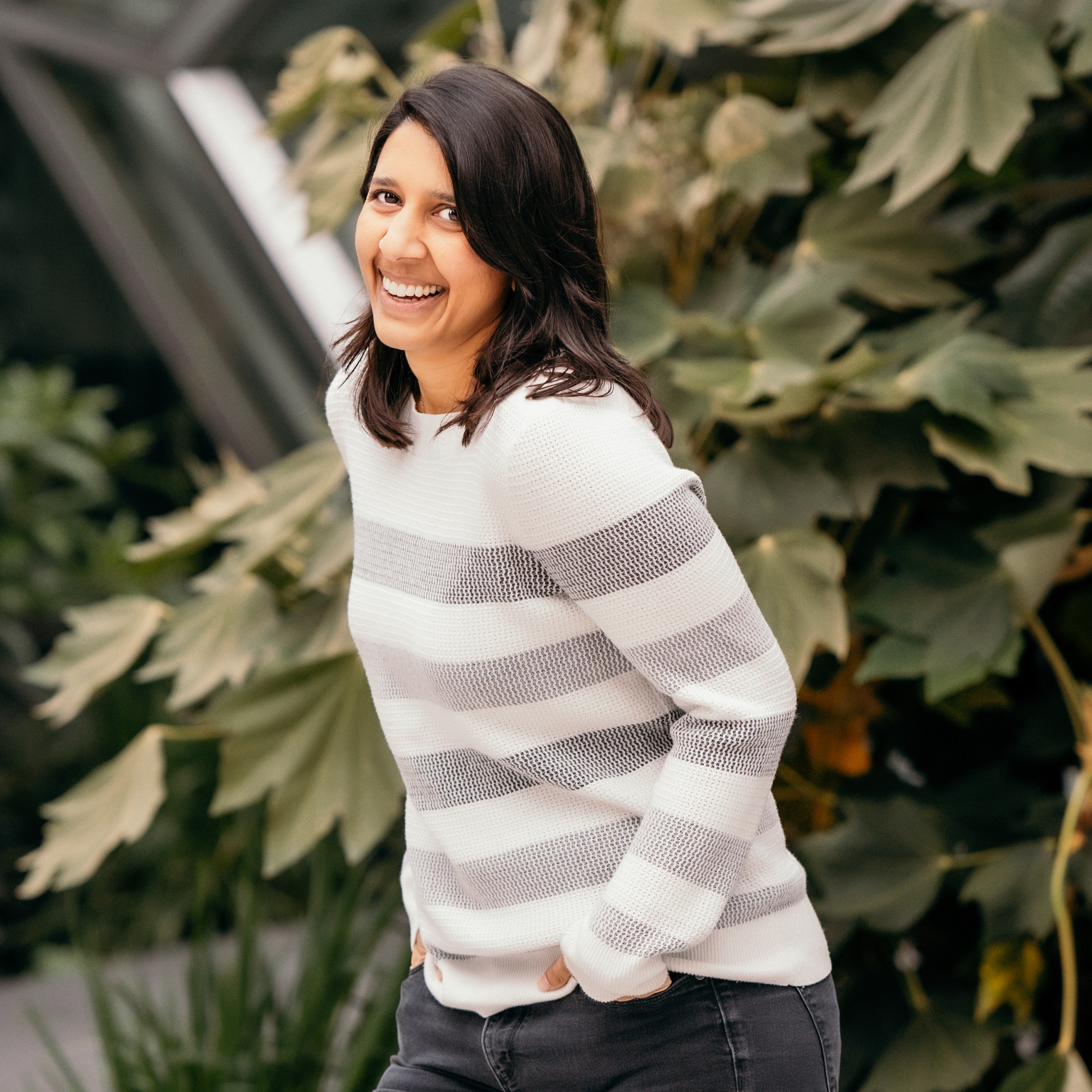
HR Director at Cylinder Health
With nearly a decade of experience in human resources and people operations, most within the healthtech space, Lia focuses her work on making the employee experience accessible and inclusive. She specializes in delightful internal communications, thoughtful change management, and intentional documentation along with building trusting and human-centered relationships across departments. She is a Lifetime Girl Scout, former pub trivia host, and outspoken disability advocate and self-proclaimed Accessibility Queen. Lia lives in Seattle and loves to look at mountains.