Using Content Creation for a Career Transition


Most people go quiet during a career transition. Laci McKinney did the opposite.
In this episode of the Workfluencer Podcast, Laci breaks down how she used content to make her transferable skills visible, pivot into organizational development, and earn three promotions in three years.
We talk about documenting your learning in public, building a dual personal + professional brand, navigating imposter syndrome, and why content isn’t self-promotion. It’s career leverage.
If you’re considering a pivot, growing influence while employed, or trying to connect content to real career outcomes, this episode is for you.
What You’ll Learn
Why waiting to be “picked” is the fastest way to stall your career
How documenting your learning builds credibility before you feel “ready”
The dual-brand strategy that makes career pivots feel natural
How to choose content topics you actually have permission to speak on
A simple way to show your day-to-day work without oversharing
How content translated into promotions, consulting, and podcast invites
Why imposter syndrome never goes away. And why that’s normal
What leaders get wrong about internal mobility and career development
How organizations benefit when content is treated as development, not ego
RESOURCES MENTIONED
- Laci's Website: https://www.lacimckinney.com/
- Free Download - Are you AI replaceable or AI proof? Discover Your Strategic Positioning in the Age of AI and Get Your Personalized Action Plan. https://www.lacimckinney.com/aiassessment
- Get Rhona's Newsletter - https://link.rhonapierce.com/YZEviw
CONNECT WITH US
- Connect with Laci: https://www.linkedin.com/in/lacimckinney/
- Connect with Rhona: https://www.linkedin.com/in/rhonabarnettpierce/
Want to turn your team into creators?
Visit workfluencermedia.com to learn how we help companies build video-first content systems that attract, engage, and retain talent.
workfluencer, career transition, career change, content creation, personal branding, career development, professional content creation, building a personal brand, career growth, thought leadership, career advancement, content strategy, career visibility, career reinvention, career storytelling, employee content creation, corporate content creator, career pivots, professional branding, workplace influence, creator economy at work
Learn more about your ad choices. Visit megaphone.fm/adchoices
Laci McKinney (00:00.086)
Instead of me waiting for somebody else to tell me what I was graded, I started to do the work myself. So when I am going through something, when I am thinking through something, learning something, I found this out about myself that it's best for me to put that out there, right?
people hide during transitions, you did the opposite.
When I started to decide to interview and found a role in Pivot, I was able to share a little more of my value.
things that I like about your approach is this dual brand strategy.
I think it started to do, you know, kind of hit home for me when people started to ask me questions. People started to send DMs about certain things. And so that's when it really started to pick up. Then on top of that, as I was building clarity and getting clear on what my value looked like, I was able to then bring that into the workplace and it got me to be able to get three promotions in three years.
Rhona Pierce (00:56.216)
I don't know who needs to hear this, but switching careers doesn't mean starting from zero. It means making your transferable skills visible. Lacey McKinney proved it when she used content to bridge her career pivot, showcasing what she already knew in a new context. That strategic visibility turned her from industry newcomer to recognized thought leader. Today, she's breaking down exactly how she did it. Lacey, welcome to Workfluencer.
Thank you so much for having me.
Alright, so for anyone who hasn't met you yet, can you tell us a bit about who you are and what you do best?
Sure. So I am Lacey McKinney. My professional world, I'm an organizational development partner. And so what that means is that I work with teams on effectiveness, also change management, learning and development as well. And what that means and what I feel like I bring best to that role is innovation, discernment, as well as strategy. And so as I'm working with different teams,
I'm helping them be strategic about their approach, whether it's launching something new or whether they are looking at refining a process or a system. And so I really get in there and get their minds thinking, asking those great questions as well. I'm always thinking of things that are new, right? I'm looking at the future. What are we not looking at? What are we not talking about? What are we missing? And so I utilize great questions to be able to do that as well.
Laci McKinney (02:29.29)
And so I feel like that that's a little bit about who I am in my professional world and what I bring to the space, as well as what I am also great at bringing into the work environment.
Amazing. And I'm glad that you spoke so much about change because we're talking about changes and career pivots and how you did that. I'm so excited to bring this story to the pod. So take me back to that moment when you realized that your career needed a change. Like, what were you leaving behind and why?
leaving behind a little bit of self-doubt. Also, I was leaving behind waiting on someone else to choose me, right? And so when I say that, I would go into our annual reviews or just one-to-one conversations with my direct report at the time, and I was kind of, you know, kind of talking about what I wanted, but not really.
was waiting for them to kind of say, you know what, I see you're talented and, you know, like I said, innovation, discernment, strategy, relationships, whatever it may be. I was waiting for them to kind of tell me what that looked like for myself, right? But what I decided to leave behind is that exact piece, right? Instead of me waiting for somebody else to tell me what I was great at, I started to do the work myself. And so that really...
pivoted and launched me into my next phase. And what I started to do is take assessments. And I looked at my current assessments that I had, and all of them started to point to one thing, right? And so, okay, your greatest strategy, your greatest innovation, your great at relationships, your great at coaching and mentoring as well, that was across the board, what I would see in those assessments. And so once I saw that and started to look at that, I started to say, you know what, how can I utilize these skills
Laci McKinney (04:21.57)
to pivot where I am, right? I've already put in years in a career working with individuals, leading them and developing different systems, changing processes, right? I've done all of those types of things. So how can I learn what I'm great at doing, understand those skills, take what I've done in the past and utilize that to pivot? And that's what I started to do. And so that mindset that I was leaving behind and changing once I shifted that, really...
me into my next career and I started to utilize that to my favor.
Amazing. And so many of us do that. Me included. You start out your career like waiting for someone else to notice. I think you're blessed when you figure that early on in your career or earlier on, usually midway through that that's not how the world works and that you have to really take charge of that.
Most people hide during transitions. You did the opposite. Like what made you decide to document things publicly?
think I'm just a natural teacher. And so when I am going through something, when I am thinking through something, learning something, I found it out about myself that it's best for me to put that out there, right? Even though I may not have all the pieces together, my thinking is not clear at all, it helps me to get past what I'm thinking if I'm talking to others, right? And it's not that I'm always seeking the answers from them. I just need to hear it out loud.
Laci McKinney (05:56.81)
And that's where in my mind, I started to discern some things that I'm saying out loud. I'm starting to even answer some of my own questions while I'm doing it. And so since I learned that about myself, I needed to find a way to do that. If I didn't have a mentor at the time, I didn't write when I decided to pivot and shift. I didn't have a mentor that I've been talking with. And so what I started to utilize and say, you know what the things that I'm learning.
let me use that in my favor and start to post and talk about them. And as people started to engage, that become kind of a, I guess you would say, I don't want to say a quiet mentor because they were actually loud because they would then share some thinking or respond to some of my comments or.
some of the thought leadership that I was putting forward. And that just helped me continue to grow. That helped me see that what I was learning, what I was thinking was valuable. And that really helped me also go into the interview process. When I started to decide to interview and found a role in Pivot, I was able to share a little more of my value because I did that.
that connection point online sharing content. And so it all worked in my favor by doing that instead of being quiet, I decided to, you know what, let's talk about what I'm doing. Let's talk about how I'm pivoting. Let's talk about what I'm learning. And I never know also how it's helping someone else.
If you've made it this far into the episode and you're not subscribed yet, now's a good time. Exactly it. And one of the things that I like about your approach is this dual brand strategy because you merge your personal brand with your professional brand. And then you were doing all of that while attempting to pivot into a new field. So what did that actually mean for you? Like before we get into talking about what you were actually posting.
Rhona Pierce (07:42.69)
What did that mean for you about the dual brand and why was combining them important for the pivot?
So if I talk about my dual brand, the dual brand is looking at personal branding as well as looking at organizational development. And so in order for me to brand myself, I needed to be a thought leader in the space that I was working in, which is organizational development. And so that's how it complemented one another is that I was sharing my thinking around organizational development, organizational effectiveness, and just working across teams in general in organizations.
And by doing that, that helped me build my personal brand, right? That helped me for people to see what my value looks like. It helped me to be able to communicate my value. And that's really the basis of personal branding. It's about what people are saying about you when you're not in those spaces or people are saying your names when they are thinking and connected to certain things, right? So I wanted people to connect me to organizational development. And that's what I showcased and talked about.
And so when I'm not in those spaces, when I'm not in the room, when I'm, you know, wanting to speak at conferences or speak on webinars, whatever it may be, I want people to be able to connect me to that thing, right? And my thing was organizational development. And so that's how I started to marry those two and then start to talk about it. And it just happened, you know, organically through the different postings and different things that I was sharing. And so as I'm talking about, hey, how do you think about your personal brand? How are you?
Positioning yourself to become a thought leader. How are you sharing it? Are you posting on? On LinkedIn are you writing newsletters? Are you sending you know email newsletters out those type of things to be able to get your voice out there and then another thing I told people is that don't be quiet in the space that you're currently in so if you are currently in a workplace and They are valuing you they should value what you bring in what you start to talk about and what you're
Laci McKinney (09:40.322)
to learn about. And so those are just things I start to naturally share and talk about. And it just became something that, you know, people would connect with me and send messages and want to know more about.
Let's get a little tactical. What, like how did you decide what topics you had a permission to speak on versus topics that you weren't ready for? I'm going to say ready for yet.
Laci McKinney (10:09.862)
I stayed away from certain topics, right? What I did was I would basically share what I knew. And so therefore I wasn't stepping into something that I didn't know about or stepping across something that was unfamiliar to me. Or maybe it was that I was asking the questions to then, you know, garner some feedback around that topic that would help me to develop and learn, right? And so it was never that I was...
posting about anything that was new or you know what, maybe it was new. And so then I am talking about how I'm going about discovering it. What am I learning? What am I thinking? What is the next thing I want to learn? And so that's kind of how I shaped it. So was never that I was afraid to talk about a certain topic because I knew there was a certain way to approach it based on my experience level with that topic.
So what types of posts were you doing? Were they mostly like you asking questions? Was it you teaching? What was the type of post that you were creating?
So one of the types of posts that I lead into that really started to help me with my thought leadership around the field was an OE insider, right? And so organizational effective insider is the full piece of it. And basically what I was doing was taking the different projects that I was working on and I would break down step by step of what I was doing within those projects. And so
What that helps me do is to tell my day to day, what does it look like for me to be in the organization development space and take all these different projects? So say for instance, if it was a change manager project, I would talk about where we started. I would talk about the strategy. I would talk about building the change management plan. I would talk about the communication plan. All of those things were valuable. And then from there, I would talk about the impact of that, right? So after I've put that together, we've produced and did the
Laci McKinney (12:10.7)
the project, we've started to work the plan and start to make some changes, put out the communication plan. Okay, so now what is the impact of that? And so I would just talk about it. What were some of the outcomes? What were some people saying about the particular project? How were people connected with it? Those different things. And so that was one of the things I leaned into that really helped me build that thought leadership because people got to see the behind the scenes day to day of what I was building and what I was doing.
Amazing you really brought people along with you and we know that that's people love online. They love the behind the scenes. They love seeing the process and that really worked well for you. Did you ever explicitly talk about the transition that you were wanting to make or did you just start showing up as the new version of yourself?
didn't necessarily in the moment of talk about it, but once it's happened, I went back and told the backstory, right? So I was telling people, how did I get here? Because you did see from me being in the leisure services space to going into organization development. And so I wanted to connect people to like, okay, how did I go from leisure services to organization development? What happened there? What mindset started to shift? What are some of the skills I started to explore? So I did share those and would post
different thought leadership pieces on what my transition looked like. I talked about where I started to where I began. I talked about the challenges as well. So I shared to say, you know what? Two to three years ago, that would be part of the post. Two to three years ago, whatever the time frame may be, I would tell them where I set within that time frame and then what I did to overcome those challenges that I had during that time. So yeah.
I let people in. would share it all and kind of give that behind the scenes of this is where I was and this is what I did to get here. And then I would even share like and tell them this is how you can apply this to your career, your pivot, whatever you're trying to do. I would share that for them to be able to see themselves inside of that story.
Rhona Pierce (14:23.374)
Did you deal with any sort of imposter syndrome, which is common for a lot of people when they're moving into something new?
Of course, you always have self doubt, you know, whenever you're starting something new, and especially being in a space where other people are posting about similar things and talking about personal branding, talking about career pivots. Maybe they are getting more, you know, views, maybe they are getting more opportunities, those type of things. And you start to say, well, you know, what's wrong with me? What am I missing? What am I not saying? And so you go back and you sit down and you look at your
your postage, you look at your strategy, you try to rework it, you try to post something new, or you even try to think about shifting and shaping and posting something similar of what they're doing, right? And I did that, and sometimes it would give me pause and it would give me some time before I would show up again and those types of things. But what I had to do is get out of my head. I had to say that I've done the work to be able to pivot, I've done the work to be able to get these promotions.
done the work to understand and talk about my values, talk about what I could bring into the space. And that's what I know. So let me show up sharing what I know and what I can do best. And then my, my, my, you know, community will follow my, people will come just by putting in the work. And so I just had to keep that top of mind. And you know what? Apostle's syndrome is going to always show up. It is, it's natural. But utilize.
it as something that's going to help you keep going, whether then it's something that stops you. And that's what I have to just keep in my mind.
Rhona Pierce (16:04.726)
I like that. Yeah, it's always going to be there, but you just really have to. It's a mindset thing. So here's what I think listeners really want to know. You're learning a new field, you're doing your day job and you're creating content. How did you actually manage that without burning out or doing mediocre work at any of it?
I mean, managing it is a little hard, right? And I'm not gonna say that I figured out how to do it perfectly. I haven't, right? And so what I've learned to do is give myself grace, give myself, you know, and be patient with different things. And so if I can't show up sharing a post every week or sharing a newsletter every week, that's okay.
because I do have a day job, but what I try to do is if I'm not able to sit down and do a long form content, just post something short, right? Keep it short, post about a simple thought process or a simple success that I've had, something like that. Or it's me just showing up and commenting under other people's posts, right? It's the simple things. And so...
I think what I would tell people is don't overcomplicate it. Don't stress yourself out. Try to build a schedule. And so if you want to build in a schedule of posting every Monday or Tuesday, or you're choosing the weekend to sit down and kind of plan that through, then that works for you. But do what is best for you in that situation and that time. And don't make it be like a stressful thing. Just show up and share what you can in the moments you can.
I would tell people just to give yourselves grace, especially when you are, you know, bordering the lines of a full-time position as well as wanting to show up and share content.
Rhona Pierce (17:56.686)
amazing advice. When did you start seeing the content work? Like, was there a moment where you realized, okay, this visibility thing is actually translating into career opportunities?
think it started to do, you know, kind of hit home for me when people started to ask me questions. People started to send DMs about certain things. And so that's when it really started to pick up. It also, I found it picked up for me is when I got a little clearer on what I wanted to share, right? At first I was kind of just, you know, posting different things here and there, but once I gained clarity around
the value that I could actually bring, that's when it shifted. And it was really when I started to connect in how personal branding and my OD work actually connects, right? And so if you think about organization development, it's all about the individual being at peak performance, right? And so if I'm a person that is in peak performance and I am doing my best and showing up and being effective at the role that I am hired to do, then therefore,
I'm going to be willing to build that personal brand. I'm going to be willing to tell the story of how did I get there? What are some of my successes? I'm also going to be willing to tell the story of that organization because I want to feel like that organization really supports me, right? And so when all of that comes together, then that really, you know, hits home for a person and shows how their impact.
you know, looks in the workplace and how they can then express that outward. And so that's what I felt like when I started to understand that and get clear about what that sounded like and start to connect the two instead of continue to separate them. Right. Because at first, when I would show up online, I was separating my nine to five. I was separating, you know, this thought leadership thing and wanting to share what I was learning and wanting to teach people online. was separating those two. once I figured out how it nicely came together and when I started to step into what
Laci McKinney (19:57.462)
was meant to do, you know, around organizational development and around, you know, bringing people along on the journey and talking about personal branding, it all became clear. And once that became clear, that just made this nice, you know, structure around what I talked about and how I brought value into the space.
And what did that translate into? Did it translate into like new jobs or promotions or speaking engagements? Like what were the tangible outcomes of you putting yourself out there?
Sure, so it did result in consulting. And so there were individuals that wanted to do one-to-one consulting. And so I've done a number of consulting things, just one-to-one guiding them through their career pivots. It translated it into individuals wanting me to help them develop content. I've had people ask me about developing learning content for their community as well.
It gained me to be able to come in and talk on podcasts. I've got to talk on a couple of podcasts as I've gone through my different journeys. And then on top of that, as I was building clarity and getting clear on what my value looked like, I was able to then bring that into the workplace. And it got me to be able to get three promotions in three years because I got so clear on what I was doing. I was digging deep into learning more about.
organization development. And so then I would be able to bring that forward into the space, into the workplace and bring that innovation forward and talk about it. And the my my direct report was able to see, this is a value, you know, that Lacey can bring. She has a lot of capacity. She can do more. And so with me being able to do that, that, you know, gave me those three promotions in three years. And that's amazing, you know, for me to be able to do that. So I pivoted into a field that I was not.
Laci McKinney (21:47.564)
you know, familiar with necessarily, but I had the skills to be able to do it. I learned, you know, what that looked like. And then I was able to then keep growing in that field as well.
With those promotions and that's really impressive. Three promotions in three years is impressive because we know how corporate America works and it usually doesn't go that way. Were people inside of your organization also like seeing your content online? Did they ever mention it to you?
Actually, yes. So I did have a couple of our executive leaders know about my content that I was posting and see it and even ask. It was one time I was sitting in a, I think it was a leadership summit. We have leadership summits that different leaders are coming in and they'll talk about a certain topic. And I remember one of the executive, one of our deputy city managers, so it's a top leader there, was talking about something and it.
you know, I'm trying to bring it all together. It was a while ago, but I remember her just kind of talking about sharing information online, sharing different thought leadership. And I remember I was sitting kind of in the front and she kind of pointed over to me and say, yes, I've seen some of your value that you share. And I can't remember the full story. It's been a while ago, but I just remember her making that statement about the content that I was sharing. Also, I've had our topic executive leader
me to help them build their personal brand strategy. And I didn't do it. I pointed them to someone else because that was just a conflict of interest. But it all came about from the information that I was sharing online and the different things that I was doing. They knew that I had a network to be able to help them. And so I was able to help them kind of develop their thought leadership and what they were sharing online by connecting them to the different people that I knew that could help them.
Laci McKinney (23:45.74)
that could help them do that. So yes, I would say I had people that would ask me about it. had even just colleagues in general, know, send different things, ask questions and connecting with me based on what I was posting online.
That is so cool to hear because so many people are afraid of posting because of what people inside of the company are going to think. And yeah, it could go different ways. Every company is different and not so much every company. Every human out there is different because this is not necessarily a company thing, but I like how other humans react. But it's also been my experience. It's been the experience of a lot of people that have been on the podcast that it's just.
It really is usually more positive. I love that executives actually asked you, help me do the same thing that says a lot about how well you were doing and how much you were killing it out there that they're like, hey, I want to do that too. And I want you to help me. Have you ever had any negative feedback or any negative interactions inside your company or outside because of the content you were sharing?
never experienced any negativity, but I will say it took me a while to show up online and share different things because I did think that, you know, my, my director would see it or a colleague would see it. And I did have, know, it was one time during COVID time. know, if you think about COVID, you were off schedule quite a bit, right? We were working early mornings. We were working through lunch. We were working the evenings. You just worked.
over the place. And so I remember I was invited to talk at a entrepreneur's summit and I was invited to talk and be on the panel. And the panel happened to be during the time of I think it was like 3 p.m. right. And so that's still work time. But if I considered the way my schedule looked during COVID, I didn't really have a work schedule. And so it
Laci McKinney (25:51.758)
There was something brought up to me around. Hey, it seems like you know, you're not really, know on the job or working or doing what you should be doing because you are taking you know this virtual workshop and this opportunity during the day and so it just looks bad and so that was brought up to me and you know, Understandably, so I said, okay, you know what? I won't take an opportunity that happens around the work time I will you know do it around the schedule or if I need to take off let me just take off and
be clear of anything like that. But, know, to be honest, that's what stopped me from posting to start with, you know what I mean? And so just that story alone, and then just thinking about the potential of someone seeing it, the potential of what they would say. I've had people search me, you know, in my organization. And I feel like during that time, it didn't come off as a positive thing. But I think as I started to shift and we started to kind of
you know, shift into where I was and the people that I was reporting to then and connected to then, they see it a little different. They see the thought leadership and posting online a little different. And really, to be honest, if people really look at what's happening, it's you building kind of raving fans around your organization. You are talking about what you're doing. You're excited to talk about the work. And that's what really we should be focusing on inside of organizations. If you see people
building and talking about their personal brand or sharing thought leadership, unless it's something totally negative against the organization, then you should support kind of what they're doing and what they're sharing. And I find that that be the case today than it was more in the past.
Yeah, and I think during COVID, a lot of organizations were going through that phase of understanding remote work because they were forced into it. I was lucky to have been working remotely since 2017 for remote first organizations.
Rhona Pierce (27:53.624)
but many organizations, were just learning. So it was just like, hey, you're doing what? But my advice has always been to people. And it's also how I started is I would take my PTO, like I would take an hour of PTO to do a virtual webinar and then I would come back and there'll be like an hour. Yes, an hour. That way no one could say anything. I was off the clock.
And if you had opinions, you could keep them to yourself. Some people did, some people didn't, but it didn't matter. I couldn't get fired because I literally was using my PTO. So that's just a tip for for people.
Yeah, great tip. Thank you.
So let's flip to your organizational development hat for a second. When you look at how organizations handle career transitions or like internal mobility, what are they getting wrong?
say in the past, and I see it kind of shifting to be something different today, but I feel like in the past, what they were doing is overlooking the talent that they currently had within the organization. A lot of times they were posting, you know, different jobs and they were looking for the missing link, right? They were looking for something, you know, great coming in. And this is an assumption, right? You know, when you're posting a job, you're looking for the best candidate for that role.
Laci McKinney (29:16.834)
But I feel like organizations should have been all along looking internally and looking at the talent that they had. And even if there was some missing links within that talent, how can you then position them and help them develop? Right. And so if you noticed previously, a lot of organizations didn't have the, you know, say a department or a person focused on development, looking at how you truly develop your talent and bring them through.
how you look at the competencies that they may be, you know, missing those different skills, all of it. You didn't have people looking at that, right? And so organization development is, even though it's been around for a while, it's a fairly new concept to organizations and they're just now starting to pick it up. And so that's what felt like people, what organizations got wrong. They got wrong where they would overlook the talent that was currently there. And when I say it's changed now, I think it's really changed because of the
the thought of organizational development and what that really truly means to organizations and how can you utilize that? How can you put a learning and development plan together to develop individuals? How can you put it within, you know, conversations to make sure you are developing individuals instead of always going outside, you need to look internally. And I feel like that's what they're getting right now.
because of the field of organizational development, because of people are bringing that forward and bringing it in, you're able to now say, okay, how do I build a strategy around the talent that's currently there? How do I start to look at what's missing? What are some gaps? What are some assessments that I can administer for them to be able to look at to say, how can I develop?
How do I then develop and train the people leaders within the organization to do some one-on-one learning and development, have conversations, get really clear around development plans, get really clear around where I want to be as an employee in the next five years? Just even ask those questions. They're getting better at that and they're not missing the link on how do I then truly take the talent I have and develop them and bring them along instead of trying to look for the next best thing.
Rhona Pierce (31:29.556)
Yes, and I'm glad to hear that you're seeing a shift out there in the market. So if you're a leader with someone on your team who has expressed to you that they want to pivot, what should you actually be encouraging this person on your team to do?
Yeah, so the first thing I wanna go back to the people leader, right? And so it's first acknowledging that you should be the person doing that, right? A lot of times we are putting just the accountability on the individual themselves and we're not even having those conversations. And so once you are a people leader and you understand what your role looks like, right? You start to set that environment for individuals to talk out loud about what they want and where they see their career going.
then that is saying, okay, now I'm giving you permission. I am supporting you through this development process. So that's the start of it, right? And so then to that individual person, it's being open enough to have the conversations, be receptive to that invitation and be receptive to that shift in environment. Because maybe previously it wasn't there, but now this person is starting to open up and ask you questions.
And so start to build that trust and that relationship with your people leader to feel comfortable to have those questions. I mean, to have that conversation and in those conversations, talk about what you want. Don't be afraid to do that. Talk about where you see yourself in five years, where you want to be in 10 years. What does life look like beyond where you are currently? And so then what that people leader can start to do is help you develop and learn those things. They connect you to...
you know, different conferences, make sure the budget is set where you are able to go out and learn. Maybe there's a certification you may need. They can help you be able to solidify that and get that done. And you start to understand where the accountability lies, right? The accountability is almost a 50-50 thing because you have that people leader that's willing to set the environment, bring you along, develop you. Maybe there's a meeting that they are.
Laci McKinney (33:29.356)
you know, participating in and they just heard you say, well, I want to learn how to do X, whatever that may be. Let me invite this person into that meeting for them to learn and be a part of it. Maybe it's a project. It could be a number of things. And so once you start to open up that two way conversation about what you want, where you want to be, and they start to build that environment for it, it's a win win situation, right? For people to then be able to go to the next step and be able to develop and grow and
go after that next opportunity and hopefully it's inside the organization because that last conversation we just had the last thing about, you know, building that talent, then hopefully it's something there where you can still maintain that comfort level with the organization. Maybe it's not, and that's okay too. Maybe it's somewhere else, but you never know what that individual people leader can connect you to just by having those conversations.
I absolutely love that. Let's do a little segment that I like to call Say It Louder. And it's like, you get to be on your soapbox and like preach to someone about this. What would change inside an organization if they saw content as career development and not as self-promotion?
Ooh, what would change? I think what would change is that you would see more people doing it, right? You would see more people sharing. And what you would then see is more raving fans about that organization, right? About the work that you're doing, about the impact that you're doing, about the value that is, you know, bringing brought forward. And so as people start to shift and do that and see that it's okay to talk about
what they're doing within the workplace is not a secretive thing. And of course, everything doesn't need to be shared on social media. And you should have enough discernment to see what I should share, what I shouldn't and everything else. You should have enough knowledge to be able to do that. If you don't ask the question, can I share this? Can I not, right? But I think that once it's opened up and people are free to share, then you just never know where it deals for your actual organization, what it bills for.
Laci McKinney (35:46.54)
what you're bringing along, you're actually utilizing the people inside of that organization to teach about. So say for instance, it's a product, right? And I'm on the product team and I'm talking about this product in a way that will be impactful to the user, right? Therefore that can help gain a lot of clients for them to be able to see that because a lot of times when people are selling something, they are just only talking that tech talk. And that goes right over your head. But if I'm posting online,
about how we're talking about and bringing the people along and why this product was built for that person and how they can start to utilize it and see it. You never know where that can go. And so I think that that's my soapbox is that once you start to understand the value and support it, you will see more people talking about it and you're building more Raven fans. And at the end, it helps the bottom line for that company and that organization.
Yes, and it also helps you save money on marketing because, or I'm not gonna say save money, I'm gonna say it gives you the opportunity to reallocate part of your marketing budget into growing your employees and supporting them with content creation, which is what I've seen many companies do, and it's been super successful, because why spend money on external influencers or things like that?
when you get you have the actual people building the thing who can speak about it and build those fans. So amazing. If someone in the audience is considering a career pivot right now, maybe they're in T.A. and they want to move into employer brand or they want to move into organizational development like you did. What's the first thing they should do with their content strategy?
say that you should start to look at the content strategy right off, right? What I would tell you is to get an understanding around the thing that you want to pivot into, right? What is attractive to you? Why do you want to do that? What have you done in your current role that would connect in? So get clear around those things first before you start to put that inside of your content. But then
Laci McKinney (38:02.28)
you get clear around that and understand it and start to do that self-reflection. That's basically what I kind of teach is do a self-reflection before you start to move, right? Because you want to be clear on that movement before you do it. But then the next step, what I would tell people to do is to start to explore, right? And so you want to pivot into something. This is something that I did as well. because I didn't know what I wanted to do, I explored and through that net, why.
And so I remember one time showing up to a event and it was for 7-Eleven, right? And if I say I'm in leisure services and I'm going to a presentation and workshop at the 7-Eleven headquarters. And so I learned and they talked about their product of their app that they were building and how some 7-Eleven stores were going to be self-service. So people could come in, they pick up their product, they pick up their item.
They would go to the counter, they'd be able to weigh it and then for it. was years ago, say four years ago, they were talking about doing this. But what it did for me going to that, it just opened my eyes to, in my mind, to innovation, to change, to design thinking, because they talked about design thinking as well. It also helped me build some relationships because I remember taking a group of individuals from my organization at the time.
over to 7-Eleven to learn about design thinking, right? And so I'm saying all that to say is cast your net wide and start to go out there and explore and don't be afraid to go to webinars and conferences and meetups that are totally outside of what you are currently doing now. I support you and want you to hear that. Go to different things because it starts to open your eyes to many different career fields and different things out there.
But then after you've done that work, then you're able to fine tune it down, right? So I've learned about different things. I'm exploring. I'm hearing what other, you know, career fields are working on. I'm hearing from other professionals. Then I can fine tune and say, and go back from that self-reflection moment to that exploratory moment and say, okay, what did I enjoy? What did I really find that?
Laci McKinney (40:17.634)
could see myself doing for the next five to 10 years, whatever your next phase may be, maybe it's 15 years or what have you. But what can I see myself doing? And once you understand that, that's when I would tell you, now it's time to start talking about it. Now it's time to start putting that out there, right? And that phase could take two months, three months, six months. It could be different for everyone. But utilize that phase to then get clear, to then start to talk about what you want to share,
talking about your content, saying, hey, I've been exploring this topic and this is what I feel and this is the impact I can bring into that space, into that topic and this is what the knowledge I have. And so then once you start to find roles that you wanna do, you have that language to be able to share with them about how you fit nicely within that framework, right? How you fit nicely within whatever you are wanting to pivot.
into. Another thing I would say is don't be afraid to see what's happening inside of your organization, right? You know, a lot of times we go looking outside, we want to change jobs when we say we want to pivot. You don't necessarily need to do that because that was my story. I didn't need to go outside of my organization because things were changing inside of the organization that I could be a part of. And so I started to put myself forward and say, hey, I want to be a part of this. I want to serve on this committee. want to
you know, help with this project. I could bring this forward. this is what I've been thinking about. And so then I was brought along. I was then, you know, reached out and people wanted me to be a part of certain teams because I wasn't being quiet about what I wanted. And so that's what I would kind of take people through. I know that's a lot to kind of decipher and think through, but that's what I would, you know, tell someone that's really thinking about pivoting at the moment.
That's amazing advice clarity really always helps everything be better and just like helps you stay focused and have a focus so thank you so much for sharing that i have really enjoyed this conversation and i know listeners have as well if someone wants to connect with you how can they connect with you.
Laci McKinney (42:27.438)
Of course, I'm on LinkedIn and so you can search Lacey McKinney on LinkedIn. You can also go to my website, Lacey McKinney.com and connect me there. You have an opportunity to be able to submit and find me in different ways. I also have where you can join my newsletter and hopefully we can share that with people as well. And I have other different downloads and courses and stuff that you can take.
to be able to help you move along in your journey.
Thanks again, Lacey, for being on the show. I really enjoyed this conversation. If you want to connect with Lacey, be sure to check out all of her contact information that I'll list in the show notes. If you're enjoying the Workfluencer pod, share it with someone who's changing how we talk about work or who should be. And hey, if this episode gave you ideas or inspiration, leave us a five-star review. Reviews help other listeners find us. And honestly, it makes my day. This show is produced by Workfluencer Media.
Visit workfluencermedia.com to learn how we help companies build video first content systems that attract, engage, and retain qualified talent. That's workfluencermedia.com. Thanks for listening and I'll chat with you next week.
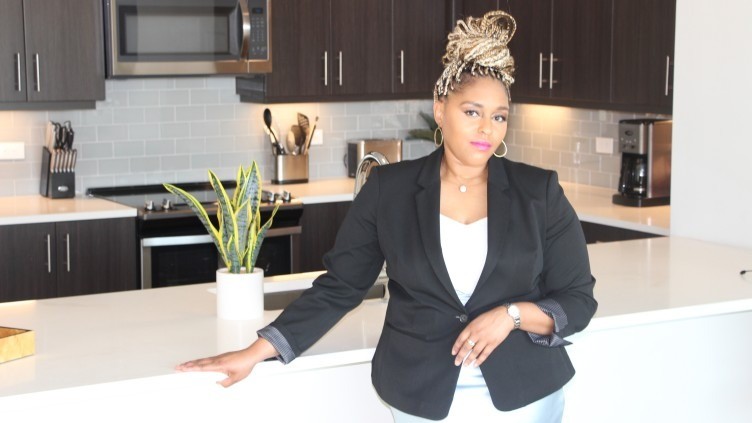
Senior Organizational Development Partner & Career Strategist
Laci McKinney is a Senior Organizational Development Partner and career strategist who helps ambitious professional women future-proof their careers through intentional branding and forward-thinking strategies.
She has scaled organizational initiatives from 40 to 40,000+ participants and created the "Future-Proof Your Career" course and Triple-Lens Framework™. Her Working Genius strengths of Discernment & Invention drive her analytical and innovative problem-solving approach.
Through her "Brand Your Career" newsletter and "OE Insider" thought leadership series, Laci shares insights that bridge individual career development with organizational effectiveness—giving professionals a unique perspective on building impactful careers in today's evolving workplace.


